Cylinder Contribution and Balance Codes P0263 Through P0296 Explained
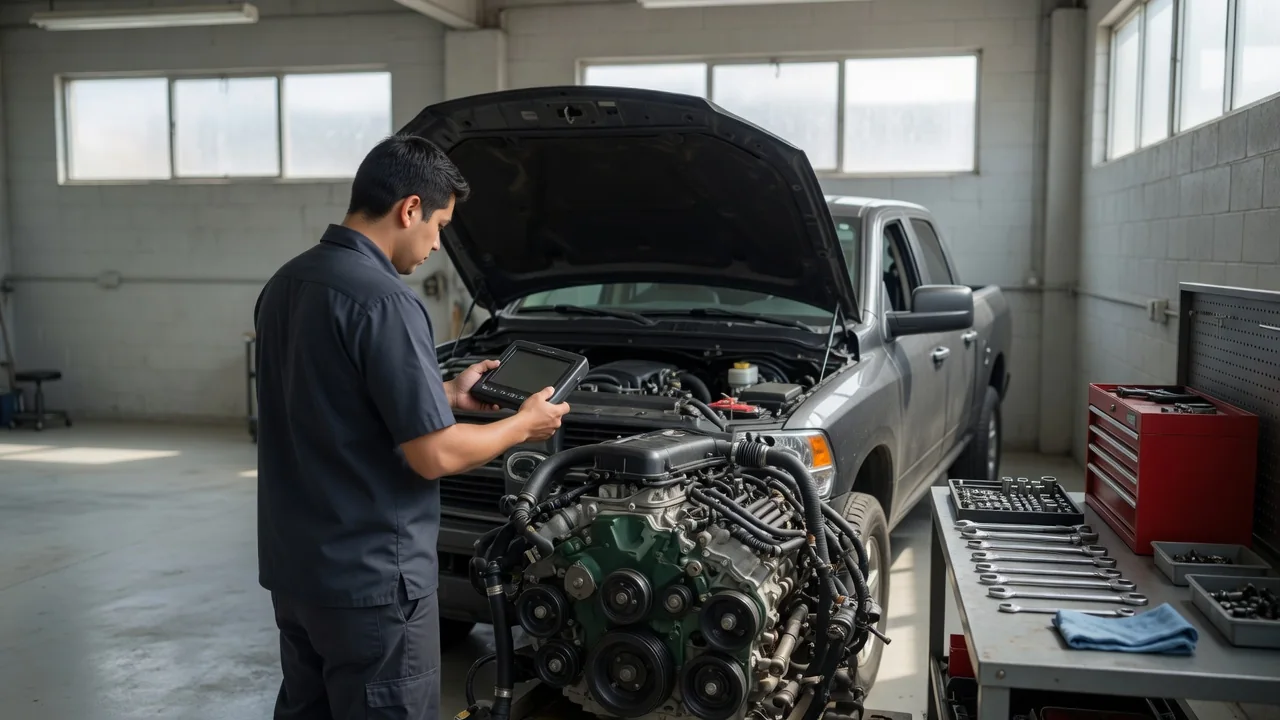
Cylinder contribution and balance codes in the P0263 through P0296 range flag an abnormal amount of work from a named cylinder, most often on diesel engines. A P0263 code, P0266 code, P0269 code, or similar result is evidence to interpret, not proof that an injector has failed. Confirm the complete description, vehicle application, and manufacturer criteria before treating scan results as a parts list.
P0263, P0266, P0269, and P0272: Cylinders 1 Through 4
On many diagnostic systems, P0263 maps to cylinder 1 contribution or balance, P0266 to cylinder 2, P0269 to cylinder 3, and P0272 to cylinder 4. A P0263 code or P0272 code therefore names a cylinder the control module judged as contributing abnormally to crankshaft rotation. That judgment still depends on the complete factory description and the diagnostic criteria for that vehicle. Manufacturer-dependent wording can differ, so the same numeric result is not interchangeable across brands without confirmation.
The code alone does not establish a failed injector. Cylinder contribution can drop because of fuel delivery, combustion, or mechanical problems, and the module is reporting the outcome, not a parts diagnosis. Before locating the reported cylinder, obtain engine-specific cylinder numbering, because bank order, firing order, and physical layout are not the same on every engine. A P0266 code or P0269 code is only useful once the numbered cylinder is identified correctly on that application.
P0275, P0278, P0281, P0284, and P0296: Cylinder Assignments
The same family continues on larger engines. P0275 is commonly cylinder 5 contribution or balance, P0278 cylinder 6, P0281 cylinder 7, and P0284 cylinder 8. A P0275 code, P0278 code, or P0281 code should be read against the actual cylinder count and layout. P0296 is the usual cylinder 12 contribution or balance assignment; a P0296 code only makes sense on an engine that actually has a twelfth cylinder, so the reported code and application must be confirmed together.
The heading describes a family, not a continuous list of identical faults. Not every numerical code between P0263 and P0296 is a cylinder contribution or cylinder balance result; other injector, circuit, or fuel-system definitions occupy some of those numbers. If a scan tool reports a cylinder that does not exist on the engine, verify the raw code, the reporting module, and the scan-tool interpretation before diagnosing components. A mismatched cylinder number is a data problem until those checks are complete.
What a Cylinder Power Balance Test Reveals
Cylinder contribution is the work each cylinder supplies to keep the engine turning smoothly. When one cylinder produces less torque than its neighbors, crankshaft speed variation increases and the power balance test can flag that cylinder. Supported diagnostic systems may watch small changes in crankshaft speed or run a controlled cylinder cutout sequence to compare contribution. Test availability, required operating conditions, displayed units, and acceptable limits depend on the engine and the diagnostic system in use.
Injector correction values are control adjustments the module applies to even out fuel delivery, not a direct measurement of injector condition or cylinder compression. A large correction can accompany a genuine injector problem, a fuel-quality issue, or a mechanical shortfall, so the number needs context from other tests. Use the factory power balance test when the application supports it, then compare those results with live data rather than treating a single correction figure as a failed part.
Symptoms and Conditions Worth Recording
A contribution or balance fault may appear with rough idle, shaking, reduced power, difficult starting, unusual exhaust smoke, or an illuminated warning light, but not every stored result produces those symptoms. Record whether the complaint occurs on cold starts, at warm idle, during acceleration, or under other ordinary driving conditions. Do not try to force severe shaking or heavy smoke just to watch it happen. Note what the engine was doing when the driver first noticed the change.
Freeze-frame data, stored and pending codes, and recent repair or refueling history help place the result in context. Fuel quality after a fill-up, recent injector work, or a compression-related repair can all change how a cylinder contributes. Symptoms alone cannot identify the affected component, and a stored P0263 or P0284 result can remain after an intermittent misfire-like feel disappears. Capture the snapshot before clearing anything, because that operating picture is often more useful than the numeric code by itself.
Injector, Compression, and Mechanical Causes
Incorrect fuel delivery, a sticking or leaking injector, or an injector control fault can reduce the work a cylinder contributes. The module sees the torque shortfall through crankshaft behavior, not a photograph of the injector. Fuel supply or fuel quality problems can influence several cylinders at once, especially when more than one contribution code is stored, but that pattern still does not assign a diagnosis by itself. Shared rail pressure, filter restriction, and contaminated fuel remain hypotheses until tests support them.
Compression loss, poor valve sealing, or other cylinder-specific mechanical faults can cut combustion output even when the injector is healthy. Compression testing and leak-down evaluation belong later in the path, after electrical and fuel-system findings point that way. After injector replacement, application-dependent calibration or coding may be required; skipping that step can leave a contribution imbalance that looks like a hardware failure. Confirm the manufacturer's procedure and supporting test evidence before concluding that a newly installed injector is at fault.
Safe Diagnostic Steps and When to Stop Driving
Save scan data, freeze-frame information, and pending codes before clearing anything. With the engine off, look only for obvious leaks, damaged accessible wiring, or loose visible connectors. Do not loosen diesel fuel lines, unplug injectors on a running engine, or invent a cylinder cutout test. High-pressure fuel work requires the right equipment and training. Professional testing may include an application-specific balance test, injector electrical checks, approved fuel-system tests, and compression or leak-down testing when earlier findings justify those steps.
If the engine develops severe shaking, pronounced knocking, heavy smoke, visible fuel leakage, or major power loss, stop safely and arrange professional assistance. A stored contribution code cannot establish that continued driving is safe. After repairs, verify the result through the manufacturer's diagnostic procedure, resolved symptoms, and follow-up scan results rather than assuming the first parts replacement closed the case. Cylinder numbering, injector correction values, and a repeat power balance test should all agree with the repaired condition before the fault is considered corrected.