CVT Transmission Cooling System: Checking Cooling and Overheating
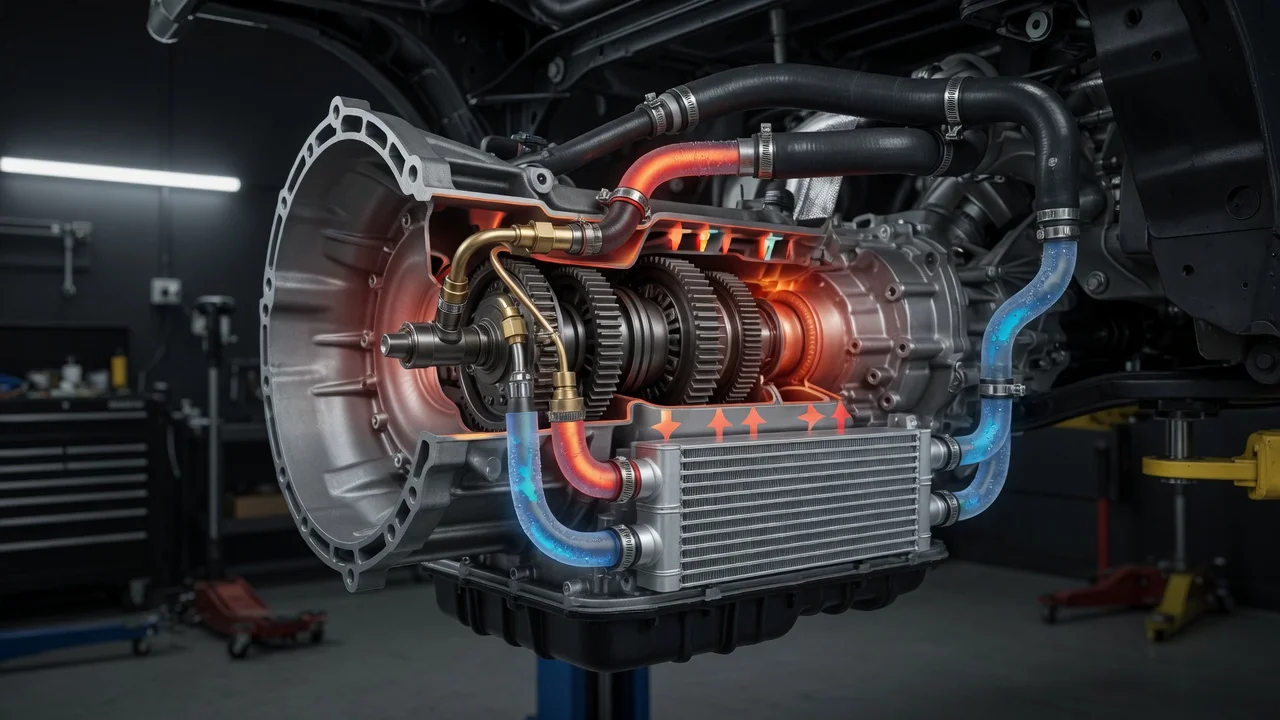
A continuously variable transmission generates heat through its belt or chain, its pulleys and its hydraulic pump. That heat leaves through a cooling circuit. When the circuit cannot keep up, the transmission control module may protect the unit by cutting power or turning on a warning. This guide explains how to record the symptoms, separate the likely causes, run checks in a sensible order, and decide how urgently the vehicle needs attention.
Establish the symptoms
Common signs of CVT overheating include a transmission temperature warning or message, a transmission or check engine light, sudden loss of power or a limp mode, engine speed that flares without matching acceleration, shudder, an increased whine, and a hot or burnt smell after driving. Write down exactly when the problem appears. It might show up on long highway climbs, while towing or carrying a heavy load, in slow traffic on hot days, or only after a certain distance. A fault that depends on load points somewhere different from one that appears right after a cold start.
Watch the engine temperature gauge at the same moment the transmission complains, because the two often share cooling hardware. Note any coolant loss, wet spots under the front of the vehicle, or steam. Record recent work as well, including a transmission fluid change, coolant service, radiator replacement, front-end collision repair, or accessories mounted in front of the grille. If you have access to a scan tool, save any stored codes before they are cleared. They help a technician confirm the pattern later.
Distinguish plausible causes
Manufacturers cool CVT fluid in different ways. Many use a fluid-to-coolant heat exchanger, sometimes called a warmer or cooler, through which engine coolant flows. Others use an air-to-oil cooler mounted ahead of the radiator, or a cooler built into a radiator tank. Some designs include a thermostatic valve that controls when fluid is sent through the cooler. Because of this shared design, a problem in the engine cooling circuit can show up as transmission overheating, and the reverse can also happen.
An engine-side fault fits best when the engine temperature also climbs or coolant is disappearing. Possible engine-side faults include low coolant, a stuck thermostat, a failed cooling fan, a restricted radiator, or a pressure cap that no longer holds pressure. A steady engine gauge makes this cause less likely. Fluid problems are the next group to consider. These include a low CVT fluid level, worn-out fluid, or fluid that does not meet the manufacturer's specification. A recent leak or a service done with an unverified product supports this cause.
A restricted external cooler, blocked cooler fins, or a stuck cooler valve fits when transmission temperature rises steadily under load while the engine stays normal. Internal slippage creates its own heat, so flare, shudder or ratio-related codes may mean the overheating is a result rather than the root cause. A faulty temperature sensor or wiring is more likely when the warning appears with no drivability change, or when the readings jump in ways that do not match how the vehicle is being driven.
Checks in a useful order
Start with checks that need no tools, and do them only after the engine is off and fully cooled. Never open the radiator cap or a pressurized coolant reservoir on a hot system. Escaping coolant can cause severe burns. Compare the reservoir level with its marks, look for drips or crusted residue around hoses and cooler lines, and clear leaves or debris from the grille and radiator face. With the engine running and the A/C on, watch from a safe distance to confirm that the cooling fans start. If coolant has to be added, use the coolant specification listed in the owner's manual. Color alone does not establish compatibility, and coolant concentration matters for both boiling protection and freeze protection.
The next checks require tools and service information. A scan tool can read codes and display live CVT fluid temperature next to engine coolant temperature, so you can compare them under similar driving conditions. Many CVTs have no dipstick. Their fluid level must be checked at a specified temperature using the manufacturer's procedure, and a reading taken any other way can mislead you. Fluid condition can be inspected at the same time. A cooling system pressure test, a thermostat check, cooler flow testing, and correct bleeding of air pockets after coolant work also follow model-specific procedures.
Leave internal diagnosis to a qualified technician. This includes line pressure testing, valve body or solenoid faults, and inspection of the belt and pulleys. The same applies when the heat exchanger may be leaking internally, because that fault can contaminate both systems.
Interpret the findings
If engine coolant temperature and CVT fluid temperature rise together, start with the engine cooling circuit. A low reservoir confirms that coolant is being lost but does not show where. A pressure test is the usual way to locate the leak. Air pockets left after a recent coolant service can reduce flow through the heat exchanger. If the problem started right after that work, proper bleeding is a reasonable step to confirm before you suspect new parts.
If the engine stays at normal temperature while the transmission temperature climbs, look at the CVT side. A correct fluid level at the specified temperature rules out low fluid, but it says nothing about cooler flow or valve operation. Dark or burnt-smelling fluid shows that overheating has happened but does not identify the cause. Milky or contaminated fluid, or transmission fluid found in the coolant, suggests an internal heat exchanger leak. That condition needs prompt professional confirmation.
A trouble code usually points to a circuit or a condition, not to a specific failed part. Before you replace a radiator, cooler or sensor, confirm the fault with live data, a test result or a visible defect. If you suspect the sensor, check whether the reported temperature makes physical sense, for example after an overnight cold soak, before condemning the transmission.
Urgency and next action
Stop driving as soon as it is safe if any of these appear: a transmission temperature warning that stays on, limp mode, an engine temperature gauge in the red or an engine overheating warning, steam, heavy coolant or fluid leaks, a strong burning smell, slipping or loss of drive, or milky fluid. Pull over, switch the engine off, and let everything cool without opening any caps. No distance can be promised as safe once these signs appear. Continued driving can damage the belt, the pulleys or the engine, so arranging a tow is often the cautious choice.
Bring the following details to the repair shop: • Year, model, engine and mileage; • The exact wording of any warning; • When and under what load and outside temperature the problem occurred; • Whether the engine temperature changed at the same time; • Any saved codes or live data; • Records of recent fluid and coolant service, with the product names used; Ask whether the manufacturer has published service information or software updates that relate to the symptom. Clear notes like these shorten diagnosis and reduce the chance of replacing parts that were never at fault.