Choosing a CTS Turbo Blanket: Fitment, Materials and Limits
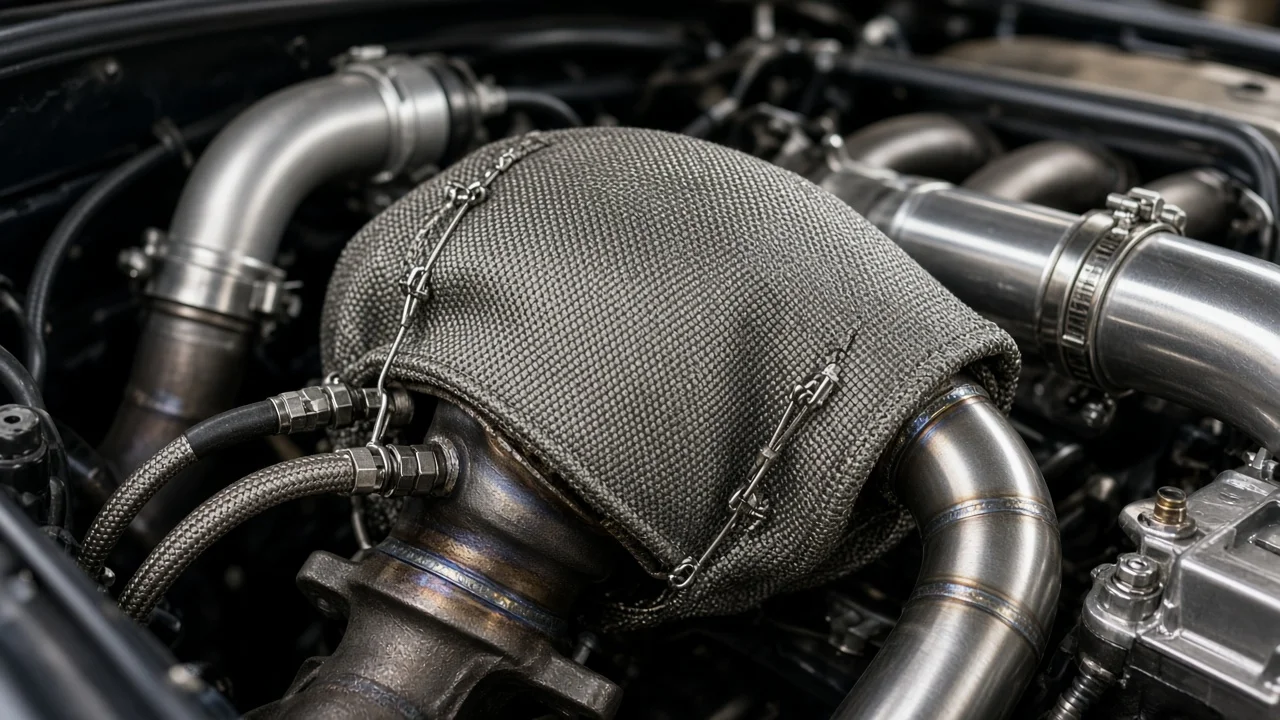
A turbo blanket is a removable insulating cover that wraps a turbocharger's turbine housing to keep exhaust heat contained. On a Cadillac CTS it can be a sensible upgrade, but only on the right car and for the right reason. This guide covers how to confirm your CTS actually has a turbocharger, which details decide fitment, what material and construction claims really tell you, and what a blanket cannot fix, so you can narrow your options before spending money.
Define the job the product must do
Start with the problem you want to solve. Owners usually consider a blanket to cut radiant heat around plastic covers, wiring and hoses near the turbo, to reduce heat soak into the intake tract after hard driving or slow traffic in hot weather, or to protect nearby parts on a tuned engine that runs hotter than stock. Keep expectations realistic: a blanket mainly holds heat inside the turbine side. It does not cool the turbocharger, its oil supply or the charge air directly, and it does not replace a properly working intercooler or cooling system.
It also helps to separate symptom reports from verified problems. A car that feels slower on a hot afternoon, or a hood that is hot to the touch, is a symptom. A verified heat issue is something you can measure or see: intake air temperature logged with a scan tool climbing and staying high under the same symptom conditions, or heat-hardened wire loom, cracked connectors or brittle hoses found during inspection. If the real cause is a boost leak, a sticking wastegate or a cooling fault, a blanket will not change the outcome. A stock daily driver and a modified car that sees track days have very different needs, so define your use before shopping.
Check compatibility
First confirm the engine configuration. In the US market, turbocharged CTS models belong to the third generation, sold for the 2014 through 2019 model years, with either a 2.0-liter turbocharged four-cylinder or, in the CTS V-Sport, a 3.6-liter twin-turbo V6. Earlier CTS generations used naturally aspirated engines, and CTS-V models use V8 engines that are either naturally aspirated or supercharged, so a turbo blanket has no job on those cars. Verify the engine with the VIN, the underhood emissions label or your service history rather than badges, which can be changed or missing on a used car.
Next, look at the interfaces. Universal blankets are generally sized to a turbine housing family, which suits aftermarket turbos, while factory turbos call for a blanket the seller explicitly lists for your engine and model year. Compare the shape against your car: openings for the wastegate actuator or its linkage, the oxygen sensor, the inlet and outlet flanges, and clearance from oil and coolant lines. The V-Sport has two turbochargers in a tight space, so you need a matched pair and should confirm whether factory heat shields must come off. If your turbo has been upgraded or replaced, size the blanket to the installed unit, not the original part.
Features that affect the choice
Most blankets combine an outer fabric, commonly fiberglass, silica or basalt fiber sold as lava fabric, with an inner insulating layer. Temperature ratings are manufacturer claims, so check whether a figure refers to continuous exposure or a short peak, because those are not comparable. Labels such as race proven, titanium or extreme duty describe marketing positioning, not measured performance on your engine. More useful evidence is concrete construction detail: the stitching material, how edges are finished, the stated thickness and photos of the product fitted to the same engine you own.
Attachment hardware matters as much as the fabric. Springs and hooks, stainless safety wire and metal straps all work if they keep tension through repeated heat cycles without rubbing nearby lines. An outer coating or layer that resists oil and fluid absorption is worth prioritizing, since insulation soaked with oil and sitting against a hot housing is a fire hazard. Be cautious with claims of faster spool or added power. Unless the seller explains the test conditions, treat them as unverified, and rely on your own before-and-after datalogs recorded under similar conditions.
Limitations and ownership costs
Plan for the installation itself. Reaching the turbo on a CTS may require removing engine covers, heat shields or underbody panels, and the engine must be fully cool before you start. If a shop does the work, labor can exceed the cost of the blanket. Manufacturers often warn that new blankets may smoke or smell briefly during the first heat cycles as binders burn off, and fasteners should be rechecked afterward because materials settle. Ask your dealer how an aftermarket heat product might affect warranty coverage on nearby components before installing.
Ongoing care is simple but easy to skip. Inspect the blanket at each oil change for fraying, loose springs, contact with lines and any sign of oil or coolant contamination, and replace it if it becomes soaked. Remember that a blanket hides the turbine housing, which makes cracks, exhaust leaks and oil seepage harder to spot, so remove it when diagnosing turbo or exhaust concerns. Some technicians are concerned that trapped heat raises housing and fastener temperatures, so follow the manufacturer specifications for your turbo and torque values for any disturbed hardware.
A correctly fitted blanket should not set diagnostic codes on its own. If boost-related codes such as P0299 for underboost appear after installation, first confirm that the blanket is not restricting the wastegate actuator or pressing on sensor wiring. A blanket also cannot repair a worn turbocharger, oil coking from missed services or an undersized intercooler.
Build a practical shortlist
Before buying, confirm each of these points for every candidate: your engine and model year are verified, the listing names your engine or your exact turbine housing, the quantity matches one or two turbochargers, cutouts clear the actuator, sensors and lines, the material and temperature rating are stated with their conditions, mounting hardware is included, the outer layer resists oil, and the seller offers a return option if the blanket does not fit.
Compare two to four options against that checklist rather than chasing a best-product label. Favor sellers who publish dimensions and photos on the same CTS engine. Record baseline intake air temperature logs and underhood observations before installation, then repeat them under similar conditions afterward. That gives you your own evidence of whether the blanket solved the problem you defined at the start.