Cracked, Burnt, Melted or Arcing Ignition Coils: What Visible Damage Means
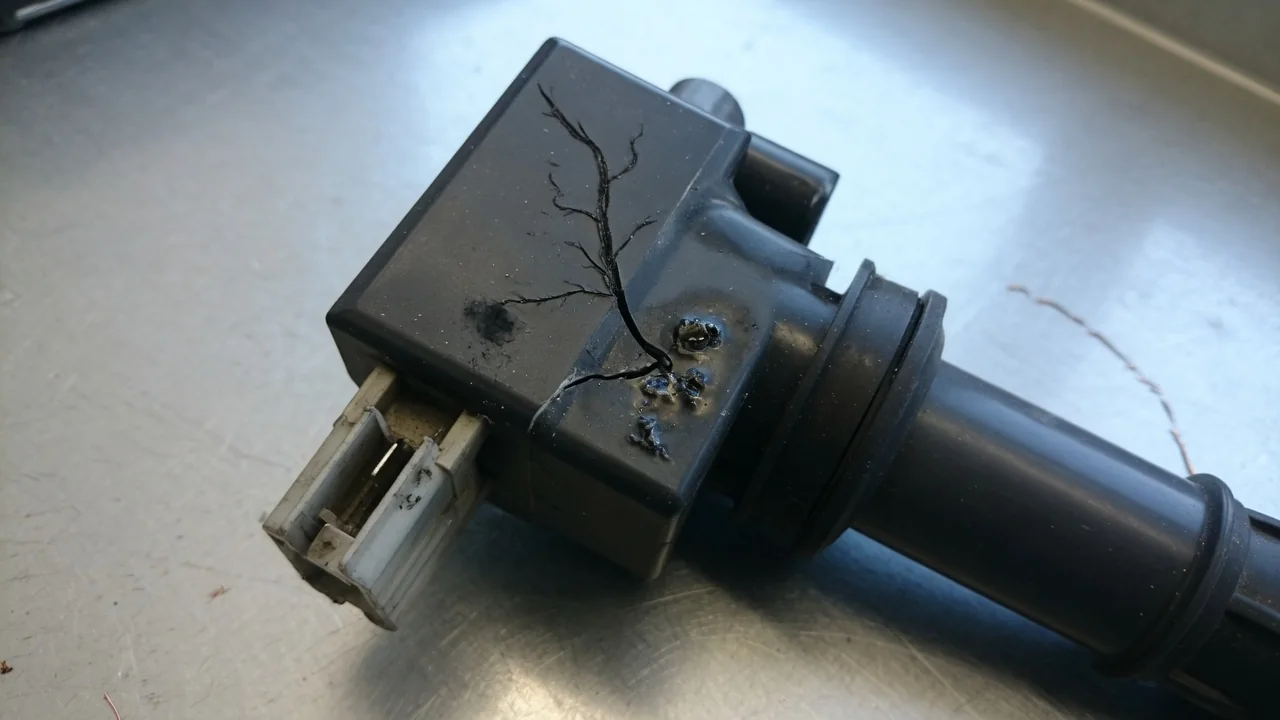
A cracked ignition coil, melted housing, or dark arc track is more than cosmetic. Visible ignition coil damage can point to insulation breakdown, moisture intrusion, or heat that still needs a cause. Coils sit in different shapes and locations depending on the ignition system, so what an ignition coil looks like on one engine may not match another. Appearance documents findings; it does not prove electrical performance or identify every internal fault.
Recognizing the Coil and Documenting Visible Damage
An ignition coil is usually a molded coil housing with a low-voltage electrical connector on one side and a high-voltage outlet or spark plug boot on the other. Coil-on-plug designs often sit in the spark plug well, while pack or remote coils may sit on a bracket and feed a cable. Shape and placement therefore depend on the ignition system, which is why what an ignition coil looks like can differ from engine to engine. Note the connector latch, boot fit, and mounting features before you treat any mark as ignition coil damage.
With the engine off and cool, look only at accessible surfaces. A cracked housing, a broken mounting tab, a dark track, terminal deposits, blistering, or a warped case are findings worth photographing and describing. Do not remove parts or touch ignition hardware while the engine is running. A coil that looks burnt or cracked on the outside still does not prove the winding failed, and a clean housing does not rule out an internal open, short, or weak spark. Appearance records condition; electrical performance needs proper testing.
Cracked Housings and Broken Coil Components
A housing crack can split the insulating barrier that keeps high voltage inside the coil. Once that barrier is open, moisture intrusion and spark leakage become more likely, especially in a spark plug well that already collects condensation or wash water. An ignition coil cracked through the case is not the same finding as a torn spark plug boot, a broken mounting tab, or a damaged electrical connector. Naming the affected area accurately helps a technician decide whether the coil, the boot, or the harness interface is the compromised part.
Heat cycling, vibration, a tight well, and installation force can all contribute to a broken ignition coil, yet a photograph cannot assign the cause. A tab that snapped during removal, a housing split from expansion, and a connector that was levered off look similar after the fact. Tape, glue, or a sealer on a cracked ignition coil does not restore insulation or a reliable high-voltage path. Compromised insulation requires replacement of the affected component rather than a field patch, because leakage can return as soon as voltage and moisture meet again.
Arc Tracks and Evidence of Spark Leakage
Carbon tracking is a narrow, often dark, path burned into an insulating surface where voltage found a shortcut. On an arcing ignition coil that path may run along the housing, down the spark plug boot, or onto the spark plug ceramic. Ignition coil arcing follows that unintended discharge route instead of jumping the plug gap as designed. An unidentified dark smear, oil stain, or heat discoloration is not proof of arcing. Treat a true track as evidence of insulation breakdown that still needs the coil, boot, and plug interface inspected together.
Spark leakage can leave unused fuel in a cylinder, which may show up as rough running, hesitation, or an engine misfire. Those same symptoms also come from worn plugs, fuel delivery problems, vacuum leaks, and control faults, so a track does not finish the diagnosis. A professional should assess the coil, boot, and spark plug as a set using vehicle-specific methods. Do not spray water on a running engine, improvise electrical tests, or try to watch a live spark. Those shortcuts can shock someone and still fail to locate the leak.
Corrosion, Moisture, and Contamination Around the Coil
A corroded ignition coil often shows white, green, or dark deposits on terminals, around the electrical connector, or at the high-voltage outlet. Ignition coil corrosion can also appear after moisture or oil sits in the spark plug well. Deposit color is not a diagnosis by itself; salt, coolant residue, dielectric grease, and oil varnish can look similar. Note whether the contamination is a light film on the housing or actual terminal corrosion that has pitted metal. Surface dirt and deteriorated contact are different problems even when they share the same well.
Corrosion raises resistance at the low-voltage pins and can interrupt coil control or power. Oil, coolant, and water on insulating surfaces also encourage tracking and heat damage by giving voltage a dirty path. Separate a wipeable film from a damaged seal, a swollen connector, or a terminal that has lost spring tension; those last findings need closer assessment. Identify and correct the moisture or fluid entry source before a replacement coil is installed. Whether terminals can be cleaned, and whether the connector is serviceable, belongs to vehicle-specific service information rather than a generic wipe.
Burn Marks, Melting, and Suspected Overheating
Scorching, blistered plastic, a softened case, and a collapsed boot are signs of heat damage. A burnt or melted ignition coil may also show a deformed electrical connector or a boot that no longer seals the well. Normal operating warmth after a drive does not diagnose overheating; coils are expected to get hot in service. Symptoms of an overheating ignition coil often overlap ordinary misfire complaints, so melted or discolored plastic is a finding, not a complete explanation of why the coil got too hot.
A burning odor, intermittent rough running, stalling, and misfires can accompany heat damage, yet they cannot name the failed part by themselves. Internal winding faults, a coil held on too long, a poor connection, exhaust or well heat, and a plug that demands extra voltage all deserve investigation. Have wiring, connections, power supply, coil control, and spark plug condition tested with vehicle-specific information. If you see smoke, melting, a persistent burning smell, severe shaking, or a flashing check-engine light, shut the engine off safely and arrange assistance rather than continuing to drive.
Replacement Decisions and Preventing Repeat Damage
A melted housing, a confirmed insulation crack, or an established carbon track makes reuse of that ignition coil unsuitable. High voltage will keep finding the same weak path, and a broken ignition coil with a fractured case cannot be made whole. Some spark plug boots or electrical connectors are separately serviceable, but that option and the correct fitment must be verified for the exact vehicle and coil design. An ignition coil broken at a mounting tab may still have an intact winding, yet the assembly is not a reliable repair if it cannot be secured and sealed.
Correct identified contamination, poor connections, loose mounting, a worn spark plug, or a control fault before a new coil goes into service, or the replacement can overheat or track the same way. Scan results and professional electrical testing support the diagnosis; a misfire code is evidence to interpret, not proof the coil failed. Manufacturer-dependent codes also need vehicle-specific confirmation. After the work, verify that the engine runs smoothly and that the conditions behind the visible damage have been resolved, including dry wells, intact seals, and a plug that is not forcing extra voltage.