Core 4x4 Adjustable Control Arms: Fitment and Selection
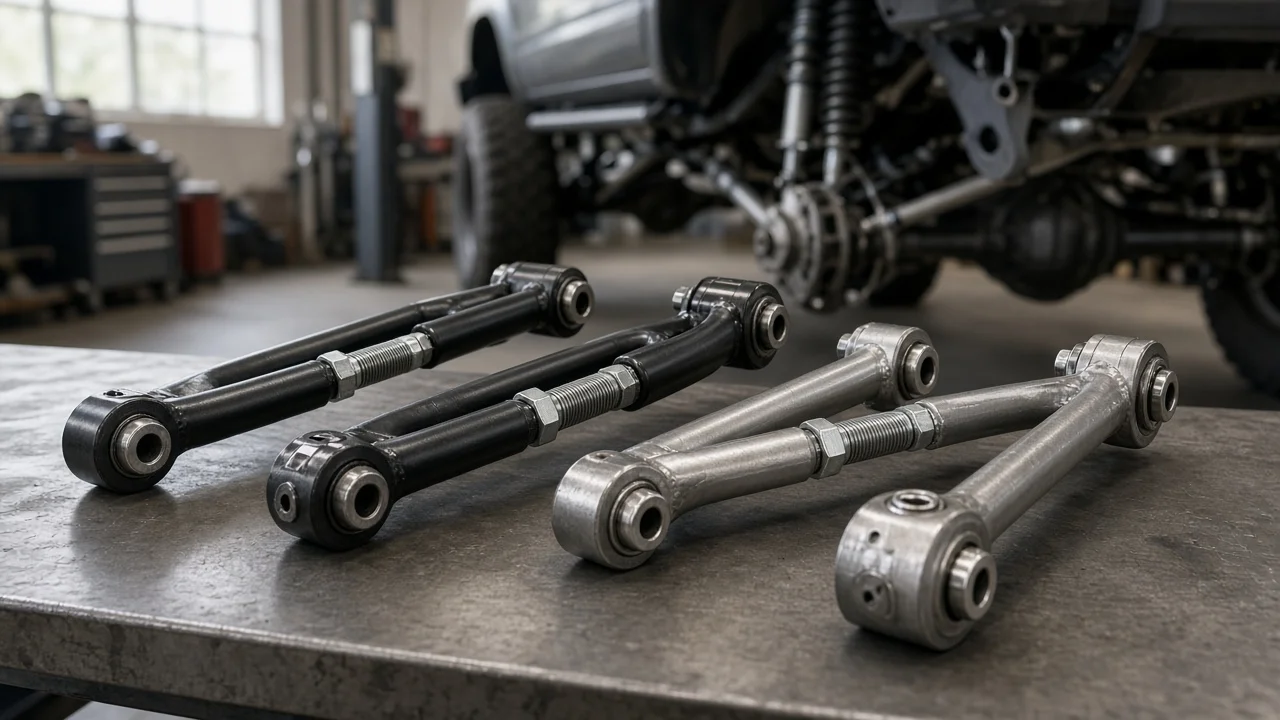
Owners usually look at adjustable control arms from Core 4x4 for one of two reasons. Some need to restore suspension geometry after a lift or leveling change. Others want to replace tired factory arms with parts that can be serviced. The right choice depends less on the brand name than on your vehicle, its ride height and how you drive it. This guide covers how to define the job, confirm fitment, compare features and plan for ownership costs before you narrow the options.
Define the job the product must do
Start with the problem, not the part. On an independent front suspension, an adjustable upper arm is usually chosen to bring caster and camber back into a usable range after a lift. Raising ride height changes the arm angles, and factory parts may run out of adjustment. It can also be chosen to make room for larger tires, or to replace a worn ball joint or bushing. On a solid-axle vehicle, the control arms are links that locate the axle. Changing their length shifts axle position and pinion angle. Each goal points to a different arm position, adjustment range and joint design.
Next, be honest about use and constraints. A daily driver that sees occasional gravel needs quiet operation and long service intervals. A trail rig needs articulation and clearance more. A loaded overland build needs durability at a sagged ride height. Also consider your budget for a professional wheel alignment and whether you have the tools and safe workspace to do the installation. If you plan to pay a shop, ask whether it is comfortable aligning vehicles with aftermarket adjustable arms.
Check compatibility
Fitment starts with exact vehicle data: year, make, model, generation, drivetrain, cab or body style and any factory suspension package. Platforms that look similar can use different knuckles, frame brackets or arm lengths between model years, so never assume a part carries over. Confirm the position you need, such as front upper, front lower, rear upper or rear lower. Check the listing against the manufacturer's own fitment information rather than a general marketplace category.
Then compare the interfaces that actually bolt together. At the frame mounting points, check bushing width, bolt diameter and whether the factory hardware uses cam bolts or eccentric washers. At the outer end, check the ball joint taper or stud style for your knuckle. Note any provision for brake line, ABS sensor or sway bar brackets that the factory arm carried. Look at the lift range the arm is designed for. An arm intended for a modest leveling kit may not correct geometry on a taller lift, and the reverse can also be true. Finally, check clearance between the arm, coilover or spring, and your intended wheel and tire package through full steering lock and suspension travel.
Features that affect the choice
The adjustment method matters. Threaded adjusters with jam nuts let you change arm length, which helps fine-tune pinion angle or axle position on solid-axle setups. Fixed-length arms with built-in offset are simpler but depend on the factory alignment cams for final settings. Ask how much range the design provides and whether you can adjust it on the vehicle or only with the arm removed.
Joint and bushing choice drives most of the ownership experience. A conventional ball joint and rubber bushings keep noise and vibration close to stock. Polyurethane bushings feel firmer and may need periodic lubrication to stay quiet. Spherical or uniball joints add articulation and precise location but can transmit more noise and tend to wear faster in mud, sand and road salt. Greasable joints can be serviced, while sealed joints are lower maintenance but get replaced when worn. Material and construction also matter, whether tubular, forged or machined, along with welding quality and finish.
Separate evidence from labels. Useful evidence includes published adjustment range, specified joint type, serviceable or replaceable components, clear installation instructions and written warranty terms. Phrases such as heavy duty or built tough describe intent, not measured performance. Treat them as marketing until the specifications back them up.
Limitations and ownership costs
Adjustable arms correct geometry within a range. They do not fix worn tie rod ends, bent components, tired shocks or driveline vibration that comes from angles outside what the arm can address. They also do not replace a wheel alignment. Plan to have the vehicle aligned on proper equipment after installation and again if you change ride height or tires, and include that cost in your budget. Settings should come from the vehicle manufacturer's specifications or a qualified alignment technician, not from guesswork.
Installation requires safe vehicle support on rated jack stands at the correct lift points. Never work under a vehicle held only by a jack. Use care around springs or coilovers that may store energy. Follow the arm manufacturer's instructions and the fastener specification for your vehicle. Some bushings must be final-tightened at ride height to avoid preload and premature wear. If you cannot confirm the correct procedure for your platform, have a qualified shop do the work.
Ongoing care includes periodic checks for joint play, boot condition, bushing wear and jam nut tightness, especially after the first few hundred miles and after hard trail use. Grease serviceable joints on the schedule the manufacturer provides. Budget over time for replacement joints, bushings and hardware, particularly with spherical joints used off road.
Build a practical shortlist
Before comparing prices, write down your vehicle details, current and planned ride height, wheel and tire size, and primary use. Then evaluate each candidate against the same checklist. Is it listed by the manufacturer for your exact vehicle and arm position? Does its lift range match your build? Do the bushing, bolt and ball joint interfaces match your mounting points and knuckle? Does it retain or replace the brackets the factory arm supported? Does the joint type suit how much noise and maintenance you will accept? Is the adjustment range documented, and can you adjust it on the vehicle? Are replacement joints and bushings sold separately? Are instructions and warranty terms clear?
Any option that leaves a fitment question unanswered should be confirmed with the seller or manufacturer before purchase. Of those that pass, choose the one whose joint design and serviceability best match your driving. Price only the full job: arms, installation, alignment and expected maintenance. That keeps the comparison grounded in what the vehicle needs rather than in product claims.