Cooling Fan Codes P0480–P0485, P0493–P0495, P0526, P0528, and P0529 Explained
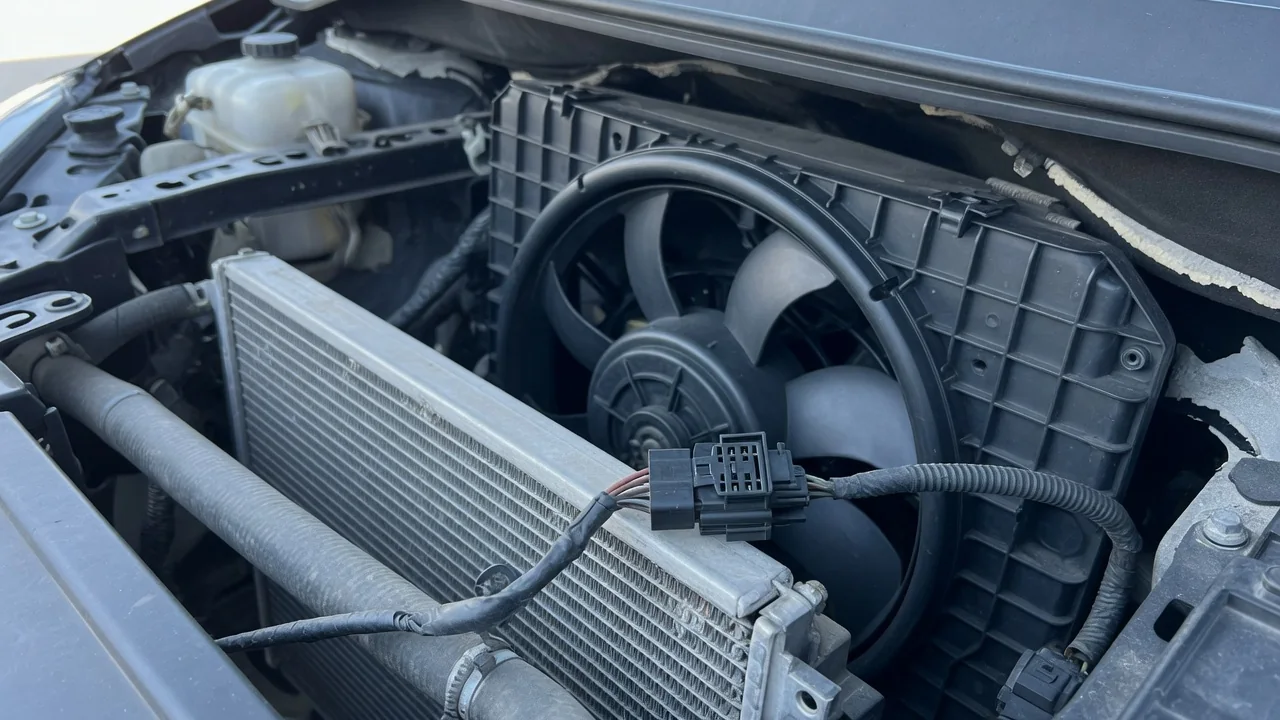
A P0480 code, or a related code from P0481 through P0485, P0493 through P0495, P0526, P0528, or P0529, means the engine control system saw something unexpected in how an electric cooling fan was commanded, powered, or reported its speed. These codes point you to a circuit that needs testing. They don't name a part to buy. Knowing what each group monitors helps you describe symptoms accurately and decide how cautiously to drive.
P0480, P0481, and P0482: Identify the Fan Control Circuit
Generic definitions usually label P0480 as cooling fan 1 control circuit, P0481 as cooling fan 2 control circuit, and P0482 as cooling fan 3 control circuit. Treat those labels only as a starting point. The exact definition and diagnostic procedure for a P0480, P0481, or P0482 code must be confirmed for the vehicle's year, make, model, and engine. The numbering also doesn't necessarily mean there are three separate fans. The wiring diagram shows whether each circuit is a relay, a speed stage, or another control path.
Some vehicles have the engine computer switch a cooling fan relay. Others send a command to a fan control module that varies motor speed. In both designs, the monitor typically watches the control side. An open driver circuit, a faulty relay coil, or a module communication problem can set the code while the fan motor itself is fine. Before clearing anything, write down every stored and pending code along with the freeze-frame data. Coolant temperature and engine speed at the moment of the fault are valuable clues.
P0483, P0484, and P0485: Rationality, Current, and Supply Faults
P0483 is commonly labeled cooling fan rationality check. It means the system commanded the fan and didn't see the expected result, such as a plausible speed response or a coolant temperature change, under monitored conditions. How that judgment is made varies, so check the vehicle-specific monitoring strategy before interpreting a P0483 code. P0484 usually indicates cooling fan circuit overcurrent. A binding motor, worn brushes, or a shorted harness can cause it, but only a measurement of fan motor current draw can show which one is responsible.
A P0485 code generally refers to the cooling fan power and ground circuit. That covers the supply from the fuse and relay, the connector terminals, and the ground path. A corroded ground can starve a healthy motor just as a weak feed can. These codes sometimes appear together, and the order matters. An overcurrent event followed by a supply fault tells a different story than the reverse. Code order, operating conditions, and supporting data all guide the next step.
P0493, P0494, and P0495: Fan Speed Outside the Expected Range
The P0493 code is usually defined as fan overspeed, P0494 as fan speed low, and P0495 as fan speed high, but confirm their exact application in service information. Some vehicles monitor an electric fan. Others monitor an electronically controlled fan clutch on an engine-driven fan. What counts as low or high speed is set by thresholds that depend on the vehicle, so a P0494 code on one platform may involve completely different hardware than the same code on another.
A speed code doesn't prove the fan motor has failed. Low speed can come from a slipping clutch, a dragging bearing, debris restricting the blades, weak control output, or an inaccurate feedback signal. High speed or overspeed, as with a P0495 code, may point to a clutch that stays locked or a command the system can't regulate. To avoid mistaking the code label for the diagnosis, compare commanded fan speed with reported speed and check the enabling conditions, such as engine temperature and load.
P0526, P0528, and P0529: Fan Speed Feedback Problems
Fan speed sensor codes are commonly labeled P0526 for fan speed sensor circuit, P0528 for no signal, and P0529 for intermittent circuit. Sensor arrangements differ between vehicles. Verify the vehicle-specific definition, the sensor's location, and its wiring before you use a P0526 or P0528 code to choose a replacement part. On some systems the sensor is a separate component. On others it's built into the fan clutch or fan assembly, which changes what can realistically be serviced.
Missing fan speed feedback doesn't by itself prove the fan stopped. A fan that visibly spins doesn't prove its feedback circuit works, either, because the computer knows only what the signal wire reports. The signal can be interrupted by chafed wiring near the shroud, a loose or corroded connector, heat-damaged insulation, or a failing integrated sensor. An intermittent P0529 often follows vibration or temperature changes. That makes testing under the conditions that set the code more useful than a quick look at idle.
Overheating, AC Changes, and When to Stop Driving
Possible symptoms include coolant temperature that climbs while idling in traffic and AC that blows warmer when the vehicle is stopped but improves once it's moving. You may also hear unusual roaring from the fan, or notice that the fan runs continuously. None of these symptoms is unique to fan faults. Low coolant, a restricted radiator, a thermostat problem, or high AC pressure from other causes can look similar. A stored code may also appear with no noticeable symptom at all.
If the temperature reading rises quickly, an overheating warning appears, or steam comes from under the hood, pull over safely and shut off the engine. Don't open the cooling system while it's hot. If overheating returns when you start driving again, arrange assistance. Whether driving is reasonable depends on how the temperature behaves and whether the fan has been confirmed to work, not on the code alone. There is no dependable safe distance or driving time with a fan fault, especially in heat or slow traffic.
Safe Observations Before Electrical Testing
Start by noting when the problem happens: at idle, with the AC on, after full warm-up, or after shutdown. Don't deliberately let the engine overheat to recreate the fault. With the vehicle off and cool, a look from a safe distance can reveal leaves or debris against the condenser, damaged wiring, or a displaced connector. Keep your hands and tools away from the blades. Electric fans can start unexpectedly, even with the ignition off.
The owner's manual usually shows where the fuse box is and which circuits each fuse protects. A blown fan fuse is meaningful evidence of excessive current or a short. It isn't a complete diagnosis, and replacing the fuse again and again only hides the cause. Don't jump the relay, power the fan directly from the battery, reach into the fan assembly, or open a hot radiator or reservoir. These shortcuts risk burns, injury, or module damage, and they rarely explain why the code set.
Professional Tests That Establish the Cause
A technician starts with vehicle-specific wiring diagrams and the published diagnostic procedure to identify whether the code involves a relay, fan control module, motor, clutch, or feedback circuit. They then use a scan tool to command the fan while watching coolant temperature, AC demand or pressure, and fan speed data. This shows whether the computer requests fan operation when it should. If the command is correct but the fan doesn't respond, attention shifts to the output side. If the request never comes, the inputs and control logic come under review.
Loaded power and ground checks reveal voltage drop that a simple continuity test can miss. Current measurement shows whether the motor is drawing more than expected. Relay or module control checks confirm the switching side, and signal testing evaluates the speed sensor output. After the repair, verification should cover the conditions that originally set the code. The engine should hold normal temperature through warm-up, the fan should respond correctly to AC requests, and a follow-up scan should show no pending or returning codes.