Converting Hydraulic to Electric Power Steering: What's Involved
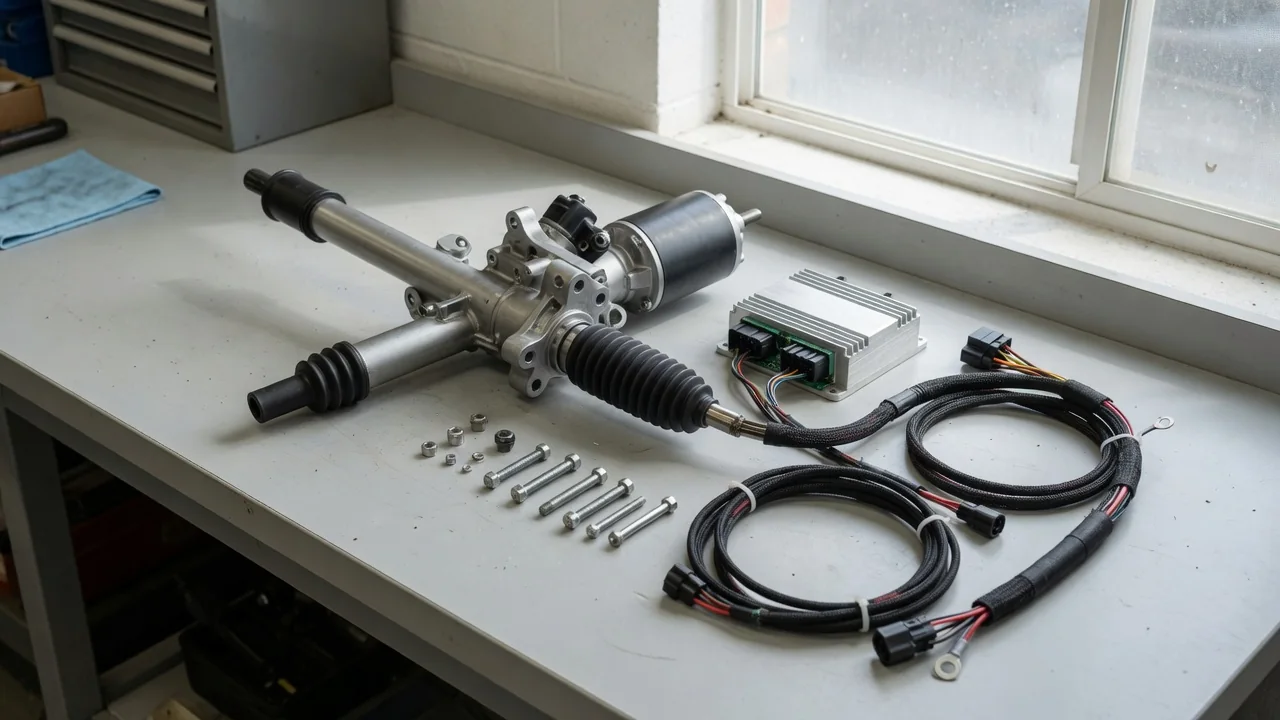
An electric power steering conversion replaces hydraulic assist with an electrically driven system so a project car can park with less effort and free engine-bay space. Feasibility depends on the existing layout, kit integration, charging system capacity, and how the mechanical steering connection is preserved. Trade-offs include altered steering feel, added electrical demand, and the need for professional mounting, calibration, and safety validation rather than a simple pump swap.
What an Electric Power Steering Conversion Changes
The conversion adds electric steering assistance to a project car while preserving a mechanical path from the steering wheel to the road wheels. The column, intermediate shaft, and rack may remain if they still fit the chassis and geometry; they may also be replaced when an electric steering rack or a column-mounted steering assist unit is a better match. What usually changes is the source of assist: a hydraulic pump, hoses, and fluid circuit give way to an electric motor, a steering torque sensor, and an assist controller.
The assist motor supplies torque when the driver turns the wheel. The torque sensor measures that driver input so the controller can scale assistance, and the mechanical steering connection must still transmit effort if electrical assist is reduced or lost. An electrically driven hydraulic pump is a different project: it keeps hydraulic assistance and does not convert the vehicle to electric power steering. Typical goals are lighter parking effort and room to delete a belt-driven pump for engine-bay work, though actual feel and packaging depend on the vehicle and the hardware chosen.
Establish Whether the Vehicle Can Support the Conversion
Before buying parts, identify the existing steering layout, any chassis modifications already made, and whether the car is meant for street driving, track use, or both. Column-mounted steering assist needs room around the column, pedal box, and firewall, while an electric steering rack needs confirmed mounting points and linkage geometry. Steering shaft clearance, u-joint angles, and travel through lock-to-lock also have to be checked so the chosen assembly does not bind, contact the pedals, or restrict collapse travel.
Hydraulic hardware cannot be treated as a simple pump disconnect. Remaining hoses, a still-pressurized rack, or a locked control valve can change effort and leak risk, so the vehicle-specific plan for isolating, removing, or replacing that circuit must be confirmed before work starts. Structural mounts, column collapse provisions, and any interfaces with airbags or other restraint systems also need qualified assessment. Those items affect crash behavior and legal compliance, and they are not solved by fitting an assist motor to an otherwise unchanged column.
Define the Kit's Contents and Integration Requirements
An electric power steering conversion kit is not a single standard package. Contents may include an assist assembly, assist controller, torque sensor or related sensors, a harness, mounting hardware, and shaft interfaces, while brackets, a matching rack, or a speed-signal interface may be sold separately. Confirm which vehicle configurations the supplier actually supports, what documentation is provided, and how installation questions will be handled. Missing drawings, unspecified shaft lengths, or a controller that arrives without calibration guidance are integration gaps, not minor omissions.
Some systems need a vehicle-speed signal, ignition status, or a calibration procedure so assistance can change with speed; others operate from torque input alone. Neither approach should be assumed. Donor column units and kits marketed as universal still have to be validated for column diameter, spline count, clocking, rack travel, and the intended steering geometry. Engineering review is what confirms that the motor, sensor, and controller will work with that chassis rather than merely physically attaching to a shaft.
Account for Electrical Demand and Steering Behavior
Steering motors can draw substantial current during parking and low-speed maneuvers, so charging system capacity has to cover that demand together with ignition, lighting, cooling fans, and any other added loads. A marginal alternator or battery may keep the engine running yet still sag voltage when the assist controller commands peak current. Circuit protection, conductor sizing, grounding, and protection from heat, moisture, and abrasion belong in a professionally specified electrical plan. Those details protect the assist circuit and the rest of the vehicle electrical system.
Assist calibration shapes how the car feels. More assistance at standstill can make parking easier, while too much assist at speed can lighten feedback and change return-to-center. The same map can also mask alignment issues that a hydraulic rack previously made obvious. For the chosen system, establish what happens at low voltage, how the controller responds to a sensor or motor fault, and how much unassisted effort remains if assistance is lost. That residual effort, not a dashboard lamp alone, determines whether the car can still be steered to a stop.
Plan Professional Installation and Safety Validation
Professional installation should confirm that mounts are secure, shaft splines and clamps are fully engaged, and the assembly has clearance through the full steering range without binding. If the rack, linkage, or mounting positions change, alignment and steering geometry need assessment so bump steer, Ackermann, and lock-to-lock travel remain appropriate for the chassis. Functional checks then follow the supplier's procedures in a controlled setting, typically with the vehicle supported or at low speed, before the conversion is used in normal traffic.
Binding, erratic assistance, unexpected steering movement, warning indicators, or loose hardware are reasons to stop and obtain professional inspection rather than continue driving. An owner can notice those symptoms, but confirming spline engagement under load, measuring current draw, and verifying sensor output require qualified equipment and expertise. A warning lamp or stored fault is evidence that the system reported a condition; it is not proof that a particular motor, sensor, or controller has failed, and manufacturer-dependent codes still need vehicle-specific confirmation.
Build a Complete Project Budget and Approval Plan
A realistic budget covers more than the assist hardware. Include the steering assembly and controls, mounting and shaft work, electrical upgrades for charging system capacity and circuit protection, professional labor, alignment, and validation time. Undocumented donor electronics, tight engine-bay or cabin packaging, and custom brackets can expand that scope quickly because each unknown often leads to another fitting, harness, or geometry change. Those extras are common on project cars and should be treated as likely, not as rare overruns.
Applicable modification rules, inspection requirements, and insurer notification obligations should be checked against the finished vehicle before money is committed. Some jurisdictions treat steering changes as a structural or safety modification that needs inspection, and an insurer may need notice even when the car remains for private use. Keep component identification, installation documentation, calibration information, and inspection records with the car. Those files help a later technician service the assist controller, diagnose a warning, or prove what was fitted if the vehicle is sold or reinspected.