Control Arm Bushing Prices: Parts Budget
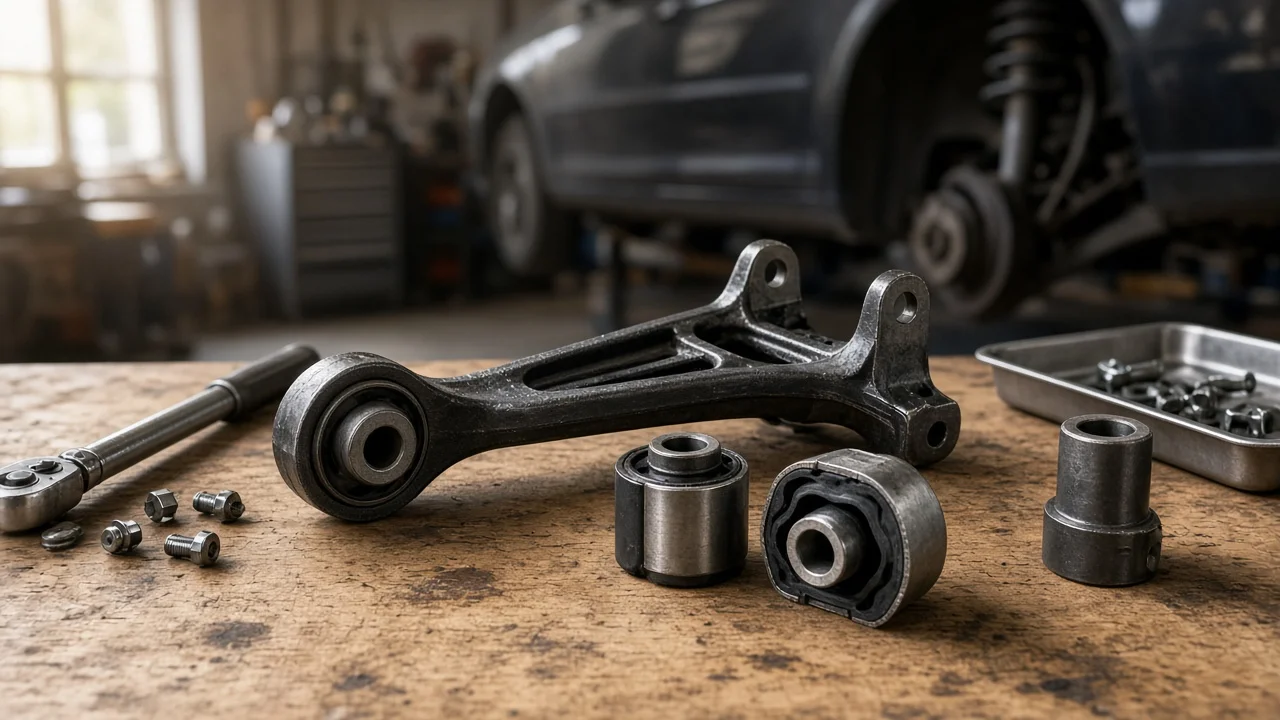
Budgeting for control arm bushings is harder than looking up a single part price. The bushing itself is a small rubber or polyurethane sleeve. The job behind it can involve pressing parts in and out of the arm, replacing the whole arm, aligning the wheels and dealing with corroded hardware. This guide explains what a realistic estimate covers, which factors move the total and how to compare quotes on equal terms.
What the estimate includes
A complete estimate for control arm bushing work should state which bushings are being replaced, on which corner, and how. Most vehicles have several bushings per arm. Many have both upper and lower arms at the front and multiple links at the rear, so the same request to replace control arm bushings can describe very different jobs. The total normally combines parts, labor, any required wheel alignment, new fasteners where the manufacturer calls for them, shop supplies and tax. A figure that covers only one of these is a partial quote, not a budget.
Be especially careful with prices quoted for the bushings alone. A loose bushing kit can look inexpensive, but installing it usually means removing the arm, pressing out the old bushing and pressing in the new one with suitable tooling. Some shops do not press bushings at all. They quote a complete control arm assembly instead, with new bushings and often a ball joint already installed. Both approaches are legitimate, but they produce different numbers, so confirm which one each estimate assumes.
What changes the cost
The vehicle itself sets the baseline. Several things vary by make, model, year and drivetrain: bushing design, the number of arms, access around the subframe and whether the bushing can be serviced separately. On some vehicles the bushing is a simple press fit. On others it is a fluid-filled or hydraulic unit, a large rear trailing arm bushing that needs a dedicated tool, or a part sold only with the arm. Front and rear positions, and upper and lower positions, are rarely priced the same.
Part choice is the next driver. Original equipment bushings, aftermarket rubber replacements and polyurethane upgrades differ in price, ride comfort, noise and service life. A complete arm adds the cost of the arm and any integrated ball joint. Labor depends on the shop's rate and on the condition of the parts. Rusted bolts, seized sleeves or fasteners that must be cut out can add time well beyond a standard labor estimate. Many manufacturers also require bushing bolts to be tightened with the suspension at normal ride height, which affects how the job is done and should not be skipped to save time.
Location matters because labor rates and parts availability differ between regions and between dealers, independent shops and mobile mechanics. The scope can also grow for good reason. A technician may find joint play in a ball joint, a cracked arm or worn bushings on the opposite side and recommend extra work. Replacing bushings in pairs across an axle is often advised so both sides behave alike, so ask whether a quote is per side or per axle.
Compare like-for-like options
To compare offers fairly, line them up on the same scope. Decide first whether you want new bushings pressed into your existing arms or complete replacement arms, then compare quotes for that approach. Complete arms usually save labor and replace the ball joint at the same time, which can make sense on a high-mileage vehicle. Pressing bushings keeps the original arm. It can suit vehicles where the arm is expensive or the ball joint can be serviced separately.
Check that each option includes the associated work it needs. New bushings or arms change suspension geometry, so a wheel alignment is normally required afterward. An estimate that leaves out the alignment will look cheaper than one that includes it. Compare the warranty on both parts and labor, the brand and grade of the parts, and whether one-time-use hardware will be replaced. A lower price that depends on a lower-grade part or a shorter warranty is not a like-for-like saving.
Read an itemized quote
An itemized quote should list each part with its brand or part number and quantity. It should show the labor hours or flat labor charge for each operation and say whether the alignment is included. Look for separate lines for new bolts, nuts or brackets, shop supplies, inspection or diagnostic fees, disposal charges and taxes. If bushings will be pressed, ask whether the shop does this in-house or sends the arms out, and whether that cost is already included.
Ask what is excluded. Common exclusions are extra labor for seized or broken fasteners, damage found at the mounting points or subframe, and additional parts discovered during the job. A clear quote states how the shop will handle these. Options include calling you for approval before any added work, charging an hourly rate for extra time, or offering a fixed price. Also confirm the warranty period, what it covers and whether it depends on the alignment being done at the same shop.
Decide the next step
Start with a confirmed diagnosis. Clunks, wandering steering and uneven tire wear can come from bushings. They can also come from ball joints, tie rods, sway bar links or worn struts. Have the suspension inspected with the vehicle properly lifted, and have the specific worn bushing identified before you buy parts. Give the shop your year, make, model, engine and drivetrain. Then ask for a written, itemized estimate for the exact bushings on the affected axle.
If you plan to do the work yourself, budget for the right press or bushing tool and for correct vehicle support on jack stands or a lift, never a jack alone. You will also need the manufacturer's fastener specification and tightening sequence, plus a professional alignment afterward. Avoid shortcuts such as burning out old bushings near fuel lines, brake lines or wiring, or improvising a press setup that can slip under load. If the tooling or access is beyond your setup, a complete arm installed by a shop may be the more reliable way to spend your budget.