Compressing Strut Springs: Tools, Hazards, and Service Options
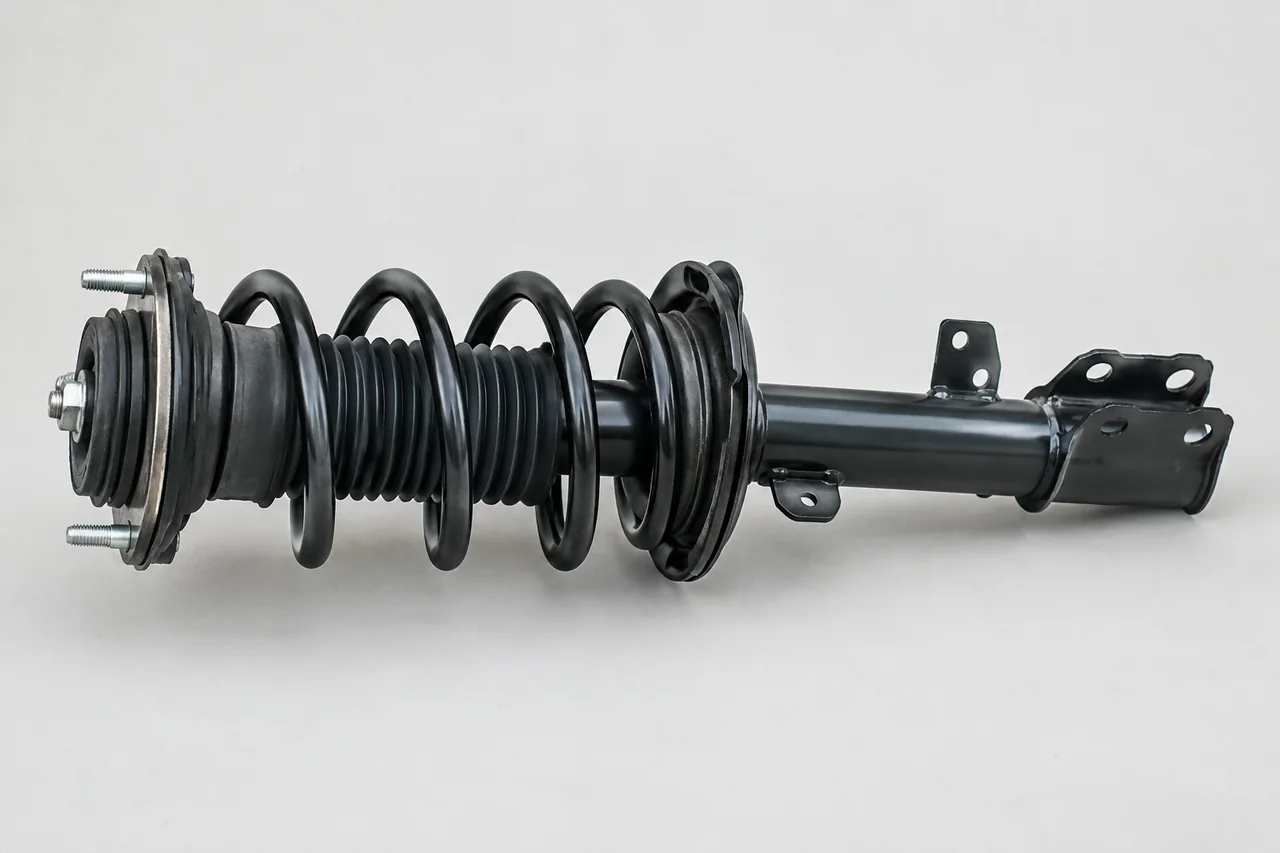
Compressing springs on struts is one of the more hazardous parts of suspension service, because a coil spring can hold considerable stored spring energy even after the strut assembly leaves the vehicle. This overview explains why compression is needed and what a spring compressor for struts actually does. It also covers how tool types differ, which warning signs mean stop, and when a complete strut assembly or a professional shop may be the better route.
Why Strut Disassembly Involves Spring Compression
On a typical MacPherson-style front suspension, the coil spring and the strut share the work but do different jobs. The spring carries the vehicle's weight and sets ride height, compressing and extending as the wheel moves over bumps. The strut's damper controls how quickly that movement happens, turning motion into heat so the body doesn't keep bouncing. Because the spring sits between a lower spring seat on the strut body and the upper strut mount, the two parts form one load-bearing unit.
That stacking creates the core problem. When the assembly is built, the spring is installed already partly compressed, so it stays under substantial preload even after the strut is unbolted and lying on a bench. The upper mount and center retaining nut keep that force contained. Compressing the spring means taking over that load with controlled restraint so a qualified technician can relieve the mount and service the damper, mount, or spring. This article stays at that level and does not describe tool placement or disassembly steps.
What a Strut Spring Compressor Does
A purpose-built struts spring compressor grips the coil spring at opposing points and draws the coils closer together, so the tool carries the spring's force instead of the upper mount. Once the tool holds that load, the mount is no longer the only thing keeping the spring contained. How well that restraint works depends on equipment rated for the job, jaws or hooks in sound condition, and correct use by someone trained to recognize whether the tool is engaged securely.
It is just as important to understand what the tool does not do. A compressor does not get rid of stored energy. It only moves that energy into the tool, so a compressed spring stays dangerous throughout the job, and attaching a tool does not make the assembly harmless. When people search for a struts compressor, they generally mean this same equipment used on the assembly's coil spring. The damper itself is not what gets compressed, so the term describes the job rather than a separate kind of tool.
Spring Compressor Tool Types and Application Limits
The equipment falls into two broad groups. Portable external spring compressors typically use a pair of threaded rods with hooks or jaws that clamp onto the outside of the coils. They are common in home garages and some shops. Bench- or wall-mounted spring compressors hold the strut in a fixed frame and apply force through cradles or plates, and they are often found in shops that do regular suspension work. Each design has its own intended uses and limits, and neither is automatically right for every strut.
Whether a tool is suitable depends on the spring and the assembly as much as on the tool. Several factors decide whether a given spring compressor tool for struts can engage securely: the spring's shape, which may be barrel, conical, or side-load, plus coil spacing, wire diameter, spring seat geometry, and the tool's rated capacity. Before use, confirm the compressor manufacturer's intended applications and any required adapters. A product sold as a coil spring compressor for struts is not suitable for every vehicle's strut assembly just because of its name.
Stored Energy Hazards and Reasons to Stop
The central hazard is uncontrolled release. If a hook slips off a coil, a threaded rod or jaw fails, or the spring itself breaks, the stored energy can release violently. It can throw tool parts, the spring, or the mount with enough force to cause severe or fatal injury. Stop and have a professional look at the parts if you see visible cracks in the spring, heavy corrosion or pitting, bent rods or plates, worn threads, or damaged tool contact surfaces. Each of these makes sudden failure more likely.
Some actions sharply raise the risk. Never use improvised restraints such as chains, straps, or clamps, and never try to reposition a compressor while it is carrying load. Loosening the center retaining nut while spring force is still on the upper strut mount can turn the mount into a projectile. Safety glasses, gloves, and face protection are sensible, but they do not make an unsuitable setup safe. If a loaded assembly looks unstable, shifts, or makes unusual noises, keep clear of it rather than trying to steady it.
Professional Spring Service and Complete Strut Assemblies
When only one component needs replacing, such as a worn damper, a noisy upper mount, or a sagging spring, a suspension shop with proper spring-handling equipment can take the assembly apart and rebuild it. This lets you keep parts that are still serviceable and replace only what inspection shows is worn. Another common option is a complete strut assembly made for your vehicle, sometimes called a loaded strut. It may arrive with the spring, spring seat, and upper mount already assembled, so the old spring assembly never has to come apart.
Complete assemblies are not available for every vehicle, and contents vary by supplier. Confirm the exact vehicle application, including trim, drivetrain, and suspension package, and check exactly which components are included. Some assemblies may leave out hardware or bearing plates that a particular vehicle uses. Even with no spring compression involved, the job still means safely supporting the vehicle, dealing with suspension fasteners that may be seized, and completing any checks the manufacturer specifies. Those tasks still call for the right expertise and proper equipment.
What to Discuss With a Suspension Repair Shop
A useful conversation with a shop starts with clear observations. Describe any clunks over bumps, a floaty or harsh change in ride, visible fluid on the strut body, uneven ride height from side to side, or unusual tire wear, and mention when each symptom appears. None of these on its own proves which part has failed. A clunk, for example, might come from a mount, a sway bar link, or another joint. Ask which components the shop's inspection shows need service and whether your current springs and mounts can be reused.
It is also reasonable to ask how the shop handles the springs. Find out what compressor or spring-handling equipment they use, how they check that it suits your vehicle's spring design, and how they confirm that any replacement assembly matches your exact vehicle. Finally, ask what follow-up is planned. On many vehicles, replacing a strut can change camber or toe, so an alignment check is often recommended. Whether one is needed, along with any other checks, depends on the vehicle and the work performed.