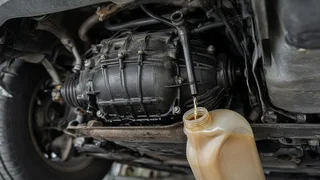
Compare NS-2 and NS-3 transmission fluid
Choosing between NS-2 and NS-3 transmission fluid often comes down to fitment, fluid specification, and how the automatic transmission behaves after service. The difference between NS-2 and NS-3 transmission fluid is not simply a viscosity upgrade; it involves friction modification, oxidation stability, and the specific transmission type each formulation was designed to protect. Using the wrong fluid can alter shift behavior, shorten fluid life, and create diagnostic codes that are misread as hard part failures. Owners comparing these fluids should first determine what the transmission requires, then consider service history and the driving conditions the vehicle actually sees before deciding which product is appropriate for a drain, fill, or fluid exchange.
Direct answer
NS-3 is generally the newer, lower-viscosity automatic transmission fluid introduced for later CVT and step-type automatic designs, while NS-2 was specified for earlier Nissan and related transmissions. The practical difference between NS-2 and NS-3 transmission fluid is compatibility: a transmission originally filled with NS-2 may not respond correctly to NS-3 unless the manufacturer has issued a service update, and a transmission designed for NS-3 should not be topped off with NS-2 based on guesswork. Fluid specification matters because the transmission control strategy, torque converter behavior, and valve body calibration are matched to the fluid's friction and flow characteristics.
A drain-and-fill does not remove all old fluid, so mixing dissimilar formulations can dilute the intended performance and make shift behavior harder to interpret. In many cases, the immediate answer is to use the fluid named in the owner's manual or on the dipstick, and to treat an NS-2 to NS-3 substitution as a model-specific decision rather than a universal upgrade. Diagnostic codes or shift quality complaints that appear shortly after a fluid change should be read as signs the replacement did not match the transmission's engineered requirements, not as automatic proof that a sensor or solenoid has failed.
Differences and suitability
The main suitability difference appears under load and temperature. NS-3's lower viscosity can reduce internal drag, which helps fuel efficiency and improves cold-weather flow in transmissions calibrated for that fluid. However, an older transmission with accumulated wear may rely on the slightly higher film strength and friction characteristics of NS-2 to keep shifts smooth and prevent flare. Shift behavior after a fluid exchange provides useful evidence: harsh engagement, delayed reverse, or a whine under light throttle can indicate that the replacement fluid is not producing the friction curve the transmission was tuned to expect.
Service history also shapes the choice. A vehicle with regular fluid changes and no shifting complaints may accept a factory-approved NS-3 substitution, while a neglected transmission with dark, oxidized fluid is usually better served by returning to the original specification and addressing any underlying condition first. Fitment is not interchangeable just because two fluids look similar or share a brand. The conditional recommendation is to use the exact fluid required for the transmission type, and only consider cross-compatibility when the vehicle manufacturer's published service information or a TSB explicitly approves the change for that specific model and production range.