Collapsible Car Trunk Organizer: Fit, Grip and Safe Securing
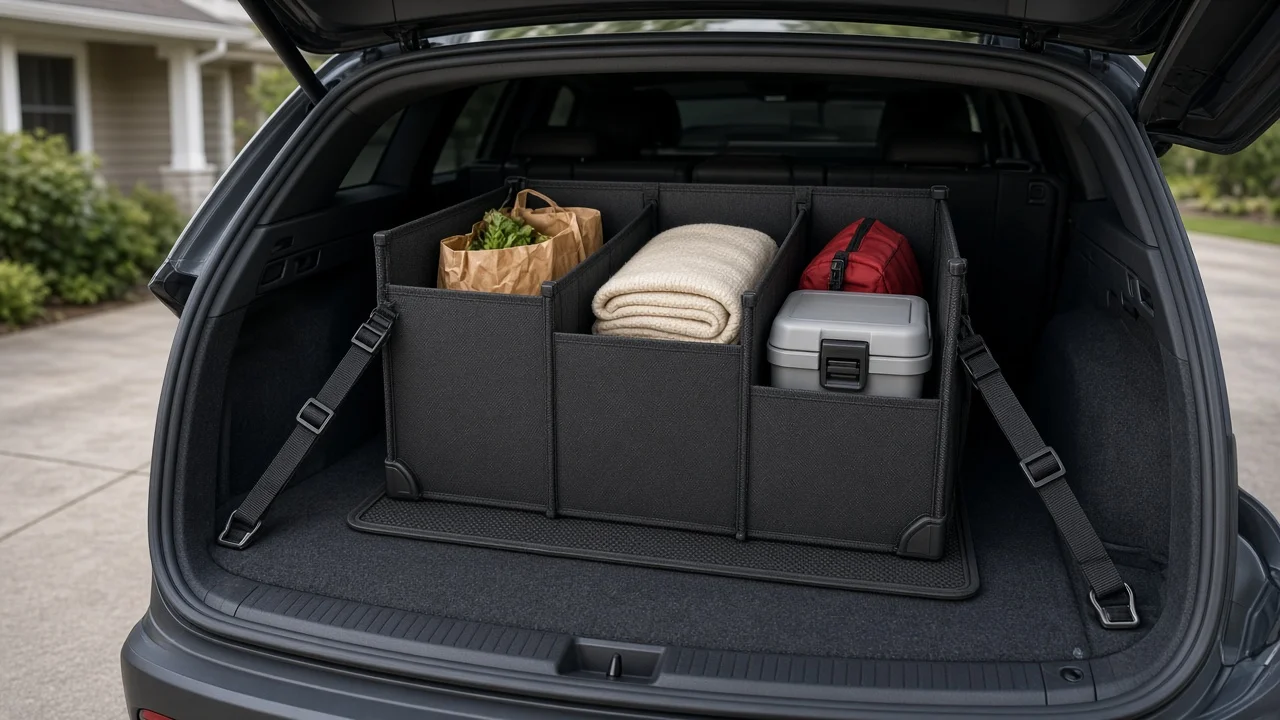
A collapsible car trunk organizer is a box made of fabric or plastic panels. It opens into divided compartments when you need it and folds flat when you need the whole cargo floor. For most owners it is a practical way to keep groceries, cleaning supplies and emergency gear from sliding around. How well a particular foldable model works depends mainly on three things: your cargo floor surface, the clearance around it and the anchoring options your vehicle provides.
Is a collapsible organizer the right choice?
For everyday loads, yes. A folding organizer keeps light and moderately heavy items grouped, upright and easy to reach. It can be collapsed or removed in seconds when you need room for luggage or bulky items. The limit is what it is designed for. A fabric organizer is a container, not a cargo restraint. Unless its maker states otherwise, it is not designed to hold its contents in place during hard braking or a collision. Dense objects such as tool kits, jump starters or full fluid jugs should sit low inside it. The organizer itself should rest against a solid surface such as the rear seatback. Anything heavy should be secured separately to the vehicle's designated tie-down points.
How a folding trunk organizer works
Most collapsible designs use stiff inserts sewn into or slid inside fabric walls. A removable base board shapes the floor of the box. The side panels hinge along seams, so the whole unit folds flat once the base is lifted out. Internal dividers usually attach with hook-and-loop strips, which lets you resize compartments. Plastic-crate versions use hinged walls that lock upright and fold inward.
Staying in place is a separate function. Organizers grip the cargo floor with hook-and-loop patches on the underside, a rubberized non-slip base, adjustable straps that clip to cargo hooks, or a combination. When a maker publishes a load rating, it generally describes how much the box can carry before it sags or tears. It does not describe how well the box resists shifting in a sudden stop. Read any such figure as a limit for the container itself, and treat capacity claims with no stated basis as approximate.
What changes the answer in your vehicle
Surface material is the first variable. Hook-and-loop patches grip carpeted cargo floors reasonably well. They do little on a rubber or hard plastic cargo liner, where you need a non-slip base or straps instead. On some carpets, repeatedly pulling hook-and-loop strips free can raise or fuzz the fibers. If the floor's appearance matters to you, a rubber-bottomed design may be the better fit.
Mounting points vary widely. Many SUVs and wagons have tie-down loops or bag hooks in the cargo area, while some sedans have few or none. Use only the points the vehicle maker designates, and check the owner's manual for what they are meant to hold. Small grocery hooks are typically intended for light bags, not a loaded organizer. Do not drill into the cargo floor or fasten anything with self-tapping screws. The floor may cover the spare tire well, wiring, fuel system components or, in some hybrids and electric vehicles, battery or high-voltage parts. Any hole also breaks through the factory paint and corrosion protection.
Clearance matters as well. Some sedans have gooseneck trunk hinges that swing down into the cargo space as the lid closes, and they can crush a tall organizer placed near them. In SUVs and hatchbacks, a tall unit can hit the cargo cover, block rear visibility or keep folding seats from lowering fully. Also think about access. An organizer sitting over the under-floor storage or spare tire cover has to come out whenever you need what is beneath it.
Choosing the best collapsible car trunk organizer for your needs
Measure before you buy. Note the usable floor width and depth, and the height available where the organizer will sit with the lid or hatch closed and any cargo cover in place. Compare those numbers with the listed exterior dimensions. Read the seller's product compatibility notes rather than assuming a size labeled for SUVs will fit your model. Then choose a base that suits your floor surface, as described above, and decide whether you need straps for anchoring.
Beyond fit, look for features that match how you use the trunk. A wipeable or water-resistant lining helps with spills from cleaners or drinks. A lid keeps items from bouncing out, and sturdy handles make a full organizer easier to lift out. Removable dividers are useful if your loads change, and some models include an insulated compartment for groceries. The best choice is usually the simplest design that fits your space and stays put on your floor, not the one with the largest advertised capacity.
Setting up and maintaining the organizer
Place the organizer against the rear seatback or a side wall so it cannot travel far. Load heavier items at the bottom and lighter ones on top. Close the trunk lid or hatch slowly the first time to confirm nothing touches the hinges, struts or cargo cover. After a short drive with a typical load, open the trunk and check whether the organizer has shifted or tipped. If it has, add straps to designated points, switch to a non-slip base or carry less in it.
Lift the organizer out from time to time to vacuum and inspect the floor beneath it. Spilled fluids or wet gear can soak into the carpet and stay trapped under the base board. That can cause odors and mildew, and if water reaches seams or the spare tire well, it can threaten the floor's corrosion protection. Keep liquids in sealed containers stored upright, and let damp carpet dry fully before putting the organizer back. Avoid adhesive mounts and never cut trim to make a unit fit, because both can permanently damage interior surfaces.
Limitations and next steps
General guidance cannot confirm how a specific organizer will fit or anchor in your vehicle. Cargo dimensions, floor construction and tie-down designs differ by make, model and trim. The owner's manual is the authoritative source for where the cargo anchor points are and what they are meant for. If the manual is unclear, or you are unsure whether something under the cargo floor could be affected, a dealer service department can confirm what is safe to attach to.
If you regularly carry heavy or dense items, a collapsible organizer alone is not the right tool for that load. For those items, look for cargo nets, barriers or tie-down systems that the vehicle maker or a reputable accessory supplier lists as compatible with your model. Keep the organizer for the lighter items it handles well.