Collapsed Brake Hose Replacement Cost: Parts and Labor
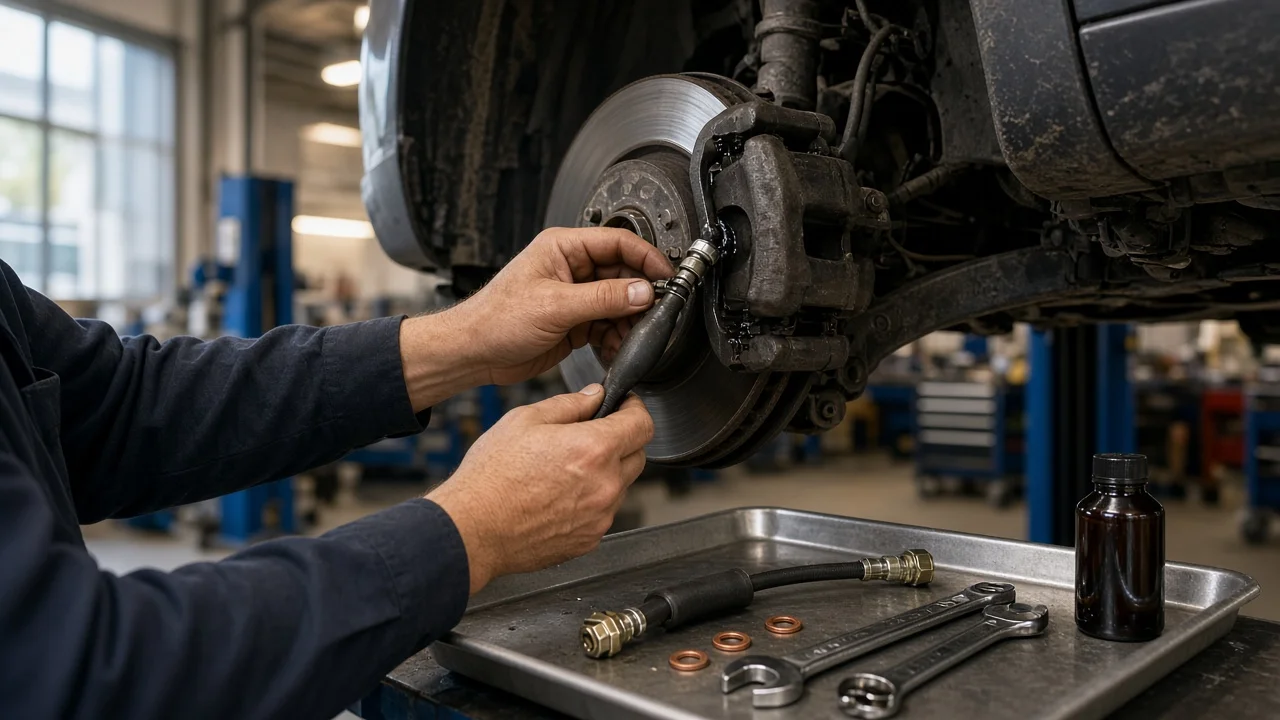
A collapsed brake hose can make a brake drag, pull the car to one side, or leave one wheel noticeably hotter than the others after a drive. The repair itself is usually straightforward, but the final bill depends on what else the fault has affected. This guide explains what a replacement estimate should cover, which factors change the price, and how to compare quotes fairly. A restricted hose changes how the brakes apply and release, so treat it as a safety repair rather than something to postpone.
What the estimate includes
A flexible brake hose links the rigid brake line on the body or frame to the caliper or wheel cylinder. When its inner lining breaks down, it can swell inward or act like a one-way valve. Pressure still reaches the caliper, but it releases slowly, so the caliper stays partly applied. A complete replacement estimate normally covers the new hose, new sealing washers where a banjo fitting is used, any retaining clips or brackets that cannot be reused, fresh brake fluid, bleeding of the affected circuit, and a road test to confirm the drag is gone.
Be careful with partial quotes. A parts-only price for a hose tells you little about the total, and a labor figure that leaves out bleeding or fluid does not describe finished work. Some estimates cover one hose, while others cover the pair on the same axle. Ask whether the figure covers the hose alone or the full job. The full job should include an inspection of the caliper, brake pads, and brake rotors on that wheel, because a dragging brake often damages them.
Confirm the hose is the cause
The symptoms of a collapsed hose overlap with those of a sticking caliper piston, seized slide pins, and a binding parking brake mechanism. A technician usually confirms the diagnosis by checking whether the wheel spins freely after the pedal is released. If it does not, the technician opens the bleeder to see whether releasing trapped pressure frees the wheel. If it does, the restriction is upstream of the caliper, which points to the hose. This check is worth paying for. Replacing a hose when the caliper is the real fault adds cost without curing the drag, and blaming the caliper when the hose has failed leaves the faulty part in place.
What changes the cost
The vehicle itself is the first factor. Hose length, end fittings, and routing vary by model, trim, drivetrain, and brake package, so correct vehicle fitment matters more than a generic price. Front hoses are often easier to reach than rear ones, although some rear axles use a single hose feeding a junction block with separate lines. Vehicles with electronic stability control or certain anti-lock modulators may need a scan tool procedure for a complete bleed, which can add labor time.
The condition of the brakes is the second factor. On older vehicles, or those driven on salted roads, the fitting where the hose meets the steel line can seize, and forcing it may twist the hard line. When that happens, that section of line must be repaired or replaced as well, which raises both parts and labor. Heat from a dragging brake can also glaze the friction material on the pads, overheat the rotor, or damage the caliper piston seal. If pads or rotors are below their wear limits or visibly heat-damaged, they should appear in the estimate rather than as a surprise later.
The third factor is where the work is done and how much of it. Labor rates differ between dealers, independent shops, and mobile mechanics, and they also vary by region. Replacing one hose, both hoses on an axle, or every hose on a high-mileage vehicle are three different jobs. Doing related work in the same visit often avoids paying for overlapping labor, such as bleeding the system once instead of twice.
Compare like-for-like options
Replacement hoses usually fall into three groups: original equipment, aftermarket hoses built to the original specification, and braided stainless hoses with an inner liner. Any hose used on a road vehicle should be marked as compliant with the applicable federal brake hose standard. It should also match the original length and fittings. A braided hose may give a firmer pedal feel, but it does not fix other faults, and a poorly fitted one can rub against suspension parts. Compare prices only between hoses for the same position with similar warranty terms.
Repairing a collapsed hose is not a real option. The internal lining cannot be restored, and clamping, sealing, or reusing a deteriorated hose is not a safe shortcut. The real choice is between replacing only the failed hose and also replacing others of the same age. If one hose has collapsed, the matching hose on the other side has been exposed to the same heat, fluid, and years of use, so many technicians recommend replacing the pair. Base that decision on the inspection findings rather than accepting or refusing it automatically.
If you are weighing a shop quote against doing the job yourself, count the full scope. That means the correct parts, new washers, the brake fluid type specified for the vehicle, line wrenches, a reliable bleeding method, and proper disposal of old fluid. A mistake in the brake hydraulics can leave the vehicle without adequate braking. Do this job yourself only if you have the tools and experience to bleed and test the system properly.
Read an itemized quote
A useful quote separates parts from labor and lists each part by position, such as left front or right rear. It should name the hose brand or source, the number of washers or clips, the type and amount of brake fluid, and whether the labor covers bleeding a single wheel or flushing the whole system. A flush replaces all of the old fluid and costs more than a bleed. If the shop recommends one, it should appear as its own line.
Look for charges that are easy to miss: diagnostic or inspection fees, shop supplies, fluid disposal, taxes, and scan tool time. Ask how the shop handles a seized fitting or a damaged hard line, because many estimates exclude that work and add it once the job is underway. Check the parts warranty and the labor warranty separately. Also confirm whether the quote includes replacing the caliper, pads, or rotors, or only inspecting them. Requiring written approval before any additional work protects you from an unexpected total.
Decide the next step
Start by having the exact vehicle details ready: year, make, model, trim, engine, drivetrain, and brake package, plus which wheel is dragging or running hot. Ask for a diagnosis that confirms the hose is at fault rather than the caliper or slide pins. Then request itemized quotes for the same scope, including bleeding, fluid, and inspection of the pads and rotors on the affected wheel. Before work begins, find out how seized fittings, hard line damage, and heat-damaged parts will be handled and priced.
Avoid shortcuts that save money briefly but leave the fault in place. These include driving on a dragging brake, opening the bleeder to relieve pressure as a fix, and fitting a hose that is not correct for the position. Follow the service information for your vehicle, including torque values and the bleeding sequence. If the pedal feels soft, the brake warning light is on, or the car pulls strongly, stop using the vehicle and have it professionally serviced.