Clutch Safety Switch in Manual Transmission
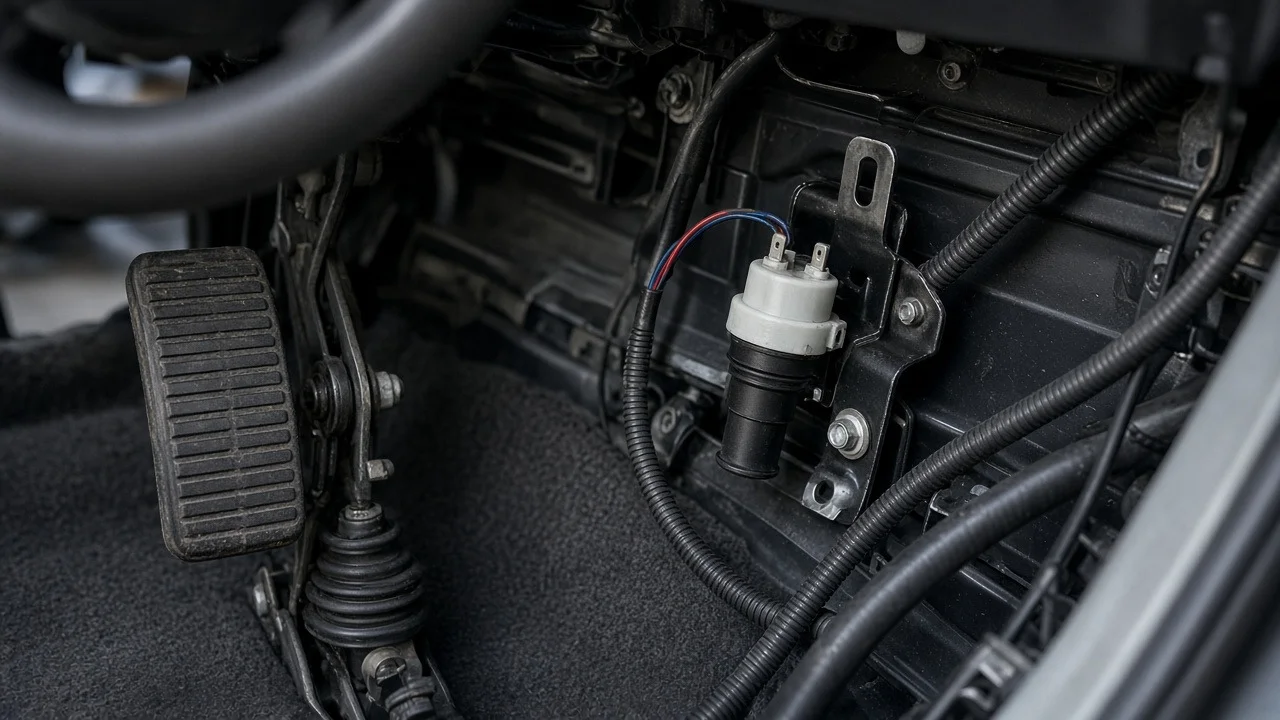
A clutch safety switch in a manual transmission is a driver-input interlock that helps prevent the engine from starting unless the clutch pedal is fully depressed. This small switch sits near the pedal assembly, where it reads clutch position and interrupts or completes the starter control circuit. For owners diagnosing a no-crank condition, understanding this switch clarifies the difference between a dead battery, a failed starter, and a simple pedal-position signal fault. It also explains why some vehicles start only after the pedal is pressed firmly against the floor.
Essential answer
The clutch safety switch is a normally open or normally closed electrical contact that changes state when the driver pushes the clutch pedal. On many manual-shift vehicles, its job is to block starter operation until the clutch is disengaged. This reduces the chance of the vehicle lurching if the transmission is left in gear during startup. The switch is part of the starting circuit rather than the transmission itself, so a fault typically produces a no-crank symptom instead of a grinding or shifting complaint.
When the switch fails, the starter may stay silent with the key in the start position, even though the battery and starter are otherwise healthy. The same behavior can appear when the pedal stop is worn, the switch is out of adjustment, or a floor mat prevents full pedal travel. Because the part is an input to the starting system, it should be tested as a signal problem before replacing a starter or battery. Manufacturer-specific wiring and diagnostic codes mean a vehicle-level wiring diagram is the best way to confirm whether the switch is open or closed at rest.