Club Car Golf Cart Starter Solenoid
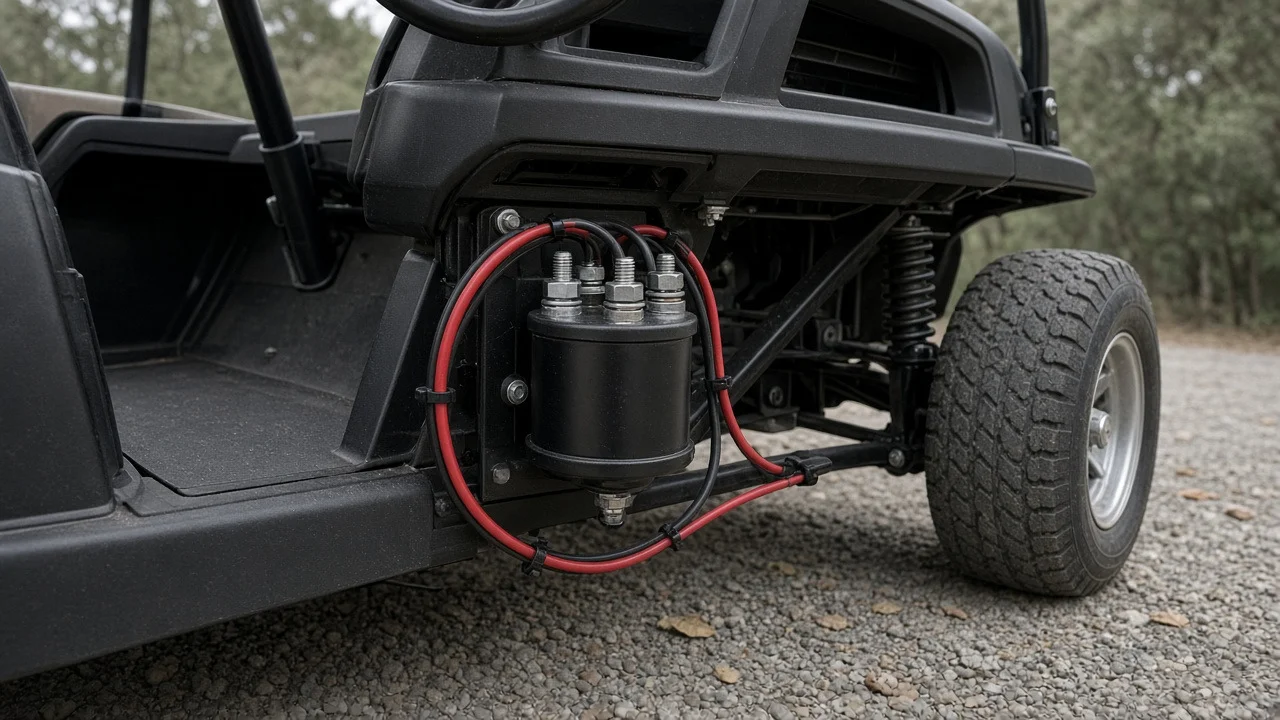
When a Club Car golf cart refuses to crank, the starter solenoid is commonly the component holding back the starting sequence. This small but powerful relay sits between the battery, the ignition switch, and the starter motor on gas-powered models. The Club Car DS and other gas carts depend on that solenoid to close a high-current circuit at the correct moment. Understanding what the part does, why it fails, and how it fits into the starter circuit helps separate a true solenoid issue from a weak battery state of charge, a faulty ignition switch, or a fuel delivery problem.
Essential answer
A Club Car starter solenoid is an electromagnetic relay that converts a low-current signal from the ignition switch into a high-current connection for the starter motor. On a gas golf cart such as a Club Car DS, the solenoid is wired into the starter circuit so the engine can spin without routing full battery amperage through the key switch. When the pedal or ignition switch is engaged, the solenoid’s internal contacts close, allowing cranking speed to build. If those contacts are worn, corroded, or if the activation coil is open, the starter may only click or remain silent despite a healthy battery.
Diagnostic checks for a suspected Club Car gas starter solenoid usually begin with confirming voltage at the small activation terminal during a start attempt. If voltage arrives but the contact side does not close, the solenoid itself is likely at fault. If voltage does not arrive, the problem may be upstream in the ignition switch, microswitch, or related wiring. A slow crank or intermittent engagement can also reflect low battery state of charge or poor cable connections rather than a failed relay. The solenoid is therefore an important electrical gateway, but not the only cause of a no-crank symptom.