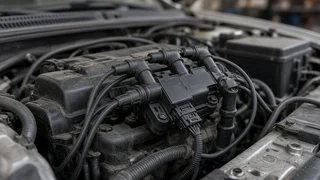
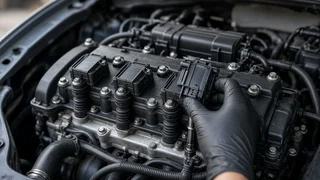
Classic car ignition coil

A classic car ignition coil is the induction device that converts low battery voltage into the brief high-voltage pulse needed to jump each spark plug gap. When an older vehicle cranks but will not fire, the coil is often suspected, yet the starter circuit, battery state of charge, ignition switch, cranking speed, and fuel delivery can produce similar symptoms. Understanding how this component works helps you perform meaningful diagnostic checks before replacing an expensive or hard-to-find part.
Essential answer
A classic car ignition coil is essentially a transformer that steps up the primary circuit voltage, typically around six or twelve volts, into the thousands of volts required to initiate combustion. Inside the metal canister, two separate windings share a laminated iron core. Current flows through the primary winding when the points close, building a magnetic field. When the points open, the field collapses and induces a much higher voltage in the secondary winding, which travels through the distributor to the correct spark plug.
The coil in a traditional points-and-condenser system works differently than modern coil-on-plug designs, so a weak spark or no-start condition must be interpreted carefully. A coil can test within basic resistance ranges when cold but still fail under heat or load. Because the ignition switch, ballast resistor, condenser, and low cranking speed all influence coil output, the component should be evaluated as part of the complete ignition path rather than being assumed defective based on a single failed start.