Chrysler, Dodge and Jeep Power Steering Fluid Specifications
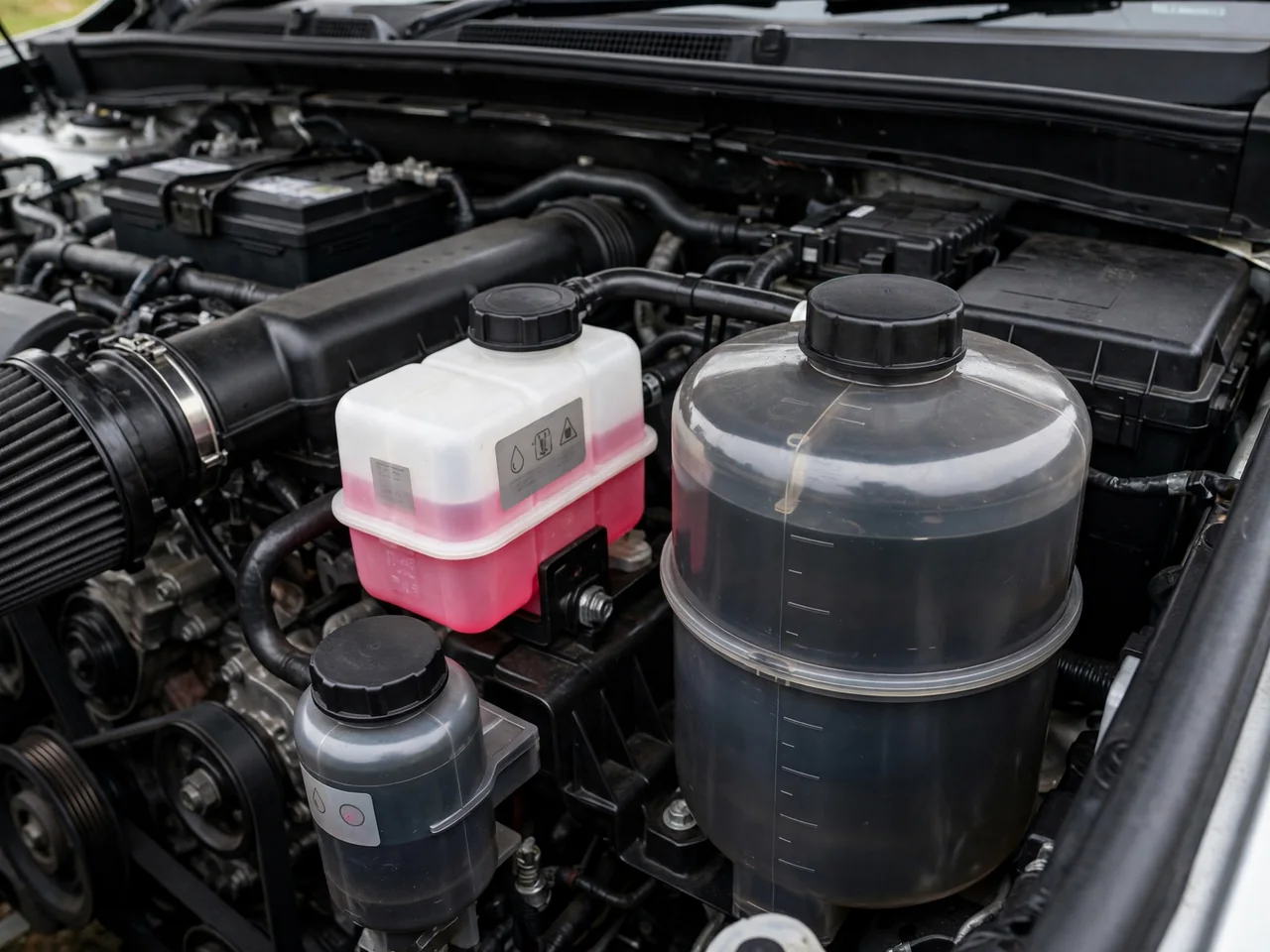
Chrysler, Dodge, and Jeep vehicles do not share a single power steering fluid specification. Some hydraulic and electrohydraulic systems call for ATF+4, while others require a dedicated Mopar power steering fluid that meets a different material standard. Electric power steering does not require hydraulic steering fluid. The correct choice depends on the vehicle’s year, model, engine, and steering hardware, as documented in the owner’s manual and on the reservoir label.
Identify the Fluid Specification for Your Exact Vehicle
The power steering fluid specification for a Chrysler, Dodge, or Jeep is tied to that vehicle’s model year, model name, engine, and steering system type. Hydraulic power steering and electrohydraulic power steering both circulate fluid, while fully electric power steering does not. Those differences change which documentation applies. Start with the owner’s manual fluid charts and the wording on the reservoir label. If a cap, bottle, or service sticker is missing, faded, or contradicts the manual, use vehicle-specific service information rather than guessing from brand family or a similar year.
Mopar branding on a bottle does not by itself prove fluid compatibility. A product is suitable only when its stated specification matches the requirement listed for that exact vehicle. Some applications need ATF+4; others call for a dedicated steering fluid. Confirm the steering hardware before shopping. If there is no hydraulic reservoir, pump, or fluid circuit, electric power steering is in use and hydraulic steering fluid should not be added. Treat any conflict between a parts-counter suggestion and the published specification as unresolved until service information for that VIN or configuration confirms it.
When ATF+4 Is Specified for Power Steering
ATF+4 can serve as power steering fluid in applications that explicitly require it, even though the product is named as automatic transmission fluid. That dual use is a documentation decision, not a general rule for every Chrysler, Dodge, or Jeep. The material specification associated with ATF+4 is MS-9602. Before filling a hydraulic or electrohydraulic circuit, confirm that the vehicle’s steering-fluid requirement actually lists ATF+4 or MS-9602. A Mopar ATF+4 product is appropriate only in those confirmed applications.
Informal references to Mopar fluid containing the number 4 are not enough to identify the correct product. Confirm the full ATF+4 designation on the container and in the vehicle requirement; shortened wording such as ATF 4 or Mopar 4 power steering fluid is incomplete. Fluid color and a generic transmission-fluid label also cannot establish approval for a steering system. Dyes vary, and many automatic transmission fluids are not MS-9602 fluids. Match the specification printed in the owner’s manual or service information to the product’s technical data.
Finding Fluid That Meets MS-11655
MS-11655 is a Chrysler material specification used for certain dedicated power steering fluids. It is not interchangeable with ATF+4 or MS-9602 unless the vehicle documentation lists both, which should not be assumed. Confirm MS-11655 in the owner’s manual or service information first, then on the fluid product’s technical information. The same specification may appear as MS-11655 or MS 11655; those notations identify one material standard, not two different fluids. Match that numbered requirement rather than a marketing name on the bottle.
Suitability requires an explicit statement of compliance with the required specification. A broad description such as universal power steering fluid, or a Mopar power steering fluid label without the matching standard, does not establish that the product meets MS-11655. Mopar-branded steering fluids are not interchangeable with one another on brand identity alone. A shared fluid color likewise does not prove compatibility, because dye is not a specification. If the technical sheet does not name MS-11655, treat the product as unconfirmed for that application.
Confirming Power Steering Fluid for a Jeep
The Jeep name alone cannot identify the required fluid. Different Jeep models and model years have used hydraulic, electrohydraulic, and electric steering, so power steering fluid for a Jeep depends on the vehicle’s year, model, engine, and steering configuration. Start with the owner’s manual fluid specification for that exact combination, then read the reservoir label if a hydraulic reservoir is present. Any Jeep power steering fluid recommendation that omits year and steering type is incomplete and should not be treated as confirmed fitment.
When a named Jeep application is discussed, include the verified specification and the applicable configuration. If that documentation is missing, faded, aftermarket, or conflicting, leave the fitment unconfirmed. Do not substitute a Mopar power steering fluid choice from a different Jeep, Dodge, or Chrysler simply because the bottles look similar. A VIN-based check through a qualified parts or service department can resolve ambiguous manuals, swapped reservoirs, or unclear steering hardware. Ask that department to cite the published fluid specification for that vehicle rather than a generic Jeep-compatible claim.
Checking a Wrangler’s Steering System and Fluid Requirement
Jeep Wrangler power steering fluid cannot be named from the Wrangler badge alone. The model year and steering configuration have to be established first, because Wrangler equipment has included fluid-based systems and electrically assisted designs. Electrically assisted equipment can still include a hydraulic circuit, so the presence of a motor, wiring, or an electrohydraulic pump does not by itself prove whether fluid is needed. Look for a reservoir, fluid circuit, and the owner’s manual entry for that year. Until those items are identified, any Wrangler-wide fluid claim remains unverified.
Tie any Wrangler-specific fluid recommendation to the applicable owner’s manual or service specification for that year and steering system. Do not extend one generation’s ATF+4 or MS-11655 requirement across all Wranglers. If the vehicle has been modified with a different pump, gearbox, ram, or aftermarket hydraulic assist, the factory chart may no longer apply. In that case, use documentation for the installed steering equipment and obtain professional confirmation when the requirement is unclear. Unresolved Wrangler fitment should be stated as unconfirmed rather than filled from a convenient Mopar bottle.
Safe Checks When Fluid Is Low, Noisy or Uncertain
Check reservoir level only under the conditions stated in the owner’s manual, using the correct hot or cold markings and keeping clear of moving belts, fans, and hot surfaces. A low reading, foaming, steering noise, or visible wetness around hoses, the pump, or the gearbox can justify inspection, but those signs do not identify a failed part by themselves. Air in the fluid, a small seep, or an inaccurate dip can produce similar complaints. Note what you see, including whether the reservoir label still identifies the required fluid, then compare that to the published specification.
Do not add an unverified fluid, and do not try to correct an unknown mixture by topping off with ATF+4 or another Mopar power steering fluid. Mixing unmatched products can leave fluid compatibility unresolved and may require a professional assessment of any needed fluid service. If steering effort suddenly becomes heavy, a substantial leak appears, or assist is lost, stop safely and arrange assistance rather than continuing to drive. Those conditions affect vehicle control. Have the system inspected, the correct specification confirmed, and any service performed with the documented fluid for that Chrysler, Dodge, or Jeep.