Chrysler 300M Transmission Limp Mode Diagnosis
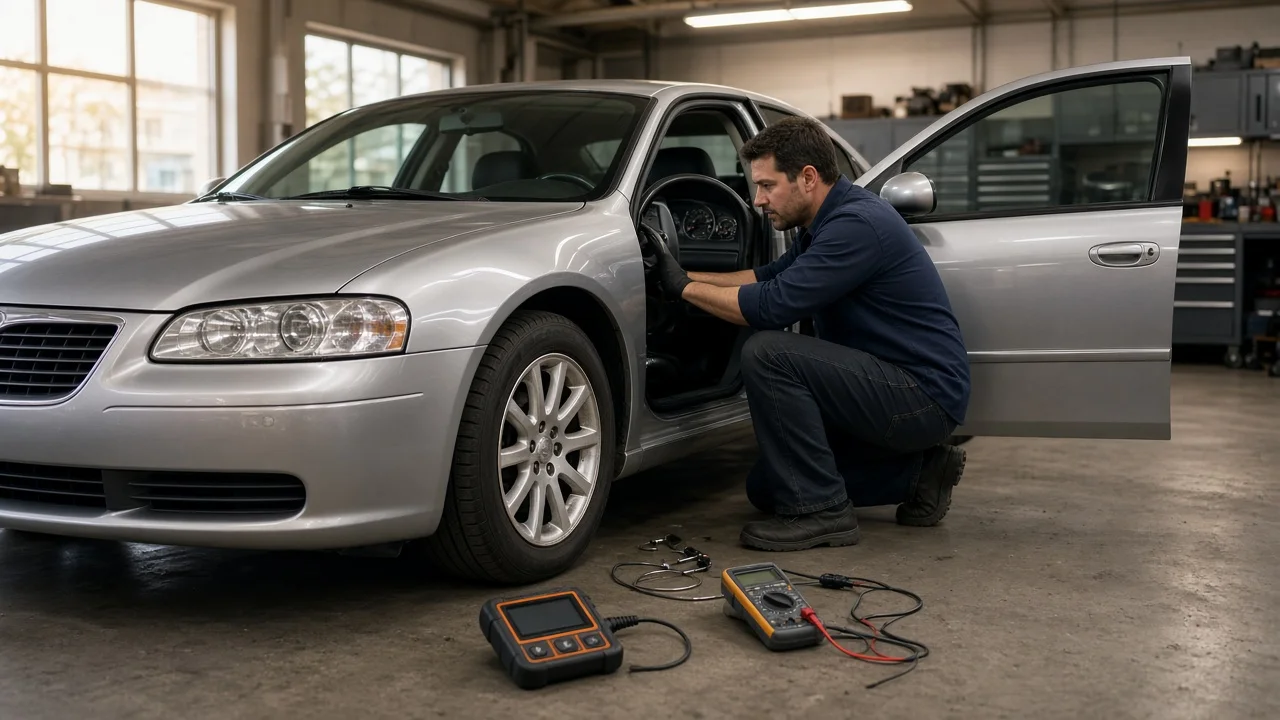
When a Chrysler 300M suddenly holds one gear, revs high on the highway and refuses to upshift, the transmission computer has usually put the car into limp mode. Limp mode is a protective strategy. It tells you the controller detected a fault, but it does not tell you which part failed. This guide covers how to record the symptoms, separate the likely causes, run checks in a sensible order and plan the next step without replacing parts on a guess.
Establish the symptoms
Start by confirming which transmission you are working with. The 300M uses an electronically controlled four-speed automatic transaxle, commonly identified as the 42LE, paired with the AutoStick manual-shift feature. Confirm the exact unit and model year from the vehicle's build data or the identification tag on the transaxle. Diagnostic procedures, fluid specification and part fitment all depend on that configuration, so the details matter before you look up codes or order anything.
On Chrysler electronic transaxles of this era, limp mode typically locks forward driving in second gear while keeping reverse available. The car feels sluggish from a stop, engine speed climbs quickly at road speed, and AutoStick inputs do nothing. Write down when the problem appears: on a cold start or only when fully warm, under hard acceleration, over bumps, in wet weather, or soon after a battery, fluid or other service. Note whether a warning light came on and whether shifts were harsh, delayed or slipping beforehand. Also note whether shutting the engine off and restarting brings back normal shift behavior for a while. That pattern is often more useful than the limp mode symptom itself.
Distinguish plausible causes
Fluid problems come first because they are common and cheap to check. A low level or the wrong fluid can let clutches slip, and the controller reads slip as a speed or ratio error. A low reading, fluid that is dark or smells burnt, visible leaks, or a recent top-off with a fluid of unknown type all support this explanation. Correct level and clean, properly specified fluid weaken it, though they do not rule out other faults.
Electrical faults are the next group. They include the input and output speed sensors, the solenoid and pressure switch assembly mounted on the transaxle, connectors and wiring, the transmission control relay and supply circuit, and low battery or charging voltage. An intermittent fault that clears after a restart, appears over bumps or in rain, or comes with a circuit-type diagnostic code points toward this group. A fault that happens consistently under load with no circuit codes points away from it.
Internal mechanical wear is the most expensive possibility. Worn clutch packs, leaking seals or valve body problems tend to show up as flare between shifts, slipping under load, debris in the fluid and gear ratio codes. A ratio code alone is not proof of internal damage, because an erratic speed sensor signal can produce the same reading.
Checks in a useful order
Owners can safely do several observations without special tools. Clean and tighten the battery terminals and note whether the battery has been weak or slow to crank. Look under the car for fresh fluid on the transaxle, lines or ground. Check the fluid level using the procedure in the owner's manual, since temperature and engine state affect the reading, and note the color and smell. Chrysler's ATF+4 specification superseded the ATF+3 originally called for on these cars. Do not top off with a generic fluid unless it is confirmed to meet that specification. With the engine off, look at the visible connectors on the transaxle for oil contamination, corrosion or damaged locks.
Next, read diagnostic codes from the transmission module, not only the engine module. A basic reader may show only a general transmission fault code, while an enhanced scan tool can display the specific stored and pending codes. Record the codes and any freeze-frame data before clearing anything. A capable scan tool also shows input and output speed, commanded versus actual gear, solenoid states and clutch volume index values, which help separate signal faults from wear.
Some tests belong with a qualified technician who has wiring diagrams, specifications and the right equipment. These include resistance and voltage tests of sensor and solenoid circuits, line pressure testing with gauges, and any work inside the transaxle. After a solenoid assembly or control module is replaced, the transmission usually needs a quick learn procedure performed with a scan tool so the controller can adapt shift timing.
Interpret the findings
If the fluid was low, refilling with the correct fluid may restore normal shifting, but you still need to find the leak. If slipping or ratio codes appeared before the refill, clutch damage may already have occurred, so monitor shift quality closely. A circuit code for a speed sensor, such as those in the P0715 or P0720 family, or for a solenoid circuit identifies a faulty circuit rather than a specific component. The sensor, connector, wiring or module could each be responsible, and testing should confirm which before you buy parts. Gear ratio codes in the P0731 to P0734 range mean the controller saw the wrong speed relationship in a given gear. That can come from real slip or from a bad speed signal, and live data plus clutch volume index readings help tell them apart.
Review the service history as well: previous rebuilds, how often the fluid was changed, which fluid was used and any recent electrical work. Clearing codes or disconnecting the battery may temporarily restore normal shifting, but that only resets the controller. A repair is confirmed only when the original conditions you recorded no longer trigger limp mode or set the code.
Urgency and next action
Limp mode is meant to get you off the road at modest speed, not to serve as a way of driving. Stop driving and arrange a tow if the car will not engage drive or reverse, slips even in the held gear with engine speed rising and no acceleration, smells hot or burnt, leaks fluid actively, or makes grinding or banging noises. Extended highway driving in second gear raises engine speed and fluid temperature and can turn a minor fault into internal damage. No particular distance can be considered safe until the cause is known.
Before visiting a shop, gather the model year, engine, transaxle identification, the full list of transmission codes with freeze-frame data, your symptom log, the fluid level and condition you observed, and the service history, including fluid type. Repair options range from a connector or wiring repair to sensor or solenoid assembly replacement, up to a rebuilt or replacement transaxle. Ask the shop which test confirmed the failed component and whether a quick learn will be performed afterward.