Choosing Wheel Bearing Grease for Cars, Trucks, RVs, and Trailers
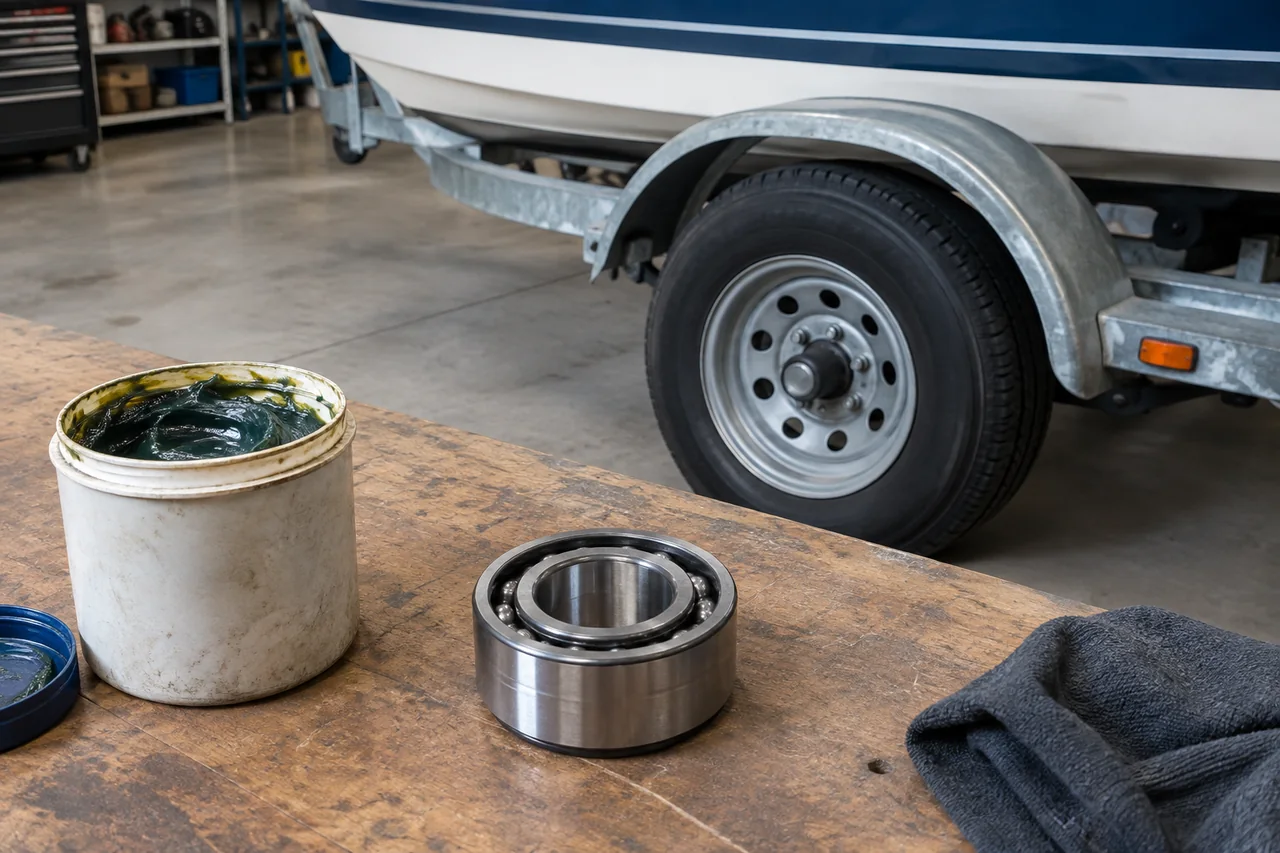
Choosing wheel bearing grease for cars, trucks, RVs, and trailers starts with the hub or axle specification, not a search for one best product. High-temperature capability, lithium complex thickeners, synthetic base oils, and marine-grade water resistance all matter only when they match the duty. Color, a grease tube, or a trailer label is not a complete rating. Match NLGI consistency, operating temperature range, water washout resistance, and corrosion protection to how the vehicle or trailer actually runs.
Start With the Bearing Manufacturer’s Grease Requirements
A suitable grease choice for a car, truck, camper, or trailer follows the vehicle, hub, or axle manufacturer's specification and the actual operating conditions of that assembly. The best wheel bearing grease is the product that specification names, not a universal shop favorite. Serviceable wheel bearings must receive that lubricant according to the maker's service procedure. Many sealed hub assemblies have no provision for routine regreasing, and forcing product through a cap or seal that was never designed for service can damage the unit.
NLGI consistency grade describes how firm the grease is, not how hot it can run. Grade 2 is common in wheel bearing applications, but the equipment requirement still governs; a softer or firmer grade can starve, channel, or leak if it was never specified. The GC wheel bearing service designation, often seen as a combined GC-LB service classification, indicates the grease has been tested for certain wheel bearing and chassis duties. Those marks still do not replace manufacturer approval or a check of grease compatibility with what is already in the hub.
Read High-Temperature Claims Alongside Operating Limits
Wheel bearings run next to brakes and carry load, so the grease must stay in place through the heat of that environment. High temperature wheel bearing grease is formulated for that duty, but the useful data are wheel bearing suitability, the recommended operating temperature range, and the service specifications the hub or axle maker requires. A hi temp or high-temp headline does not replace those checks, and it does not make a product suitable for a hub that was specified differently.
Dropping point is a laboratory property that records when grease becomes fluid enough to drip under a standard test. It is not a safe continuous operating temperature and it is not a complete measure of suitability. High-temperature grease also cannot correct a dragging brake, a damaged bearing, or an improperly adjusted assembly. Unusual heat, a burning odor, smoke, or a hub that is much hotter than its mate needs professional assessment rather than a thicker or hotter-rated lubricant as a workaround.
Understand Lithium Complex, Synthetic Oil, and Grease Color
Lithium complex wheel bearing grease names the grease thickener, the soap-like structure that holds oil in place. Synthetic wheel bearing grease typically describes the base oil, not a separate thickener family, so both descriptions can apply to one product. Neither claim, by itself, proves the formulation is a good wheel bearing grease for a given hub. Check the complete specification for consistency, temperature limits, water washout resistance, corrosion protection, and any GC-LB or manufacturer listing instead of selecting from a single ingredient headline.
Red wheel bearing grease is simply dyed, and a red color does not establish temperature capability, water resistance, quality, or grease compatibility with another product. Wheel bearing grease that happens to be red can still be the wrong chemistry for a hub. Color and broad chemistry labels also cannot confirm that two greases may be mixed. When the existing lubricant is unknown, changing products can soften, harden, or separate the fill, so seek manufacturer guidance or professional service before switching.
Match Trailer, Camper, and RV Grease to the Hub and Exposure
For trailers, campers, and RVs, start with the axle or hub documentation, including any grease requirement tied to the installed lubrication system. Road heat, load, standing water, and long storage make temperature suitability, water washout resistance, and corrosion protection relevant. Trailer wheel bearing grease that works well on a dry highway axle may still be a poor match for a camper or RV hub that sits in rain. The best wheel bearing grease for trailers is the one that meets that specification under those conditions.
A trailer designation on a container does not establish a marine-grade requirement. Marine-grade grease for trailers and RVs is justified by actual water exposure and by manufacturer requirements, not by the word trailer alone. An enclosed travel trailer stored on pavement may need temperature capability more than washout resistance, while an RV that sits in standing water needs both. Selecting a suitable grease also does not establish bearing condition or a service interval. Follow the equipment maker's guidance, and have leakage, noise, or abnormal heat assessed rather than treating a product change as proof the hub is healthy.
Check Marine Grease Requirements for Boat Trailer Bearings
Launching and retrieval submerge boat trailer hubs, so water resistance and corrosion protection become central requirements. Boat trailer wheel bearing grease, often sold as marine wheel bearing grease, still must be explicitly suitable for wheel bearings and must comply with the hub manufacturer's specifications. A marine label on a container does not by itself meet those two tests. Wheel bearing grease for boat trailers that will see salt spray should also be checked for documented saltwater-related corrosion performance where the maker provides it.
Water washout resistance and corrosion performance are useful product data because they describe how the fill behaves when water reaches the hub. Marine grease cannot make a damaged seal watertight. Visible leakage, rust staining, milky grease, or suspected water intrusion calls for inspection of seals, races, and rollers rather than simply adding more product. Packing a wet or corroded cavity with a better marine formula leaves the original damage in place and can hide the evidence until the next launch.
Check Grease Tube Labels and Know When Selection Is Not Enough
A wheel bearing grease tube is a packaging format, not a performance rating. Confirm the formulation, NLGI grade, service designation, and the hub manufacturer's requirements on the cartridge or accompanying data, not from the fact that the product is sold in a tube. Cartridge dimensions and grease-gun fittings also vary. Do not assume every tube fits every gun; a mismatched cartridge can leak, ingest air, or simply refuse to seat, which has nothing to do with whether the grease itself is suitable.
Keep containers closed, wipe fittings before they enter the gun, and avoid dirt, water, and mixed leftover greases that contaminate a fresh fill. Record the exact product used so a later compatibility check is possible. Application still follows the equipment manufacturer's service procedure. Additional grease is not a remedy for grinding, wheel wobble, smoke, or severe heat. Those symptoms mean stop using the vehicle or trailer and have the hub assessed professionally rather than pumping more lubricant into a failing assembly.