Choosing a VS Racing Turbo Blanket
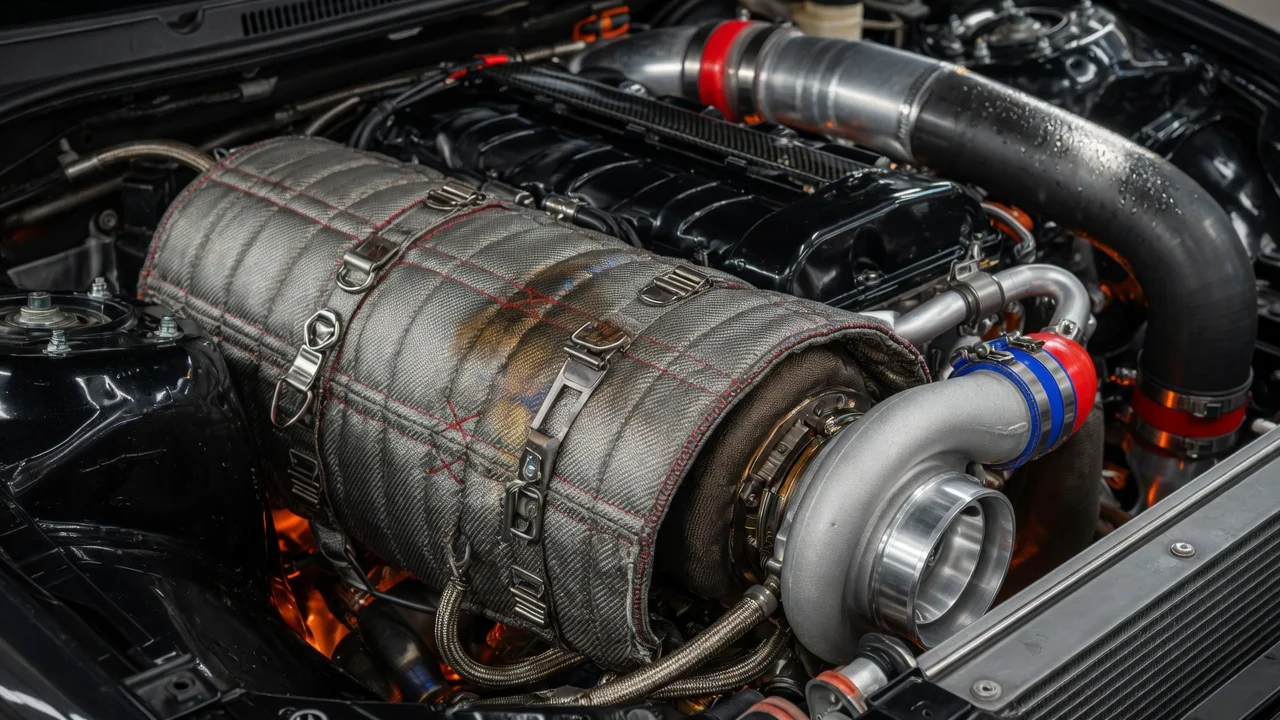
A VS Racing turbo blanket wraps the turbine housing to hold exhaust heat inside the turbo and away from nearby parts. Choosing the right one depends less on the brand name than on matching the blanket to your actual housing, the space around it and how you drive. This guide compares the practical options and lists the checks that rule a blanket out before you spend money on it.
What is being compared
VS Racing blankets mainly differ in three ways: the turbine housing they are cut for, the material and construction of the blanket, and how it fastens to the turbo. Listings are usually organized by turbo frame or housing family, such as T3, T4 or a GT-series designation. That label describes a family of turbos, not the exact shape of the housing on your engine. Within one family, housings can be single-scroll or twin-scroll, have an integrated wastegate or none, and use different inlet flanges and outlet orientations.
Treat the product name as a starting point and the stated specifications as the real comparison. Look at the listed material, the stated temperature rating, the cutout positions for the inlet, outlet and wastegate, and the fastening hardware. Then compare those details with your own housing. If a listing does not state a specification, consider it unknown rather than assuming it matches a similar product.
Compare on the same criteria
Fitment: the blanket must match the housing family, the scroll design and the wastegate layout. Coverage that stops short of the flanges leaves hot spots exposed, and excess material bunches up and can contact lines or brackets. Material and heat rating: compare the stated rating with your use case and with the manufacturer specifications for your turbo, not with another product's marketing. Construction: check the outer layer for abrasion resistance and whether the edges are finished cleanly, because frayed edges shed fibers and loosen over time.
Fastening: spring-and-hook systems and safety-wire or strap systems differ in how easily the blanket comes off and how well it stays tight as the housing expands and contracts with heat. Service access: consider whether you can reach the oil feed, coolant lines, wastegate actuator and downpipe bolts without removing the blanket entirely. Ownership: a blanket that is quick to remove makes leak checks and routine inspection practical, which matters more over years of use than a small difference in coverage.
Where the differences matter
On a daily-driven street car with stop-and-go traffic, the main benefit is lower radiant heat reaching the intake, wiring and plastic components near the turbo. In that setting, fit and durability matter more than the highest heat rating, because the blanket goes through many heat cycles and needs to stay snug without frequent attention. Towing and long highway grades create sustained high exhaust temperatures, so the material rating and edge construction carry more weight there.
For track or repeated hard pulls, the blanket sees prolonged peak heat, and access becomes a practical concern because these cars are inspected and serviced more often. Owners often say a blanket helps the turbo spool sooner by keeping heat in the housing. That effect depends on the engine configuration, the turbo and the driving conditions, so treat it as a possible side benefit rather than a guaranteed gain. Retained heat also has a cost: the housing stays hot longer after shutdown, so follow your turbo maker's cooldown guidance, especially on turbos that are cooled by oil alone.
Compatibility comes first
Start with the exact turbo on your engine, not just the vehicle name. The same model can use different turbos across model years and engine variants, and a previous owner or shop may have replaced the original unit with a different housing. Service history and a visual check of the housing are more reliable than a parts lookup by model alone. Factory heat shields may need to be removed or may block a blanket from fitting, and some housings leave too little clearance to the firewall, strut tower or intercooler piping for any wrap.
Several conditions should rule out a blanket until they are fixed. An active oil leak at the turbo seals, oil feed or valve cover is the most important, because the blanket can soak up oil, hide the leak and create a fire risk. A wastegate actuator rod, exhaust gas temperature probe or oxygen sensor wiring that the blanket would touch also needs clearance first. If the blanket rubs the actuator linkage, boost control can change, and diagnostic codes for over-boost or under-boost may appear after installation.
Separate symptom reports from verified failures. Owner reports of a burning smell, smoke or new codes after fitting a blanket describe symptom conditions, not causes. A burning smell from a new blanket can come from residual coatings, while smoke that continues usually points to oil reaching hot surfaces. Confirm the cause with an inspection and code readout before blaming the blanket or the turbo. If your vehicle is under warranty or subject to local inspection rules, check whether modifications around the turbo affect either.
Which option fits which use
If you drive daily in traffic and mainly want to protect nearby wiring and intake parts, choose the blanket that matches your housing exactly and comes off easily. Removal convenience will matter more often than an extra margin in heat rating. If you tow or run long sustained loads, put the stated material rating and edge construction first, and confirm that the fastening stays tight through repeated heat cycles.
For track or frequent hard driving, choose the most secure fastening that still lets you reach the oil lines and wastegate during between-session checks, and plan regular inspections for oil seepage and wear. If your engine bay is tight or your turbo is an uncommon housing, a correctly cut blanket for that exact housing is the only sensible choice, even if a more general option looks attractive on paper. If you cannot confirm the housing type or clear an existing leak, fix that first, then pick the blanket.