Choosing a Turbo Heat Shield for a 2002 WRX
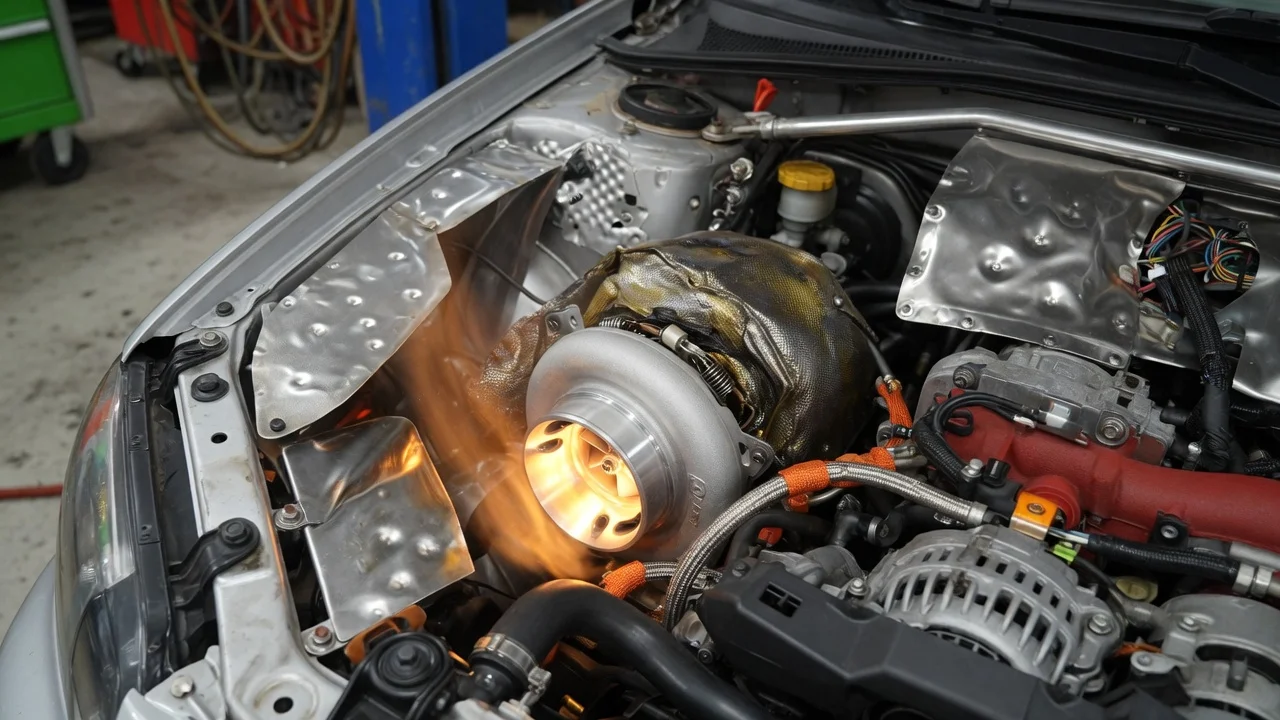
On a 2002 WRX the turbocharger sits under the top-mount intercooler, close to hoses, wiring and sensor leads, so the shields around it do real work. Owners usually start shopping after a rattle, a shield that came off during other repairs, or an exhaust upgrade. This guide explains how to confirm what you actually need, check fitment for your car's engine configuration, weigh OEM against aftermarket designs, and understand installation and ownership costs before you buy.
Define the job the shield must do
Start by naming the reason for the purchase, because each reason points to a different product. Replacing a rusted or cracked factory shield on a stock car calls for an exact-fit part. Reinstalling after turbo, up-pipe or downpipe work may only require new hardware if the original shield is still sound. Reducing heat around the turbo on a modified car that sees track days or hard driving is a different goal, and it may lead you toward aftermarket designs. A daily driver in a salted-road climate also needs corrosion resistance more than a fair-weather weekend car.
Separate symptom reports from verified failures. A metallic buzz at a certain rpm or on a cold start is commonly blamed on heat shields, but the same noise can come from loose exhaust fasteners, a worn hanger or a rattle inside the turbo's wastegate mechanism. With the engine cold, inspect the shields for cracked tabs, missing or loose bolts, rust-through and rub marks, then press on them by hand to see if the noise reproduces. Note the symptom conditions: cold or hot, idle or load, and the rpm band. A loose or missing shield will not set diagnostic codes on its own, so any stored code needs its own diagnosis rather than being attributed to the shield.
Finally, list your practical constraints: budget, available tools, whether the intercooler or exhaust is coming off anyway, and what the car's service history shows. A car with previous turbo or exhaust work may already have non-original parts that change what will fit.
Check compatibility with your car
Confirm the exact vehicle before anything else: model year, sedan or wagon, market and engine. A US-market 2002 WRX uses the 2.0-liter turbocharged EJ205; the STI with its different engine was not sold in the US until the 2004 model year, and later WRX models moved to a 2.5-liter engine. Imported cars, engine swaps and replaced turbos break the usual assumptions. Use the VIN and the part number stamped on or listed for your existing shield, and match it against the manufacturer specifications in a parts catalog instead of trusting a broad listing such as fits all WRX.
Next, identify which shield you mean. Owners use turbo heat shield loosely for the cover over the turbine side of the turbo, the shield on the up-pipe and the shield around the J-pipe or downpipe area. Each has its own shape, bolt locations and thread size. Check that the mounting points match your parts and that the shield clears the intercooler, wastegate actuator and rod, oil and coolant lines, and the oxygen sensor wiring. If the car has an aftermarket turbo, up-pipe or downpipe, factory shields often have nothing to bolt to, so the shield must be matched to those specific components.
Features that affect the choice
Factory-style stamped steel shields offer known fit, use the original mounting points and keep the engine bay looking stock, which matters for inspection-sensitive owners and resale. Their usual weakness is corrosion at the fasteners and mounting tabs rather than the shield body. Aftermarket formed shields in stainless steel or other alloys may resist rust better, but fit varies by maker, so judge them by their stated fitment and mounting design rather than by material alone.
Turbo blankets and wraps are a separate category. They wrap the turbine housing instead of bolting beside it and can reduce radiated heat, but owners report concerns: they keep more heat in the housing, they can soak up oil or fuel from a leak, they hide cracks and seepage during inspection, and cheaper ones fray. Confirm that any blanket clears the internal wastegate actuator and its linkage on the factory turbo.
Treat claims such as lowers underhood temperatures by a stated number of degrees as marketing unless the seller explains the test conditions. Useful evidence includes the stated material and thickness, a temperature rating with its basis, a fitment list naming model year and engine, clear installation instructions and photos of the mounting points. Kits that include new bolts, washers or isolating spacers are worth more than a bare shield, because worn hardware is a common cause of rattles.
Limitations and ownership costs
The part price is often the smaller cost. Shield bolts near the turbo see repeated heat cycles and frequently seize; removal can require penetrating oil, heat, extractors and patience, and a snapped bolt in a turbo or exhaust component can turn a simple job into a much larger repair. Reaching some shields means removing the intercooler, which is a good moment to inspect its couplers and seals. If the up-pipe or downpipe comes off, plan for new gaskets and nuts, and tighten everything to the manufacturer specifications.
Recheck the fasteners after a few heat cycles, and inspect blankets periodically for oil saturation or damage. A large stainless band clamp is a common temporary fix for a loose shield, but it does not restore the original mounting and can trap moisture. Be clear about what a shield cannot do: it will not seal an exhaust leak, cure a wastegate rattle, repair a cracked turbine housing or clear a diagnostic trouble code. If any of those are present, they need their own repair.
Build a practical shortlist
Before comparing products, confirm that the shield is actually the source of the problem and record your model year, body style, engine, turbo and exhaust parts. Identify the exact shield position and its part number. For each candidate, check that the mounting points and bolt sizes match your components, that it clears nearby lines, linkages and wiring, and that the seller states the material and a fitment list covering your car. Note whether hardware is included, what else must be removed to install it, the return policy for fitment problems, and the total cost including gaskets, fasteners and labor.
Rank candidates by proven fitment first, then serviceability, then price. For a stock car, an OEM or exact OEM-equivalent shield with fresh hardware is usually the lowest-risk choice. For a modified car, choose a shield made for the specific turbo or exhaust parts installed. Whatever you buy, add the part, hardware and installation date to the car's service history so the next inspection starts with accurate information.