Choosing a Turbo Blanket for a Subaru STI
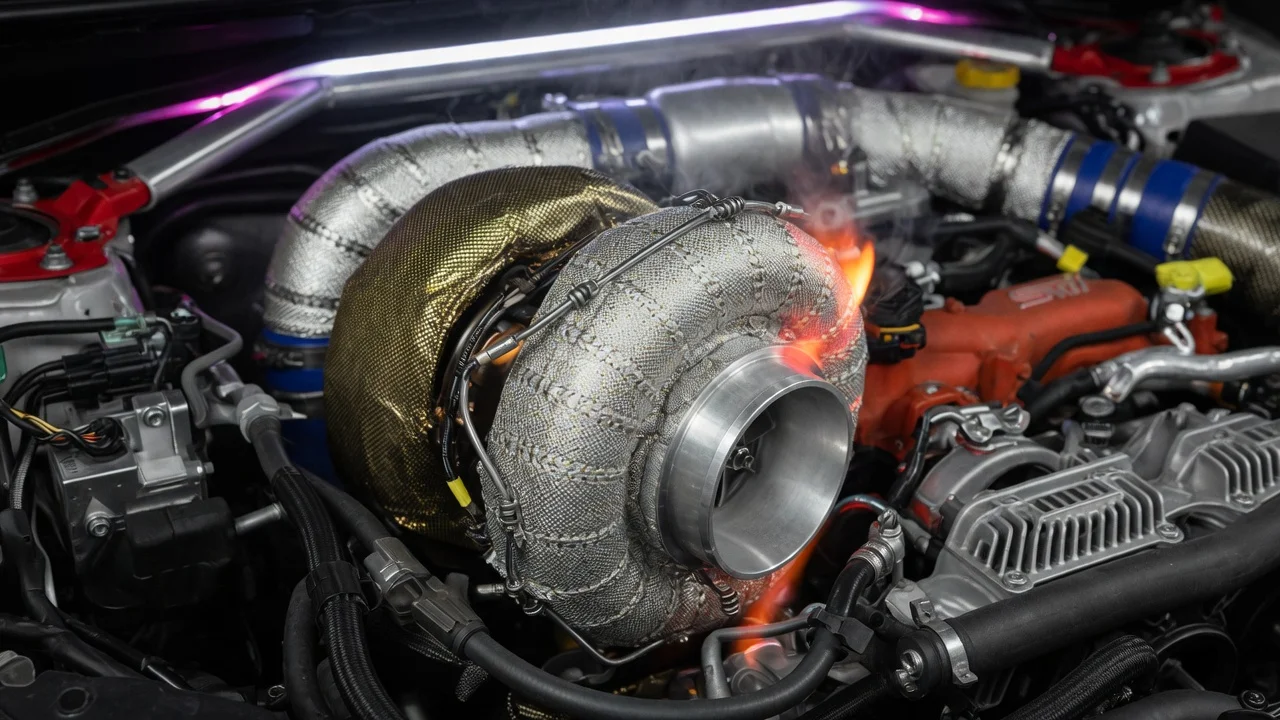
A turbo blanket wraps the hot turbine housing so that more heat stays in the exhaust side and less radiates into the engine bay. On a Subaru WRX STI this matters because the turbocharger sits behind the engine, close to the firewall and directly below the top-mount intercooler. This guide covers how to decide whether an STI turbo blanket suits your car, how to confirm fit for your model year and turbo, and what it costs to own one.
Define the job the product must do
Start by naming the problem you want to solve. Most owners shopping for a blanket want less radiant heat reaching the intercooler, the charge piping, and the wiring and hoses packed near the firewall. Owners building track or rally cars often want to protect nearby lines and components after hard sessions. Some hope for quicker spool, but that claim comes mainly from owner reports rather than controlled measurement. Treat it as a possible side effect, not a reason to buy.
Be honest about the symptom conditions behind the purchase. Hesitation after a short heat-soaked stop, high intake air temperatures in traffic, and a hood that feels hot are reports, not diagnoses. If you can, log intake air temperature with tuning or logging software before and after any change, under similar ambient temperatures and driving. A blanket will not cure a boost control fault, a sticking wastegate or an exhaust leak, and it will not clear diagnostic codes. If a check engine light or irregular boost is part of the story, diagnose that first, because insulation can hide leaks and make later inspection harder.
Check compatibility
Every US-market WRX STI from 2004 through 2021 uses the EJ257 2.5-liter turbocharged flat-four, with the turbo in the same general location. That does not mean one blanket fits every car. Turbine housing shapes differ between turbochargers, and many STIs no longer carry their original unit. Confirm the engine configuration and the turbo actually installed through the service history, parts receipts, or an inspection of the housing and its identification tag before you order. Imported or engine-swapped cars, including those running a JDM EJ207, need the same check rather than assumptions based on the badge.
Blankets are sold either for a named turbocharger or for a turbo family or housing size. A product made for your exact turbo is the simplest match. A generic blanket has to cover the turbine housing without stretching over the inlet and outlet studs, and it must leave room for the up-pipe and downpipe connections. Rotated or relocated turbo kits change the packaging completely, so follow the kit maker's guidance instead of an STI-specific listing.
Check the interfaces around the housing. The internal wastegate actuator rod must move freely, the oil feed, oil drain and coolant lines must stay accessible, and nothing should press against sensor wiring. The up-pipe, its heat shield and the downpipe flange bolts also need clearance for future service. If the factory turbo heat shield has to come off to make room, consider whether the blanket protects the area that shield used to cover.
Features that affect the choice
Most blankets use layered fiberglass, silica or basalt cloth around an insulating core, finished with a heat-resistant outer jacket. Labels such as titanium, lava or volcanic usually describe a basalt-based fabric rather than a distinct technology. A temperature rating on a listing is a seller claim unless the maker explains how it was established. Compare stated continuous and peak ratings, the outer material, and whether the stitching uses high-temperature thread or wire. Promises of a fixed percentage drop in underhood heat or a set horsepower gain are marketing, not evidence.
The retention method determines how well a blanket stays put on a vibrating engine. Springs, hooks and safety wire are common, and some designs use straps or clamps. A cut-out pattern shaped to the housing gives better coverage than a loose wrap, and a design without gaps over the bolt areas limits hot spots. Check whether it covers the full scroll or only part of it, and whether it can be removed for inspection without destroying the retaining hardware.
An oil-resistant or coated outer layer is worth having where an oil fitting could weep. Porous cloth that soaks up oil next to a hot turbine housing becomes a fire risk. A coating does not make a blanket immune, so a dry, leak-free turbo remains the prerequisite.
Limitations and ownership costs
Access on an STI is tight. Expect to remove the top-mount intercooler at a minimum. Depending on the design, the blanket may slip on with the turbo in place, or it may require loosening the up-pipe and downpipe or removing the turbo entirely. Budget for gaskets, couplers or clamps that turn out to be degraded, and for fresh safety wire or springs. Torque any disturbed fasteners to manufacturer specifications, and recheck the fit after the first few heat cycles.
Insulation keeps more heat in the turbine housing, and owners disagree about whether that contributes to housing cracks or faster wear on nearby hardware. The evidence is mostly anecdotal. Even so, read the turbocharger maker's guidance and warranty terms before you install one. Blankets degrade with heat cycles, so inspect yours at oil changes for fraying, hardened fabric, oil staining or loose retainers, and replace it when the outer layer breaks down. A blanket cannot replace sensible cool-down habits, repair a worn turbo, or make up for an intercooler that is undersized for the power level.
Build a practical shortlist
Narrow the field with a checklist rather than a ranking. For each candidate, confirm which turbo or housing family it is designed for and that it matches the unit on your car. Note the stated temperature ratings and materials, the retention method, the coverage pattern and cut-outs, and whether the outer layer resists oil. Check that the design leaves clearance for the wastegate actuator, the oil and coolant lines, and the up-pipe and downpipe flanges.
Then weigh the ownership factors: whether installation requires pulling the turbo, what spare hardware is included, how easily the blanket comes off for inspection, and what the seller's return policy is if it does not fit. Keep the purchase details with your service history so the next technician knows the turbo is insulated. If your goal is lower intake temperatures, record baseline logs before installing so you can judge the change on your own car instead of relying on someone else's numbers.