Choosing a Transmission Valve Body Gasket: Fitment, Materials and Trade-Offs
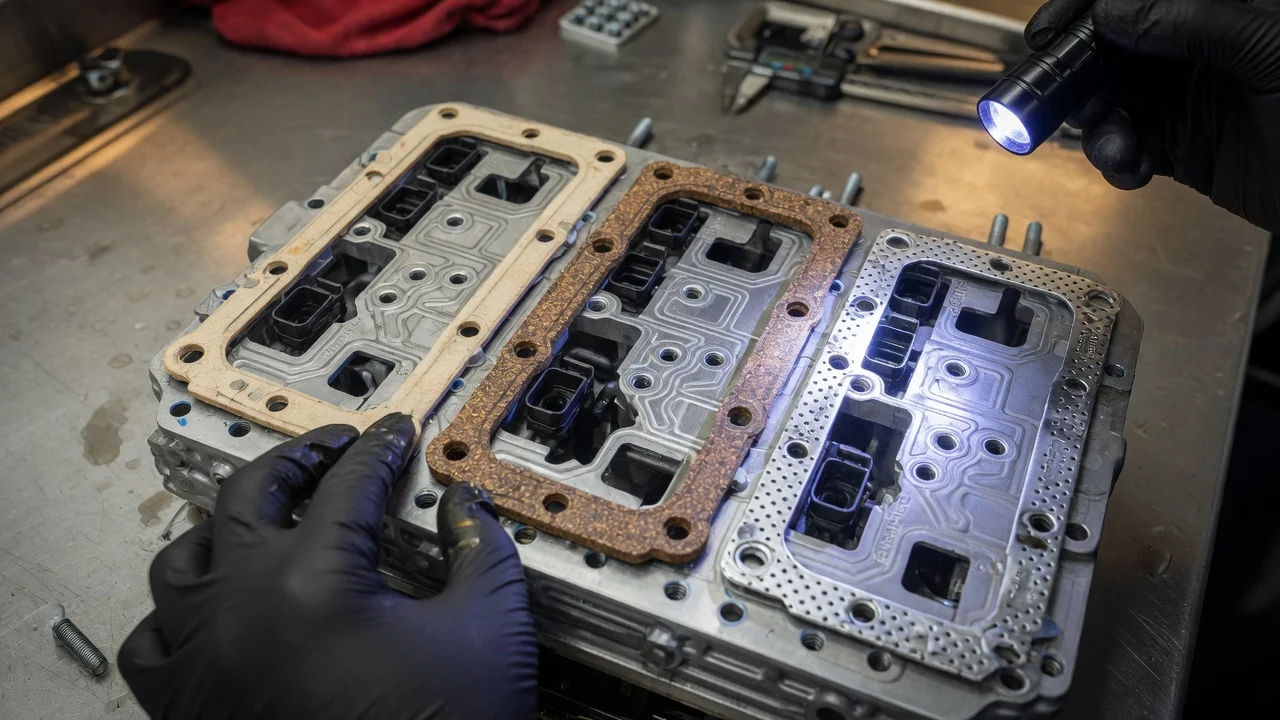
A transmission valve body gasket seals the passages between the valve body, the separator plate and the transmission case. That keeps the pressurized fluid that controls clutches and bands flowing where it should. Choosing the right one depends less on brand than on matching your exact transmission, knowing what the gasket can and cannot fix, and buying a set that covers the whole job. This guide covers those decisions for owners planning their own repair or reviewing a shop quote.
Define the job the product must do
Start with why you are buying the part. Most owners need a valve body gasket because the valve body is coming off for another reason, such as replacing a solenoid pack, a separator plate, a shift kit or a rebuilt valve body, or because a technician found a specific internal leak. In those cases the gasket is a required consumable. Once a used gasket has been compressed and the plate disturbed, it should not be reinstalled.
Be cautious if the purchase is driven only by a symptom such as harsh or delayed shifts, slipping, flare between gears or stored diagnostic codes. Those signs can come from low or degraded fluid, a faulty solenoid, a wiring or sensor problem, worn clutches, software, or valve body wear, and a new gasket addresses only one narrow possibility. Check the fluid level and condition, read codes with a scan tool that shows transmission data, and review the service history first. Also decide whether you will do the work yourself. Valve body removal involves small check balls, springs and torque sequences, so a DIY job is realistic only if you have the correct service information for your unit.
Check compatibility
Identify the transmission type precisely before you search. The vehicle year, make, model and engine are a starting point, but the same vehicle can be built with different transmissions, and one transmission family can change internally across production years. Get the transmission model code from the build data, the identification tag or stamping on the case, or a dealer lookup by VIN. Note whether the unit is a conventional automatic, a dual-clutch design or a CVT, because valve body construction and sealing methods differ between them.
Next, confirm how your unit actually seals the valve body. Many conventional automatics place a steel separator plate between the valve body and the case, with a gasket on one or both sides. Those two gaskets often have different shapes and must not be swapped. Some designs use gaskets bonded to the plate, and others rely on machined metal surfaces with no separate gasket at all. A listing that names your vehicle does not prove that a loose gasket exists for your unit. Shoppers also often confuse the valve body gasket with the transmission pan gasket or a valve body cover gasket, so compare the part illustration with your service manual.
Finally, compare the gasket with the separator plate you will reuse or install. Aftermarket and updated plates can have revised feed holes, and a gasket made for one plate revision may block or open passages incorrectly on another. If you are installing a shift kit or a remanufactured valve body, use the gasket that kit or supplier specifies so fitment stays correct.
Features that affect the choice
Accuracy matters more than material, but material is still worth understanding. Paper and fiber gaskets are common and compress slightly to fill minor surface variation. Some products use coated or bonded materials meant to resist shrinkage or improve sealing, and certain units use rubber-edged or molded designs. Treat labels such as heavy-duty or high-performance as marketing unless the seller names a concrete difference, such as a revised hole pattern for a specific updated plate or a material matched to the original design.
Cut quality is the feature you can actually inspect. Holes should be cleanly punched, fully open and aligned with the plate, with no torn edges or loose material that could break off into a passage. Compare the new gasket with the old one and with the plate before installation, because a gasket that blocks a feed or exhaust orifice can cause a shifting problem of its own. Packaging matters too, since a folded or creased gasket may seal poorly.
Decide between a single gasket and a kit. A kit may include both separator plate gaskets, the pan gasket, a filter, and sometimes seals for solenoid connectors or bolts. That can save a second order, but only if every piece matches your unit. A single gasket makes sense when you already have the other parts or when the kit contents do not suit your version.
Limitations and ownership costs
The gasket itself costs little compared with the labor around it, so the real ownership cost is the job. Removing the pan and valve body releases fluid. Buy enough fluid of the correct fluid specification to refill, and check the level using the procedure for your transmission. That procedure may require a specific fluid temperature or a fill plug instead of a dipstick. Many jobs also need a new pan gasket or seal, and often a filter. Some vehicles need a scan tool to read fluid temperature, reset adaptive values or run a relearn after valve body work, so confirm that requirement before you start.
Understand what the gasket cannot do. It will not repair worn valve bores, sticking valves, damaged solenoids, burned clutches, a failing torque converter or electrical faults, and it will not restore fluid that has broken down. Installation errors carry their own risk. Missing or misplaced check balls, wrong bolt lengths or locations, uneven torque, or debris on the sealing surfaces can all create new shift complaints. If the diagnosis is uncertain, weigh other repair options, such as a professional diagnosis, a remanufactured valve body or a transmission specialist's quote, before committing to a DIY reseal.
Build a practical shortlist
Narrow your options with a short checklist instead of a best-product ranking. Confirm the exact transmission model code and production range, whether your unit uses a separate gasket at all, and which side of the separator plate each gasket fits. Make sure the listing shows the actual gasket shape and that its hole pattern matches your existing plate or the plate supplied with a kit. Prefer listings that state the original part number they replace or cross-reference, and verify that number against your service information.
Then compare the practical details: whether the set includes both plate gaskets plus any pan gasket and filter you need, the material and its stated purpose, the return policy for wrong fitment, and how quickly you could get a replacement if a gasket is damaged during installation. Budget for fluid, any required tools and possible relearn equipment. Keep the old gasket and plate for comparison until the transmission is reassembled, filled and road-tested. Record the work in the service history so that any future diagnosis starts from accurate information.