Choosing a Transmission Shift Solenoid Kit: Fitment, Features and Limits
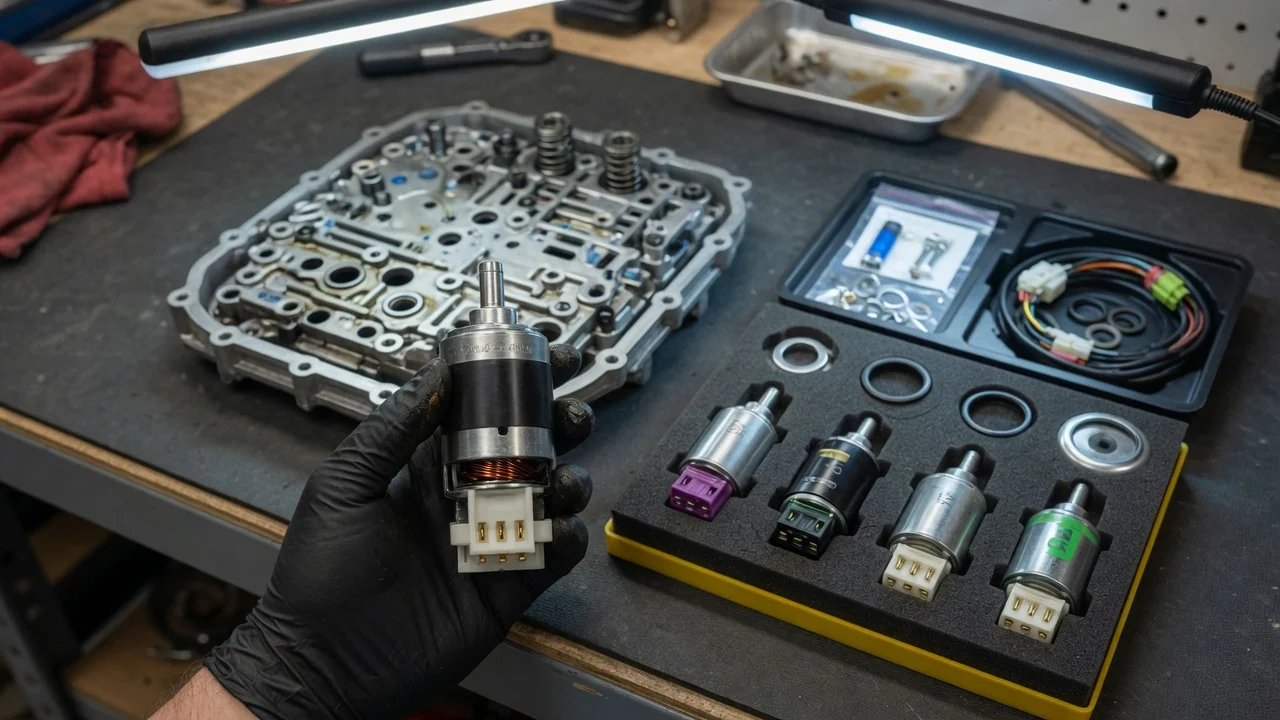
A shift solenoid kit can restore normal shift behavior when a solenoid has actually failed. It only helps if it matches your transmission and the diagnosis points to it. This guide explains how to narrow the choice: identify the exact transmission, confirm fitment, judge what a kit contains, and understand what the part cannot fix. Procedures, fluid types and diagnostic paths differ between transmissions, so use this as a framework to apply to your specific unit.
Define the job the kit has to do
Shift solenoids are electrically operated valves. They direct pressurized fluid inside the valve body so the transmission can apply the clutches and bands for each gear. The transmission or powertrain control module switches them according to vehicle speed, load and throttle input. A solenoid kit replaces one or more of these valves. Depending on how it is packaged, a kit may also include related seals or a pressure control or torque converter clutch solenoid.
Before you shop, be clear about why you need one. A solenoid can cause harsh or delayed shifts, a transmission stuck in one gear, flare between gears or a lit check engine light. The same symptoms can also come from low or degraded fluid, wiring and connector faults, a control module problem, valve body wear or internal mechanical damage. Stored diagnostic codes in the shift solenoid range, such as the generic P0750 through P0770 series, indicate a circuit or performance problem. They do not by themselves prove a solenoid has failed. Check fluid level and condition, read codes with a capable scan tool and test the circuit to narrow the cause before you spend money.
Also consider your practical limits. On some transmissions you reach the solenoids by dropping the pan. Others require removing the valve body or a sealed mechatronic unit, and some designs need programming or an adaptive relearn afterward. Decide whether you are buying for your own repair, for a shop to install or as a spare, because that changes which kit makes sense.
Check compatibility before price
Fitment starts with the exact transmission, not just the vehicle. The same model and year can be built with different transmissions depending on engine, drivetrain or production date. Manufacturers also often revise solenoids within one transmission family. Identify your unit from the tag or stamping on the case, the build data tied to your VIN, or your service history and parts records. Note whether the vehicle is two-wheel or four-wheel drive, since that can also change the parts.
Next, compare the interfaces that decide whether a solenoid will work in your valve body: connector shape and pin count, mounting style and bolt pattern, O-ring size, and the solenoid's electrical type. Some solenoids are simple on/off valves. Others are pulse-width or current-controlled and must match what the control module expects. If your service information lists resistance specifications, use them as a cross-check. A kit that fits physically but has the wrong electrical characteristics can cause poor shift quality or new codes.
Confirm the fluid specification at the same time. Replacing solenoids usually means losing some fluid. The transmission needs the correct fluid for that unit, not a generic substitute, to shift as designed.
Features that actually affect the choice
Kits vary widely in what they include. Some contain a single solenoid, others a full set for the transmission. Some are complete solenoid packs or blocks, where several valves share one body and harness. A full set costs more, but it can make sense on a high-mileage unit where all the solenoids have the same age and fluid exposure. A single replacement suits a confirmed, isolated fault. Check whether seals, O-rings, a pan gasket, a filter or a harness are included, because missing pieces delay the job.
You can buy new original-equipment parts, new aftermarket parts or remanufactured units. Useful evidence of quality includes a clear part number cross-reference to the original, an application list by transmission code, a description of the flow or electrical testing done on remanufactured units, and a written warranty with understandable terms. Labels such as heavy duty, upgraded or performance mean little on their own. Ask what was changed and whether the change suits a stock calibration. A solenoid altered to shift firmer may not behave as expected under the factory control strategy.
Limitations and ownership costs
A solenoid kit cannot repair worn clutches, a damaged torque converter, valve body bore wear, a failing control module or chafed wiring between the module and the case. If the fluid is burnt or full of debris, new solenoids can clog or stick again, so finding the source of contamination matters as much as the part. Installing a kit on a transmission that is slipping mechanically usually just adds cost.
Budget for more than the kit. Expect to buy fluid, plus a filter and pan gasket where applicable, and possibly a valve body gasket or connector seals. Some transmissions need a scan tool or dealer-level software to reset adaptations or program new components. Some also require checking fluid level at a specified temperature. Follow the torque values in the service information, since overtightened valve body bolts can distort the valve body. If any of these steps are beyond your equipment, compare the kit price with shop repair options. Those may include replacing the valve body assembly or rebuilding the transmission.
Build a practical shortlist
Narrow your candidates with a short checklist rather than a ranking. For each kit, confirm five things. The transmission code and production range it lists match yours. The connector, mounting and electrical type match the original. The contents match your repair plan, whether that is a single solenoid or a full set. The required seals and gaskets are included or bought separately. The warranty covers the way you intend to install it.
Then weigh the remaining factors. Is the part new or remanufactured, and what testing is documented? Is programming or a relearn needed after installation? What is the total cost once fluid, consumables and labor are added? Keep your diagnostic codes, freeze frame data and test results with the order so a parts supplier or technician can verify the choice. A kit that passes every item on the list and addresses a confirmed fault is a reasonable purchase. A kit bought to chase an unverified symptom often is not.