Choosing Transmission Cooler Lines for a 700R4
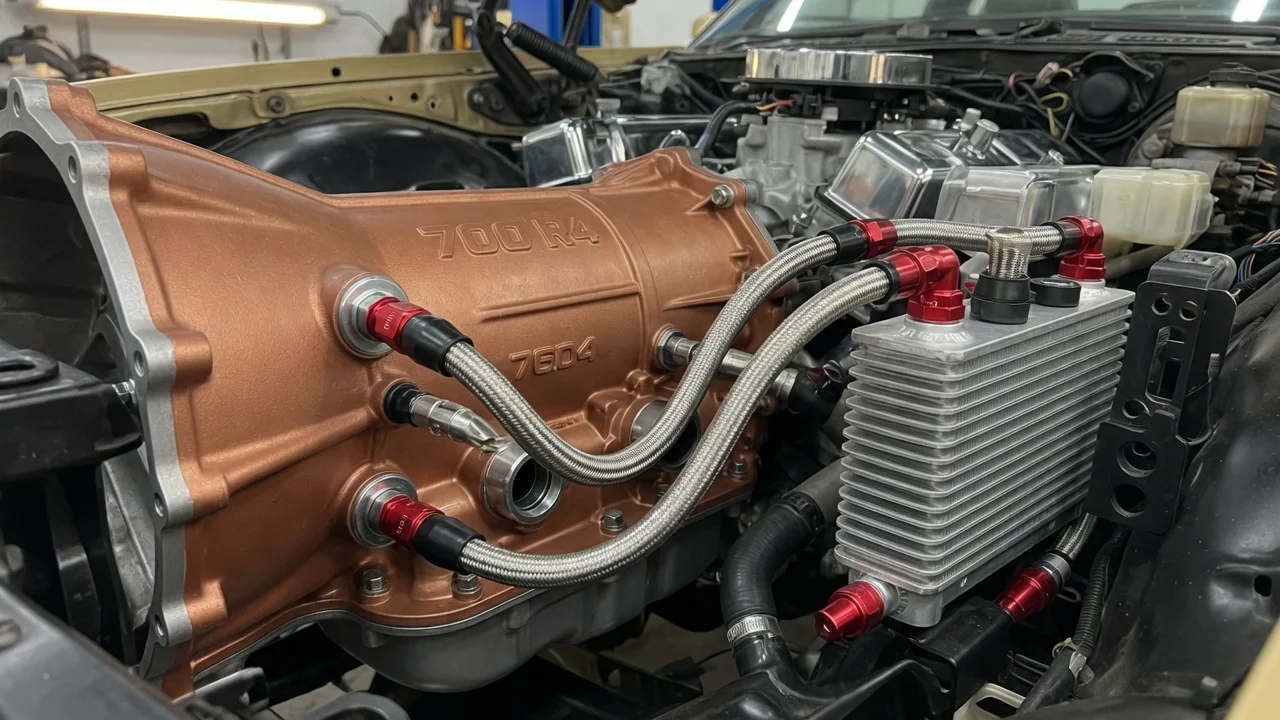
Replacing or upgrading the cooler lines on a 700R4 looks simple until the fittings don't match, the routing runs too close to the exhaust, or a transmission swap leaves the original lines short. The right lines depend on knowing exactly which transmission is in the vehicle, what cooler it feeds and how the fluid will be routed. This guide covers defining the job, checking fitment, weighing materials and fittings, understanding ownership costs and building a practical shortlist.
Define the job the product must do
Start with why you need new lines. Common reasons include original steel lines that have rusted through or been crushed, a 700R4 installed in a vehicle that originally had a different transmission, a new radiator with different cooler ports, or an auxiliary cooler added for towing or hot-climate driving. Each situation calls for something different. A stock replacement in a vehicle that came with a 700R4 may only need preformed lines that copy the factory routing, while a swap or a custom cooler setup usually needs straight tubing or hose that you route and terminate yourself.
Also be honest about practical constraints: the tools you have, how much bending and flaring you are comfortable doing, and how the vehicle is used. A daily driver that rarely sees heavy loads has different priorities from a truck that tows. Finally, confirm the problem is really the lines. Fluid on the ground or a wet transmission case can come from a loose fitting, a leaking radiator cooler, a pan gasket or a seal elsewhere. Clean the area, run the engine and trace the leak to its source before buying parts.
Check compatibility
Verify the transmission type first, because the 700R4 is often confused with its successor, the 4L60E. The 700R4 is hydraulically shifted and uses a throttle valve cable running to the carburetor or throttle body; the 4L60E is electronically controlled, has no TV cable and has a larger electrical connector for its shift solenoids. That difference matters for diagnosis as well: a 700R4 will not store transmission shift diagnostic codes the way an electronically controlled unit can. Its case fittings and line connections can also differ, and parts listed for one are not automatically correct for the other. If the service history includes a rebuild or swap, inspect the unit itself rather than trusting the original vehicle specification.
Next, record every interface the lines must connect to. At the case, note the thread type and size of the cooler fittings. At the other end, check the radiator cooler or auxiliary cooler ports, which vary by radiator and are often different from the transmission side. Measure the outside diameter of the existing tubing and identify the end style, such as inverted flare, AN or barbed hose connections. Many 700R4 installations use pipe-thread fittings in the case with inverted-flare line connections, but previous owners and aftermarket radiators change things, so measure rather than assume.
For swaps, check routing and flow direction. A 700R4 differs from a TH350 in case length and port placement, so lines from a TH350 vehicle rarely route correctly. Confirm which case port is the outlet to the cooler and which is the return using a service manual for your unit, and plan a path that clears the exhaust, crossmember, steering components and moving suspension parts.
Features that affect the choice
Rigid tubing is the factory approach and remains a solid choice. Plated steel is affordable and easy to bend and flare. Stainless steel resists corrosion and looks clean, but it is harder to bend and flare correctly, and a poor flare will seep. Preformed kits save fabrication time when they are listed for your exact vehicle and transmission combination; straight lengths suit swaps and custom routing. Match flare types carefully: inverted-flare fittings use a 45-degree double flare, while AN fittings use a 37-degree flare, and the two are not interchangeable.
Hose solutions trade rigidity for easier routing. Braided hose with AN ends is neat and flexible but requires adapters at the case and cooler, and every adapter is another potential leak point. Rubber hose is inexpensive and simple to fit with barbed connections and clamps, but it must be rated for transmission fluid and the operating temperature, it ages faster near heat, and clamped barbs are more prone to seepage than sealed fittings. Any hose needs support so it cannot rub on brackets or sag onto the exhaust.
Separate evidence from marketing. Useful information includes listed fitment by transmission and vehicle, stated thread and line sizes, end-fitting type, hose material and fluid compatibility, temperature rating and whether brackets or clips are included. Labels such as high flow, universal or direct fit mean little without those details. A larger line diameter does not automatically lower fluid temperature, and adapting it to the case fittings can add restrictions or leak points.
Limitations and ownership costs
Cooler lines carry fluid; they do not cool it on their own and they cannot fix internal problems. If the transmission slips, shifts harshly, overheats or shows burnt fluid, new lines will not correct worn clutches, a failing torque converter or incorrect TV cable adjustment, so diagnose shift behavior separately. After an internal failure, debris can collect in the cooler and lines. Flushing them or replacing the cooler is commonly recommended so contamination does not reach a rebuilt or replacement unit.
Budget beyond the lines themselves. You may need fittings, adapters, a tubing cutter, a bender, a double-flare tool, mounting clips and heat sleeving. Use thread sealant appropriate for transmission fluid on pipe threads only, never on flare seats, and avoid loose tape fragments entering the system. Expect some fluid loss during the job and refill with the fluid specification listed in the service information for your unit. Check the level using the correct procedure for the 700R4, typically warm, running, in park and on level ground, then recheck after the first few drives.
Ongoing ownership is mostly inspection. Look for damp fittings, chafing, loose clamps, hose cracking and corrosion at mounting points, especially after winter driving or off-road use. Hose installations generally need closer attention over time than well-made rigid lines.
Build a practical shortlist
Before comparing products, confirm that the transmission is a 700R4 and not a 4L60E, and note any swap or rebuild in its history. Write down the case fitting thread, the cooler or radiator fitting thread, the existing tube outside diameter and the end style at both ends. Then decide whether factory-style routing fits your vehicle or a custom route is required.
For each candidate, check that fitment is listed for your transmission and vehicle or that the dimensions match your measurements, that the end fittings match without unnecessary adapters, that the material suits your climate and your ability to bend and flare it, and that any hose is rated for transmission fluid and heat. Include the cost of fittings, tools, clips, sealant and fluid in the comparison, not just the line price.
Your repair options usually come down to three paths: a preformed hard-line kit for a stock-configuration vehicle, a hose kit with proper fittings for swaps or auxiliary coolers, or custom-bent tubing from a shop when routing is complex. Choose the one that matches your measurements, routing and skills rather than the one with the most impressive label.