Choosing a Transmission Cooler for a 4L80E
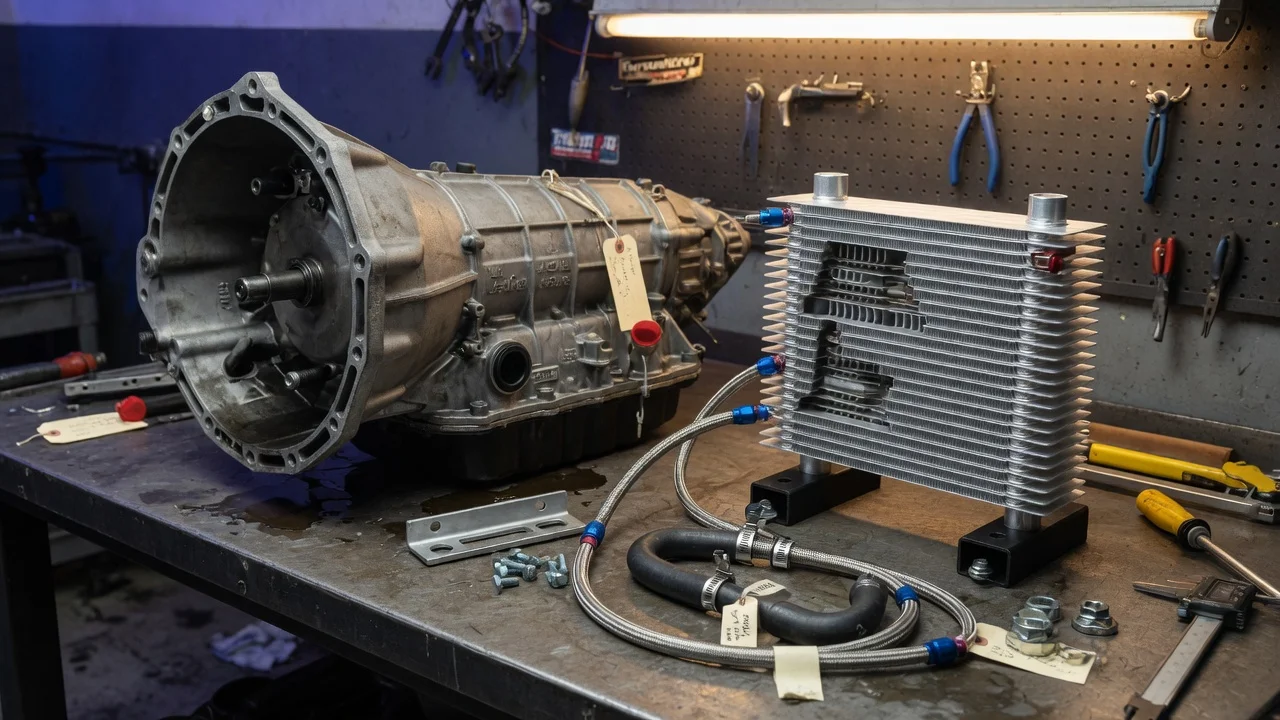
The 4L80E is GM's heavy-duty electronically controlled four-speed automatic, used in many full-size trucks, vans and SUVs built for towing and work. Heat is the biggest threat to its fluid, clutches and seals, so an auxiliary cooler is one of the most common upgrades owners consider. This guide covers how to pick a cooler that suits your vehicle and workload, what to confirm before buying, and what a cooler cannot fix.
Define the job the cooler must do
Start by confirming the transmission type. GM vehicles of the same era and body style were built with different automatics, and lighter-duty versions often used other transmissions. Check the service parts label or the identification tag on the transmission case rather than relying on model year or badge alone. Cooling needs, line routing and fittings differ between transmissions, so a part listed for a similar truck is not automatically right for yours.
Then describe the real workload. Towing a heavy trailer up long grades, plowing, slow off-road crawling, stop-and-go delivery work, motorhome duty and high-stall converter performance builds all load the transmission differently. Note your climate, how much open space sits in front of the radiator, whether the vehicle already has a factory auxiliary cooler, and your budget for hardware and installation. Those answers decide how large the cooler should be, where it can mount and whether features such as a fan or thermostatic bypass are worth paying for.
Check compatibility and fitment
Fitment depends on more than the vehicle listing. Identify the diameter of your cooler lines and the type of fittings at the transmission and radiator; factory systems commonly use quick-connect fittings that need matching adapters. Universal coolers usually come with barbed connections and clamps, while others use threaded or AN-style fittings. Any hose must be rated for automatic transmission fluid at operating temperature and pressure. Measure the mounting area and check clearance to the A/C condenser, radiator, grille, hood latch and any diesel intercooler, since blocking airflow to those components creates a new heat problem.
Confirm the fluid specification for your vehicle as well. The 4L80E uses a Dexron-type ATF, and GM's later service guidance supersedes older specifications for many applications, so follow the requirement in your owner's manual or service information. A cooler does not change the fluid you need, but its internal materials and hoses must be compatible with ATF. Finally, plan the plumbing: most installations keep the radiator's internal cooler in the circuit and add the auxiliary unit after it, while some setups bypass the radiator tank. Identify which line carries fluid out of the transmission and which returns it on your specific vehicle instead of guessing, because on many GM automatics the return flow feeds the lubrication circuit and excessive restriction can reduce lube supply.
Features that affect the choice
Core design is the main trade-off. Tube-and-fin coolers are inexpensive and tolerant, but they transfer less heat for their size. Plate-and-fin and stacked-plate designs generally move more heat in a smaller package, which helps when mounting space is tight, though their narrow passages can be more sensitive to debris. When comparing a 4L80 transmission cooler from different makers, look past labels such as heavy duty or extreme towing. Capacity is often expressed as a vehicle weight or tow rating, and those figures are not standardized between brands. Core dimensions, internal design and any published pressure-drop data are more useful for comparison than marketing tiers.
Some coolers include a thermostatic bypass that routes fluid around the core until it warms up. This helps in cold climates, where an oversized cooler can keep fluid too cool for proper shift behavior and moisture burn-off. Fan-assisted coolers suit vehicles that work hard at low speed with little natural airflow, but they add wiring and another part that can fail. Whatever you choose, plan to verify results: a transmission temperature gauge, or a scan tool reading the transmission fluid temperature sensor, shows whether the cooler actually controls heat under your typical load.
Limitations and ownership costs
A cooler manages heat; it does not repair a transmission. Slipping, flare between gears, harsh or delayed engagement, and stored diagnostic codes can come from low or degraded fluid, electrical faults, pressure control problems, solenoid issues, internal wear or torque converter trouble. High fluid temperature itself has several possible causes, including incorrect fluid level, a torque converter clutch that is not applying, a restricted or kinked line, a clogged radiator cooler or internal drag. Treat a symptom as a starting point for diagnosis, not proof that a particular part has failed, and read codes and live data before buying parts.
Budget for the full installation, not just the core: hose, fittings, adapters, clamps, mounting brackets and enough ATF to refill the added capacity and correct the level. Inspect hoses and connections periodically for seepage, chafing and soft spots. If the transmission has suffered an internal failure, debris can lodge in the cooler and lines and contaminate a rebuilt or replacement unit. Many cooler manufacturers recommend replacing rather than flushing a cooler after a major failure because fine passages can trap material, so factor that into your repair options and keep records in the service history.
Build a practical shortlist
Before comparing specific products, work through a short checklist. Confirm the transmission type from the vehicle label or case tag. Note the required fluid specification. Measure line diameter and identify the fitting style at both ends. Measure the available mounting space and check airflow paths around existing heat exchangers. Match core type and size to your heaviest regular workload rather than an occasional extreme. Decide whether you need a thermostatic bypass or a fan. Check which hoses, adapters and brackets are included. Review the service history so you know the condition and age of the fluid, filter and lines.
Narrow the field to two or three coolers that pass every fitment item, then compare core design, included hardware, warranty terms and ease of installation on your vehicle. If the transmission already shows abnormal shift behavior, stored codes or burnt fluid, have it diagnosed before installing a cooler, since adding one will not correct an existing fault. For straightforward towing or work-truck upgrades, a correctly sized cooler, sound plumbing and a way to monitor fluid temperature give the best chance of extending the life of a 4L80E.