Choosing Tie Rod Ends for a Honda Accord
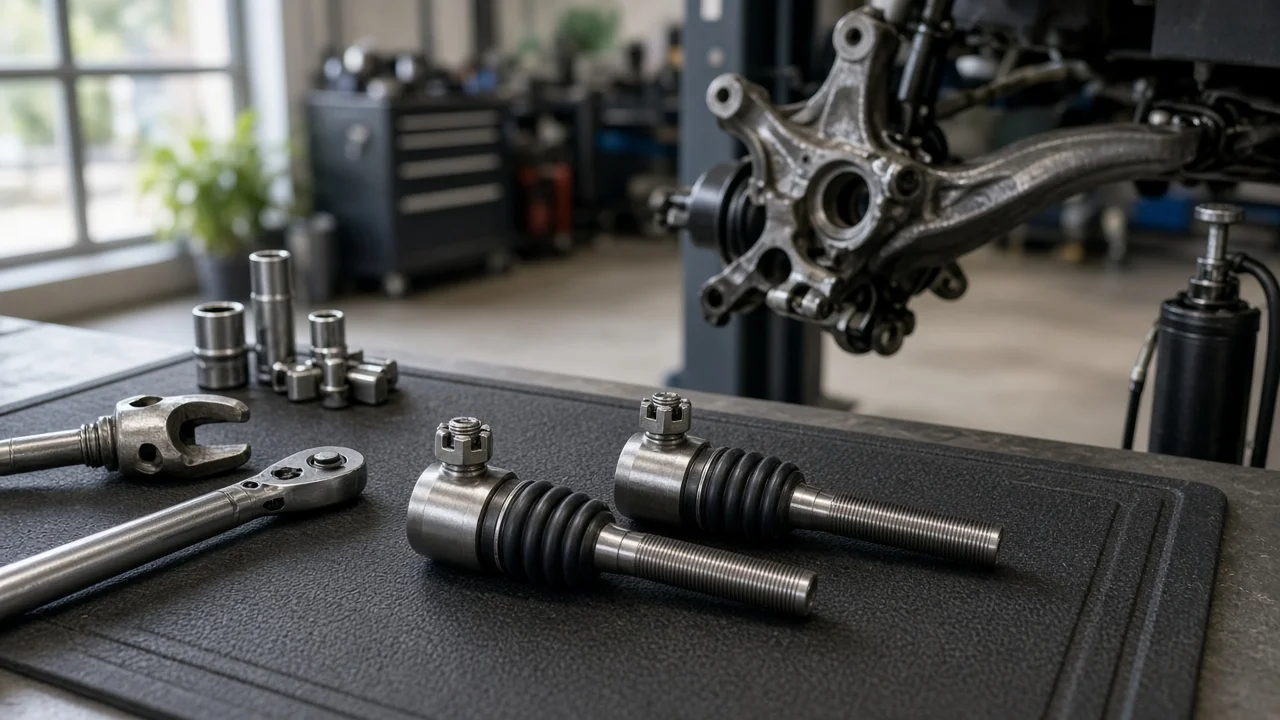
Tie rod ends connect the Accord's steering rack to each front steering knuckle. A worn or poorly matched part shows up as vague steering, clunks over bumps and tire wear that an alignment alone cannot cure. Choosing replacement Honda Accord tie rod ends comes down to three things: confirming that the joint is actually the problem, matching the part to your exact car, and planning for the alignment and hardware the job requires.
Define the job the tie rod end must do
The outer tie rod end is a small ball joint. It pushes and pulls the knuckle when you turn the wheel, and it lets the suspension move up and down without binding the steering. On an Accord, that usually means years of commuting, highway miles, potholes and, in many regions, road salt. Your choice should reflect how the car is used and where it is driven. A high-mileage daily driver in a snowy state needs good corrosion resistance and a durable boot. A lightly used car in a dry climate mainly needs correct fitment and consistent quality. Also consider your practical limits: whether you will do the work yourself with proper tools, or have a shop install the part and align the car.
Confirm the diagnosis before buying anything. Raise the front of the car and support it securely on jack stands placed at the lift points shown in the owner's or service manual, with the rear wheels chocked. Never work under a car held only by a jack. Grip the tire at the 3 and 9 o'clock positions and push and pull. Joint play felt or seen at the outer tie rod end points to that part. Movement elsewhere may come from the inner tie rod under the rack boot, a wheel bearing or the rack mounts. A torn boot means dirt and water have likely reached the joint. If you find looseness in any steering joint, have the car inspected and repaired promptly rather than guessing how long it will hold up.
Check compatibility with your Accord
Accord steering parts changed across generations, so the model year is only a starting point. Fitment can also depend on body style, engine, trim and sometimes production date. Use your VIN with the parts supplier's lookup, or check the original Honda part number, rather than relying on a general description such as "fits Accord." Decide whether you need only the outer ends or also the inner tie rods. They are separate components, and some sellers offer them as matched assemblies. If the inner joint shows play or the rack boot is damaged, replacing both at the same time avoids paying for a second alignment later.
The interfaces that matter are the internal thread that screws onto the inner tie rod, the tapered stud that seats in the knuckle, the stud length and nut type, and whether the listing is side-specific or the same for both sides. A stud taper that does not match the knuckle will not seat properly, even if the nut tightens. Comparing the new part to the old one on the bench is a useful check, but it does not replace a confirmed listing. Use the fastener specification and tightening procedure from Honda service information for your model year. Do not guess at values or reuse hardware the procedure says to replace.
Features that affect the choice
The most meaningful difference is greaseable versus sealed construction. A greaseable joint has a fitting that lets you push out contaminated grease, but it only helps if someone actually greases it at service intervals, and overfilling can damage the boot. A sealed joint needs no attention but cannot be refreshed. Neither is automatically better. Boot material and fit are important because most joints fail after the boot tears and contamination gets in. A protective coating on the housing helps where road salt is common, and it also makes the threads easier to adjust later. Some parts include a new nut and cotter pin or locking hardware, which saves a separate purchase.
Treat labels such as heavy duty, premium or lifetime with caution, because they do not describe how the joint is built. Useful evidence includes a clear fitment listing for your VIN or part number, a cross-reference to the original part, a description of the bearing and boot design, the hardware included, and warranty terms stated in writing. Read the warranty carefully. A lifetime replacement policy may cover only the part, not the labor or alignment needed to install a second one. Original-equipment and reputable aftermarket parts can both work well, and the best value is the part with verifiable fitment and a design that suits your climate and maintenance habits.
Limitations and ownership costs
A new tie rod end restores a tight connection, but it cannot fix worn inner tie rods, a loose rack, tired bushings, a bad wheel bearing or tires that have already worn unevenly. It also does not set itself to the correct length. Toe changes whenever an outer end is replaced, so a wheel alignment is part of the job, not an optional extra. Counting thread turns or measuring the old part's position helps you get close enough to drive carefully to the shop. It does not replace an alignment performed at normal ride height to Honda's specifications. A car whose ride height has changed because of sagging springs or modifications may need those issues addressed for the alignment to hold.
Budget for more than the part itself. Typical extra costs include the alignment, a tie rod end separator or puller, penetrating oil for a seized jam nut, new cotter pins or nuts when required, and possibly new boots. Corroded threads can make removal difficult and may damage the inner tie rod, which turns a simple job into a larger one. Inspect the mounting points on the knuckle for damage or an oversized taper bore before installing the new stud. Many owners replace both outer ends together for even wear and a single alignment. If the other side passes inspection, replacing only the worn joint is a reasonable choice.
Build a practical shortlist
Narrow your options with a short set of yes-or-no checks. Is the part listed for your VIN or confirmed by part number, with the correct side if it is side-specific? Do the thread, stud taper and stud length match the original? Does the seller state whether the joint is greaseable or sealed, and does that match how the car will be maintained? Is the boot well described and the housing protected against corrosion where you drive? Is the required hardware included or easy to obtain? Are the warranty terms written and clear about labor? Any part that fails one of these checks should drop off the list, whatever its price or label.
Then compare the remaining options on total cost: the parts, any inner tie rods or boots the inspection showed you need, tools you do not already own, and the alignment. Book the alignment at the same time you order the parts so the car does not stay out of alignment longer than necessary. After installation and alignment, check that the steering wheel is centered and the car tracks straight. Recheck the joints and tire wear at your next service, so any remaining looseness elsewhere in the steering is caught early.