Choosing Steering Linkage for a Jeep Wrangler
Direct Answer
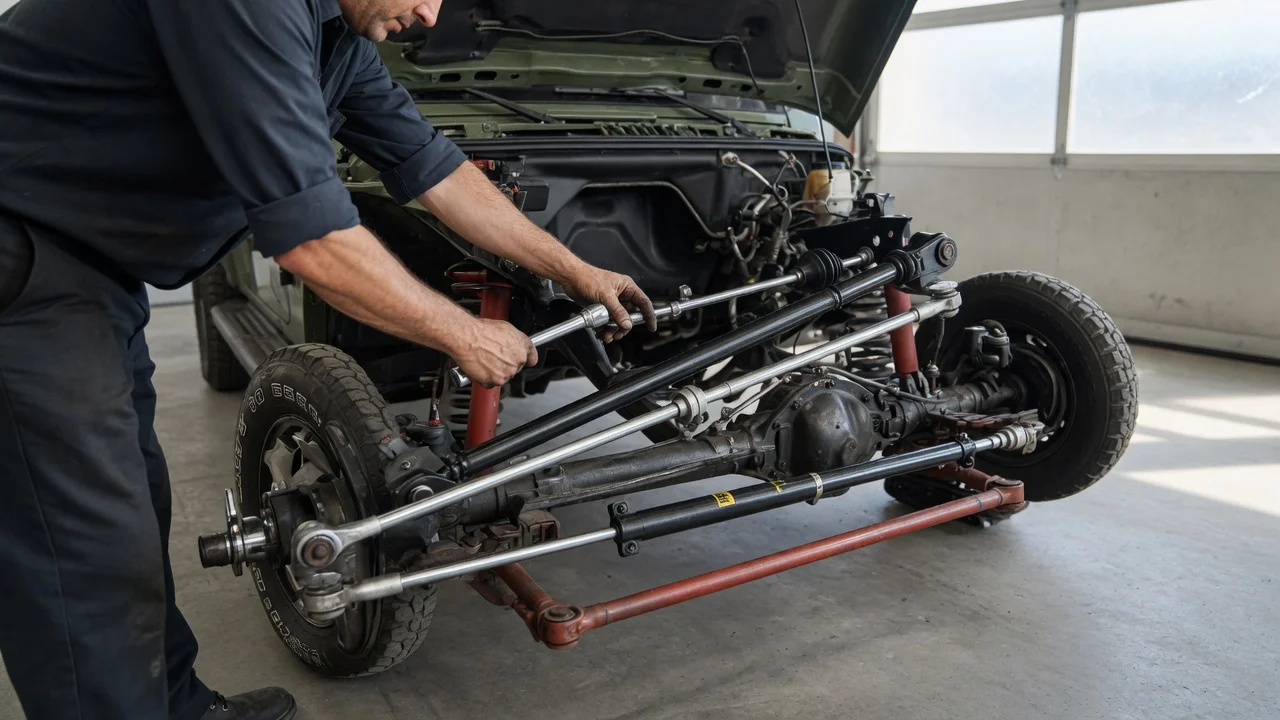
Jeep Wrangler steering linkage is the series of rods and joints that transfers movement from the steering gear to the front wheels. The correct choice depends mainly on the model year, front axle configuration, suspension height, and whether the vehicle uses a Y-link or crossover-style system. There is no single linkage that fits every Wrangler. A replacement must match the steering gear output, the knuckle attachment points, and the geometry of the specific axle.
Why the Term Covers Different Systems
The phrase steering linkage can refer to related but different parts. On many Wranglers, the assembly includes a drag link, which connects the pitman arm on the steering gear to the steering knuckle or tie rod, and a tie rod, which links the two front wheels. A tie rod end is the replaceable joint at the end of a tie rod, while a drag link end is the similar joint on the drag link. Mixing these names can lead to ordering the wrong component.
Comparing the Main Linkage Layouts
Y-Link Steering
A Y-link arrangement is common on many Wrangler models. In this layout, one end of the drag link attaches near the tie rod center, and the tie rod extends from that area to the passenger-side knuckle. Y-link systems can be sensitive to suspension height changes because movement of the axle can alter steering geometry and create unwanted bump steer.
Crossover Steering
Crossover steering is often used on lifted or heavily modified Wranglers. The drag link runs from the steering gear or pitman arm to the passenger-side knuckle, and the tie rod runs between the two knuckles. This layout usually keeps the drag link and track bar moving in similar arcs, which can reduce bump steer when the suspension height is increased. It is generally an aftermarket or custom configuration rather than the stock setup on all years.
Compatibility and Fitment
Compatibility with a Wrangler steering linkage is not universal. Physical fit must be confirmed against the model year and axle, and for modified vehicles against the final installed height and steering knuckle type. For example, a linkage intended for a Wrangler with a standard-height suspension may not maintain correct geometry on a vehicle with a tall lift. A component that physically bolts on is not automatically geometrically correct.
Electrical communication and software support do not apply to basic steering linkage in the same way they apply to electronic steering or driver-assistance systems. A traditional linkage is a mechanical assembly. However, a physical fit does not confirm that steering angle sensors, stability-control calibration, or other electronic systems will behave as intended after a geometry-changing upgrade.
What to Check Before Choosing
Confirm the Wrangler model year and axle type. Identify whether the vehicle has a Y-link or crossover-style system. Note the current suspension height and any lift kit. Verify the knuckle attachment style and steering gear output. Check whether the replacement part includes tie rod ends, drag link ends, or both.
Gaps in the Evidence
This guide does not provide a universal part number or a single recommended brand because no supplied evidence identifies a verified cross-year fitment. Exact interchange depends on manufacturer specifications and the specific Wrangler configuration. If the vehicle is lifted or has replaced axles, the safest choice is to confirm the linkage dimensions and end styles against the installed parts rather than relying only on the model name.
Jeep Wrangler steering linkage is a mechanical system, but the right replacement depends on model-year details, axle configuration, and suspension height.