Choosing Rough Country Tie Rod Ends: Fitment, Features and Ownership Costs
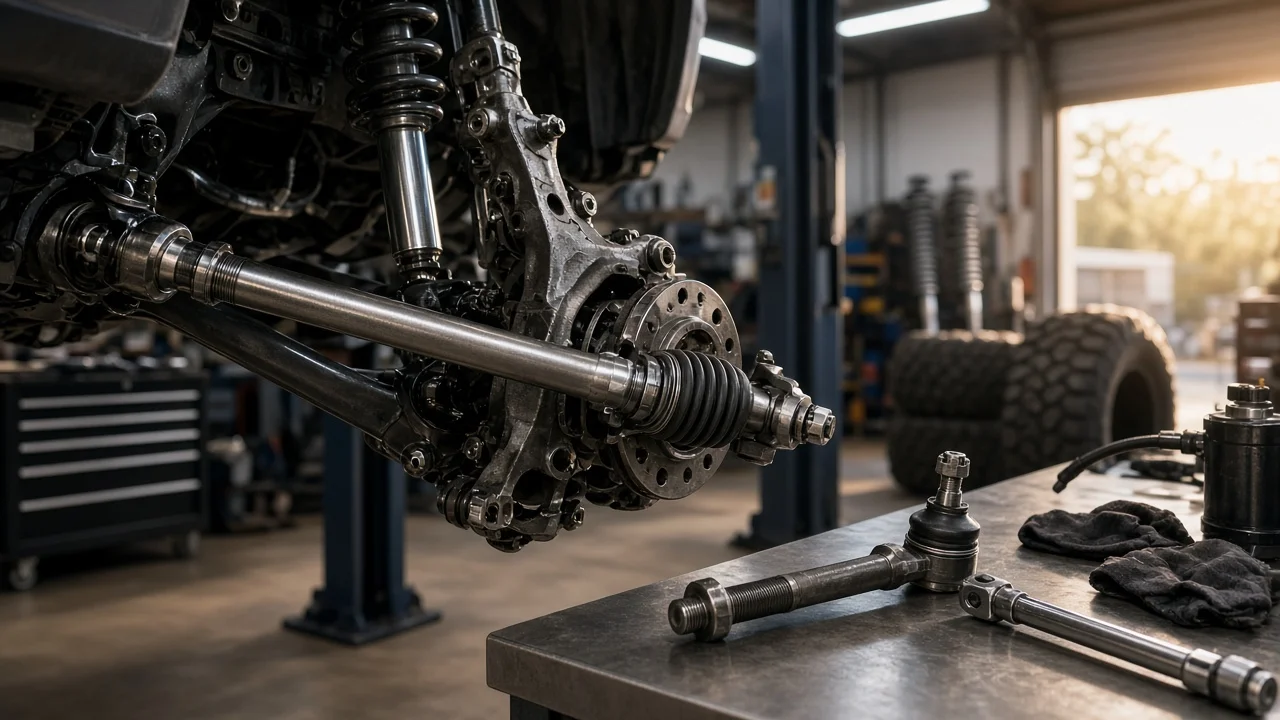
Tie rod ends connect the steering linkage to the steering knuckles, so they decide how precisely your wheels follow the steering wheel. Rough Country offers tie rod ends and related steering parts aimed mostly at trucks and Jeeps, many of them lifted. A part that suits one build can be wrong for another, so this guide covers defining the job, confirming fitment, judging features, budgeting for installation and alignment, and narrowing your options to a short list.
Define the job the product must do
Start with the reason you are shopping. Replacing a worn factory part calls for a direct equivalent. Upgrading after a lift or a move to larger tires may call for a stronger or differently configured part. Loose or wandering steering, clunks over bumps and uneven tire wear can point to worn tie rod ends, but worn ball joints, a loose track bar, a worn steering box or bad alignment can cause the same symptoms. Confirm the diagnosis first. With the vehicle on proper vehicle support and the parking brake set, have a helper rock the steering wheel while you watch each joint for joint play. Also look for torn boots, grease loss or rust around the stud.
Next, write down your practical constraints. A daily driver that occasionally tows has different needs than a trail rig that sees mud, rocks and oversized tires. Note your current ride height and any lift components, because suspension changes alter steering geometry and sometimes require matching steering parts. Decide whether you are replacing individual ends or the whole tie rod assembly, whether you will do the work yourself or use a shop, and how much routine maintenance you are willing to do.
Check compatibility
Fitment starts with year, make, model, drivetrain and front suspension type. A solid front axle and independent front suspension use very different linkages. Identify whether you need an inner or outer end and which side it goes on. On many trucks the ends thread into an adjusting sleeve with opposite thread directions on each side, so a left and right part are not interchangeable. Compare the part number and fitment notes in the listing against the part currently installed on your vehicle. Do not assume a part fits because it looks similar.
Then check the interfaces. The stud taper must match the bore in the knuckle or steering arm, and the thread size and pitch must match your sleeve or tie rod tube. If a lift kit changed mounting points, added a drop bracket or flipped the tie rod above the knuckle, follow the lift kit instructions for which steering parts are required. Larger tires and wheels with different offset can bring the wheel closer to the tie rod end, so confirm clearance through full steering lock. If the fitment information leaves any doubt, contact the seller with your exact vehicle and lift details before ordering.
Features that affect the choice
Check whether a given end is greasable or sealed. A greasable joint with a fitting lets you push out water and grit and extend service life, but it needs regular greasing to deliver that benefit. A sealed joint needs no routine service, yet once its internal lubricant is contaminated it cannot be refreshed. If you drive through mud or water often, the boot design and how well it stays seated matter as much as the joint itself.
Treat labels such as heavy duty or upgraded as marketing until the listing backs them with checkable details: stud diameter, tube diameter, material, forging versus casting, or joint construction. Compare those numbers with your factory part rather than accepting a general claim. Also check what hardware is included, such as castle nuts, cotter pins and jam nuts, and read the actual warranty terms, including any exclusions for off-road use. Owner reports about fitment on your specific vehicle and lift are more useful evidence than overall star ratings.
Limitations and ownership costs
Installation is manageable for an experienced home mechanic, but safety comes first. Lift only at the manufacturer's recommended points and support the vehicle on rated jack stands, never on a jack alone. Separate the tapered stud with the correct tool rather than striking the threads. Measure overall length or count exposed threads before removal so you can set the new part close to the original position, but this only gets you to an alignment shop safely. Tighten every nut to the fastener specification in your vehicle's service information or the product instructions, and follow those instructions when aligning the cotter pin. Never guess a torque value.
Budget for a professional wheel alignment after replacing any tie rod end, since even a small change in length alters toe and affects tire wear and handling. You may also need new adjusting sleeves, and inspection often reveals other worn parts. Greasable ends add a recurring maintenance task, and boots should be checked whenever you service the vehicle. Understand what tie rod ends cannot do: they will not fix worn ball joints, a loose track bar, steering box play, or caster and ride height problems created by a lift. If you find excessive joint play, have it repaired promptly rather than continuing to drive on it.
Build a practical shortlist
Narrow your options with a simple comparison. For each candidate, confirm exact fitment for your year, model, drivetrain and suspension; the correct position, inner or outer, left or right; matching taper and thread specifications; and compatibility with your lift and any relocated mounting points. Then note whether the joint is greasable or sealed, which measurable specifications are published, what hardware comes in the box and what the warranty covers.
Drop any part whose fitment you cannot confirm from the listing or from the seller. Among the remaining options, choose based on your actual use rather than the strongest-sounding label: a direct replacement often suits a stock daily driver, while a heavier-duty part makes more sense for larger tires and regular off-road use. Add the cost of alignment, any sleeves or hardware and your time or shop labor to compare the real price of each option, not just the part cost.