Choosing an IS38 Turbo Blanket
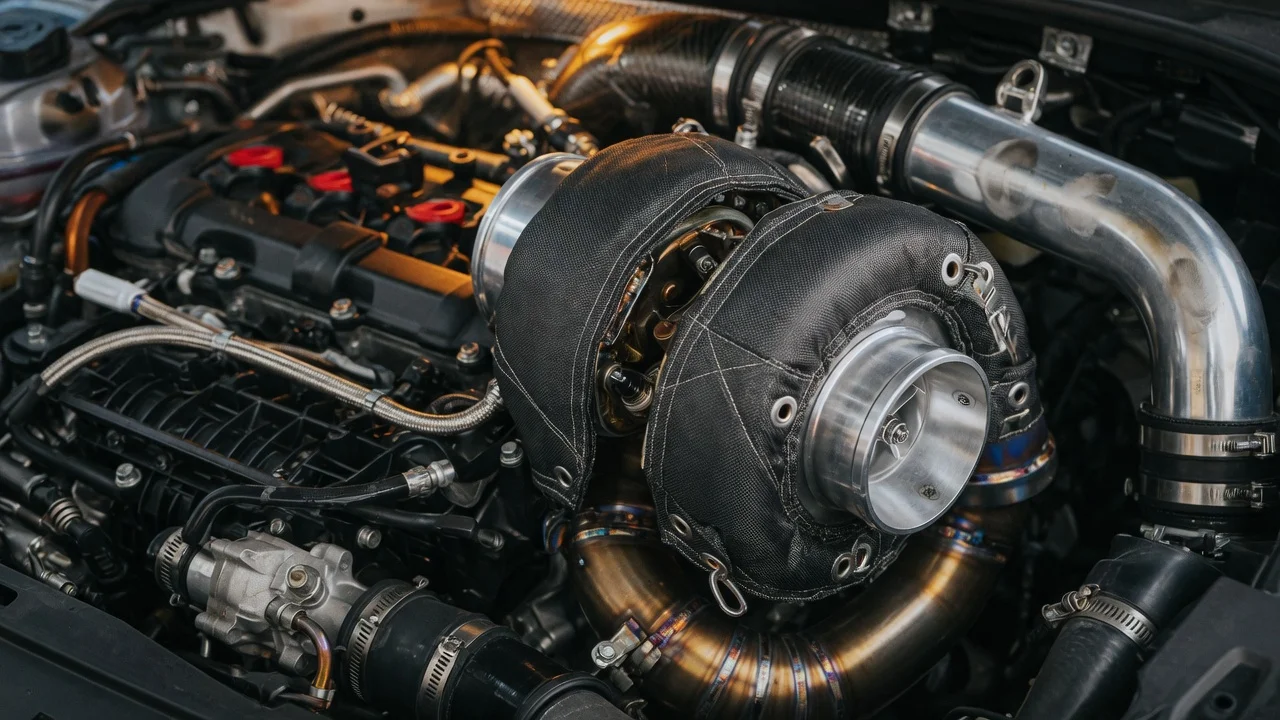
An IS38 turbo blanket wraps the hot side of the turbocharger used on many transverse EA888 Gen 3 engines. It keeps exhaust heat in the turbine housing and out of the engine bay. Whether one makes sense depends on how you drive, your engine configuration and what you expect it to fix. This guide covers fitment, materials, trade-offs and ownership costs so you can compare options without relying on marketing claims.
Define the job the product must do
Start with the problem you are trying to solve. Most owners shopping for an IS38 blanket want one of three things. The first is less radiant heat reaching nearby plastics, hoses and wiring. The second is lower intake air temperatures after repeated pulls or in traffic. The third is a better heat-managed bay on a car that already runs an upgraded intake, turbo inlet or downpipe. A blanket mainly addresses the first goal. It can affect intake temperatures in principle, because less heat radiates toward the compressor side and intake tract. How much it helps depends on airflow, ambient conditions and the rest of the installation.
Separate symptom reports from verified failures before buying. Several faults can cause sluggish response after a stop, a hot smell or discolored nearby components. Insulation will not cure a boost leak, a failing wastegate actuator, a cracked housing or an exhaust leak at the turbo flange, and it may hide them. If you have stored diagnostic codes, or a rattle that changes with load, get them inspected and resolved first. A blanket is a heat management accessory, not a repair.
Also consider how the car is used. A daily-driven car on a stock tune sees different temperatures than a car used on track days. Climate, regular stop-and-go traffic and how often you work under the hood all affect which design is practical.
Check compatibility
The IS38 is fitted to several transverse EA888 Gen 3 platforms, including the Mk7 and Mk7.5 Golf R and the 8V Audi S3. Related applications exist across the group. Model year and engine variant matter because several parts can differ between revisions and markets. These include turbo housings, heat shields, oil and coolant line routing, and nearby brackets. Before ordering, confirm the turbo part number on the car or in your service history rather than relying on the model name alone. A replacement turbo may not be the same revision as the original. Some upgraded or hybrid units based on the IS38 use modified housings that a stock-shape blanket will not fit correctly.
Check the interfaces around the turbine housing. The blanket must clear the electronic wastegate actuator and its linkage. It must also clear the oil and coolant feed and return lines, the downpipe flange and its fasteners, and any sensors nearby. Openings should line up with these points without pressing the material against hoses or wiring. Find out whether the design works with the factory heat shield or replaces it. Removing a shield that also protects a wiring loom or line can create a new problem.
With an aftermarket downpipe, compare its flange and clamp style with the blanket's cutouts, because some blanket designs assume the factory connection.
Features that affect the choice
Blankets are commonly built from layered fiberglass, basalt or silica-based textiles, sometimes around a denser insulating core. Some outer weaves are sold under names such as lava or titanium. The fiber label matters less than three things: the published continuous and intermittent temperature ratings, the layer construction, and how the edges are finished. Use stated ratings you can compare against manufacturer specifications for exhaust temperatures. Treat vague claims such as race proven, or a specific percentage drop in under-hood temperature, as marketing unless the seller explains how it was measured.
Fit is the most practical difference between products. A blanket shaped for the IS38 housing should wrap the turbine scroll evenly, without gaps or bunching. Attachment usually relies on springs, stainless wire, straps or tabs. Springs and tabs make removal for inspection easier. Safety wire is secure but slower to undo. Check that the hardware is stainless steel and that no fastener sits against a line or connector.
Ask how the outer surface handles oil and fluid contamination. Insulation that soaks up oil from a leaking line or gasket can smolder against a hot housing. Some outer weaves resist absorption better than others, but no blanket makes an oil leak safe.
Limitations and ownership costs
Installation on transverse EA888 cars is tight. Depending on the model, you may need to remove intake components or the factory heat shield to reach the turbo. Heat-cycled fasteners may be seized. Budget time for this, or shop labor. Replace any disturbed one-use fasteners or gaskets according to manufacturer specifications.
A blanket changes how you inspect the turbo. It covers the turbine housing, the flange joints and the areas where oil or coolant leaks usually show first. During scheduled service, remove or lift it and record what you find in the service history. Look for oil staining, frayed edges, broken springs and discoloration. The blanket keeps more heat in the housing, which is its purpose, but the housing and its fasteners also run hotter. Watch for loosened hardware or exhaust leaks after fitting. If the car is under warranty, check the terms before modifying parts near the turbo.
A blanket cannot fix mechanical faults or offset limited intercooler capacity. It also cannot compensate for a tune that runs the turbo hard. To judge whether it helped, log intake air temperature and related values under similar symptom conditions before and after fitting. Impressions from a single drive are not reliable evidence.
Build a practical shortlist
Narrow the options with a checklist rather than a ranking. First, the blanket is made for the IS38 housing revision on your model year and engine variant. Second, its cutouts clear the wastegate actuator, oil and coolant lines, sensors and downpipe connection on your setup. Third, it lists continuous and intermittent temperature ratings. Fourth, the construction and outer surface are clearly described, including oil resistance. Fifth, the hardware is stainless and comes off without special tools. Last, the instructions say whether the factory heat shield stays or goes.
Then weigh practical points. Consider how easily it comes off for inspection, whether replacement springs or hardware are available, and whether the seller documents fitment against specific part numbers. An accurately fitting blanket that removes easily is usually a better choice than one with bolder claims and a vague fitment list. Start with a clean diagnostic baseline and inspect it regularly, and a blanket can do the limited job it is designed for.