Choosing an Intercooler for a Twin-Turbo Setup
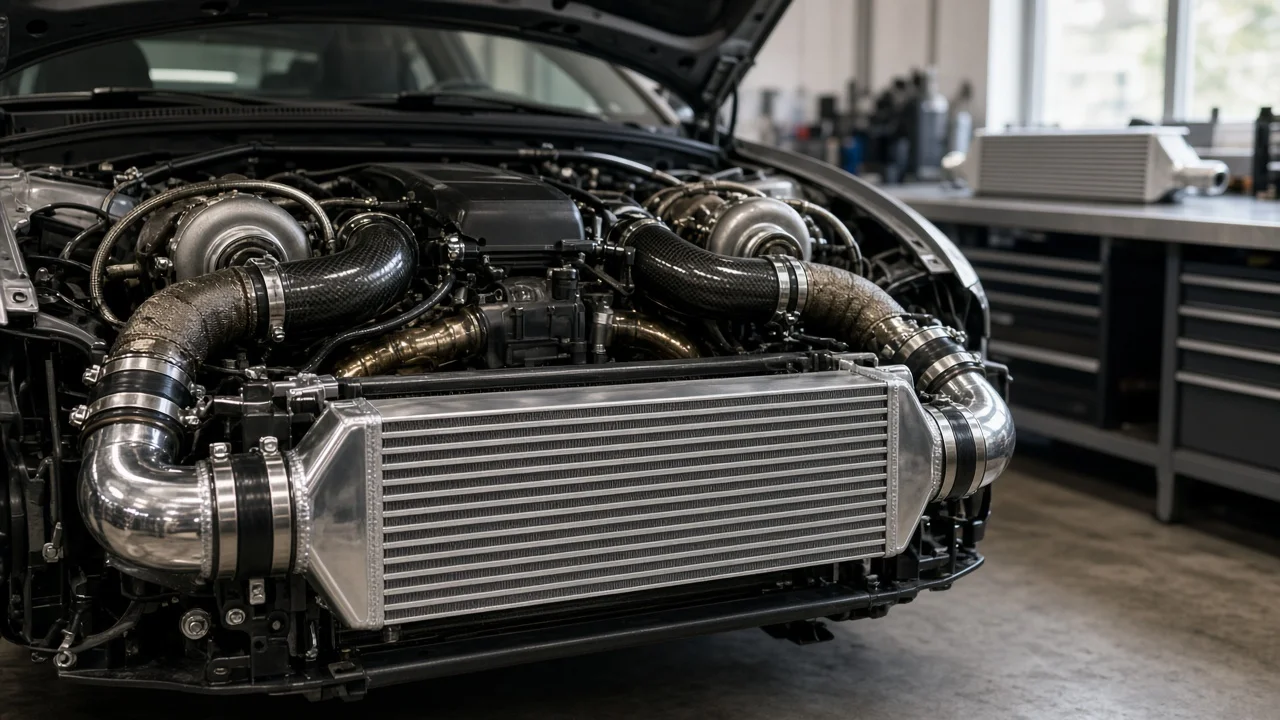
A twin-turbo engine sends two streams of compressed, heated air toward the intake, and the intercooler decides how much of that heat reaches the cylinders. Choosing one is less about fitting the biggest core and more about matching your engine configuration, piping layout and goals. This guide covers how to define the job, confirm fitment, weigh features without relying on marketing, and narrow the options to a short list.
Define the job the product must do
Start with how the vehicle is actually used: daily driving on factory boost, a mild tune, towing, track sessions or sustained high load on long grades. A street car at stock boost may gain little from an oversized core, while repeated hard pulls expose heat soak quickly. Note practical constraints as well: budget, whether you will accept trimming the bumper, emissions inspection rules where you live, warranty concerns and any plans for more power later. Record the exact model year and engine variant, because twin-turbo platforms often change piping, sensors and mounting points between years and trims.
Be clear about the problem you are solving. A symptom report, such as power fading after several pulls or an owner saying the stock unit heat soaks, is not a verified failure. A verified problem is something measured or found: logged intake air temperatures that climb and stay high under repeated load, a leak confirmed by a pressure test, a cracked end tank found during inspection, or diagnostic codes for underboost or charge-air temperature that persist after hoses and clamps have been checked. Write down the symptom conditions, including ambient temperature, gear, speed and how long the load lasted, so you can compare results before and after any change.
If the factory intercooler is simply leaking, a like-for-like replacement may be the right answer rather than an upgrade. If your logs show the stock core holding temperatures well at your boost level, an upgrade may bring little measurable benefit. Review the service history too: earlier repairs, aftermarket parts already installed and the amount of oil in the charge pipes all change the diagnosis. A light oil film is common on many turbocharged engines, while heavy pooling points to a separate issue worth investigating first.
Check compatibility
Twin-turbo layouts differ widely. Some engines route each turbo through its own intercooler before the paths merge, others join both compressor outlets ahead of a single core, and some use air-to-water units mounted on or near the engine. An intercooler for twin turbo use built around one layout will not suit another without new piping. Confirm the number of inlets and outlets, their positions and diameters, and the connection type, whether silicone couplers, quick-connect fittings or flanges, against your engine and its turbo outlets.
Physical fit comes next. Compare core dimensions with the space available and check clearance to the radiator, A/C condenser, crash structure, tow hook mounts, horns, washer reservoir and any parking or radar sensors. Some kits require trimming bumper supports or relocating parts. Make sure intake air temperature and boost pressure sensor ports are provided in usable locations and that bypass or blow-off valve mounting carries over. Check whether factory ducting and undertrays still fit, since they guide air through the core.
Verify fitment against manufacturer specifications for your specific model year and engine variant, not just the platform name. Mid-cycle updates and market differences can alter mounting points or pipe routing. When a listing covers a range of years, confirm the chassis and engine code it was designed for. For air-to-water systems, also confirm where the pump, reservoir and heat exchanger mount and how they connect electrically.
Features that affect the choice
Core size involves trade-offs. A larger frontal area and thicker core generally add cooling capacity and thermal mass, but they can also increase pressure drop, charge volume, weight and the restriction to airflow reaching the radiator behind it. Bar-and-plate cores tend to be robust and carry more mass to absorb heat, while tube-and-fin cores are usually lighter and can flow with less restriction for a given size. Neither is universally better. End tank shape matters too, because poorly designed tanks can leave parts of the core underused.
Some considerations are specific to an intercooler twin turbo installation. Where each bank has its own core or path, uneven cooling or restriction can make one side run warmer or deliver different boost, which the engine management may compensate for or flag. Longer piping and extra bends add volume and more joints that can leak. Air-to-water systems allow a short charge path and steady temperatures over brief bursts, but they add a pump, coolant and a heat exchanger with its own limits under sustained load. Air-to-air designs are simpler but depend on airflow through the front of the car.
Separate useful evidence from labels. Useful evidence includes data logs from vehicles with the same engine variant showing intake temperatures and boost under stated conditions, pressure drop figures with the flow they were measured at, clear construction details, visible weld quality and written warranty terms. Weak evidence includes phrases like race proven, percentage gains without conditions, and dyno results from a different tune or with no baseline. Treat any claim without test conditions as unverified.
Limitations and ownership costs
Installation often means removing the bumper, and some kits require draining coolant or moving the A/C condenser, which calls for proper refrigerant recovery equipment. After installation, pressure test the whole charge system and recheck clamps after the first few heat cycles. Your tune may need revision, since a change in charge volume or temperature can alter boost control behavior. Budget for consumables such as couplers, clamps, O-rings and, on air-to-water systems, coolant.
Ongoing maintenance is modest but real. Periodic inspection should look for oil residue, debris, bent fins and loose clamps, and air-to-water systems need checks of pump operation and coolant condition. Front-mounted cores are exposed to road debris and minor impacts. An intercooler also cannot fix a boost leak elsewhere, a sticking wastegate, a worn turbo, a faulty sensor or fueling and ignition problems. On many stock setups it mainly reduces heat-related timing reduction rather than adding power on its own, and it may affect emissions compliance or warranty coverage.
Build a practical shortlist
Before comparing products, confirm your model year, engine variant and twin-turbo layout, and record a baseline log of boost and intake temperature under repeatable conditions. Then check each candidate against the same points: matching inlet and outlet count and size, physical clearance with your bumper and sensors, sensor and valve provisions, required modifications, core type and size relative to your goal, documented test conditions, included hardware, warranty terms and whether a tune revision is needed.
Narrow the field to two or three options that pass every compatibility check, then favor the one whose evidence comes from comparable vehicles rather than the one with the boldest claims. Ask the seller to clarify anything unstated, such as exact year coverage or pressure drop conditions. After installation, log again under the same conditions as your baseline so the result is measured rather than assumed.