Choosing an HX35 Turbo Blanket: Fitment, Materials and Trade-Offs
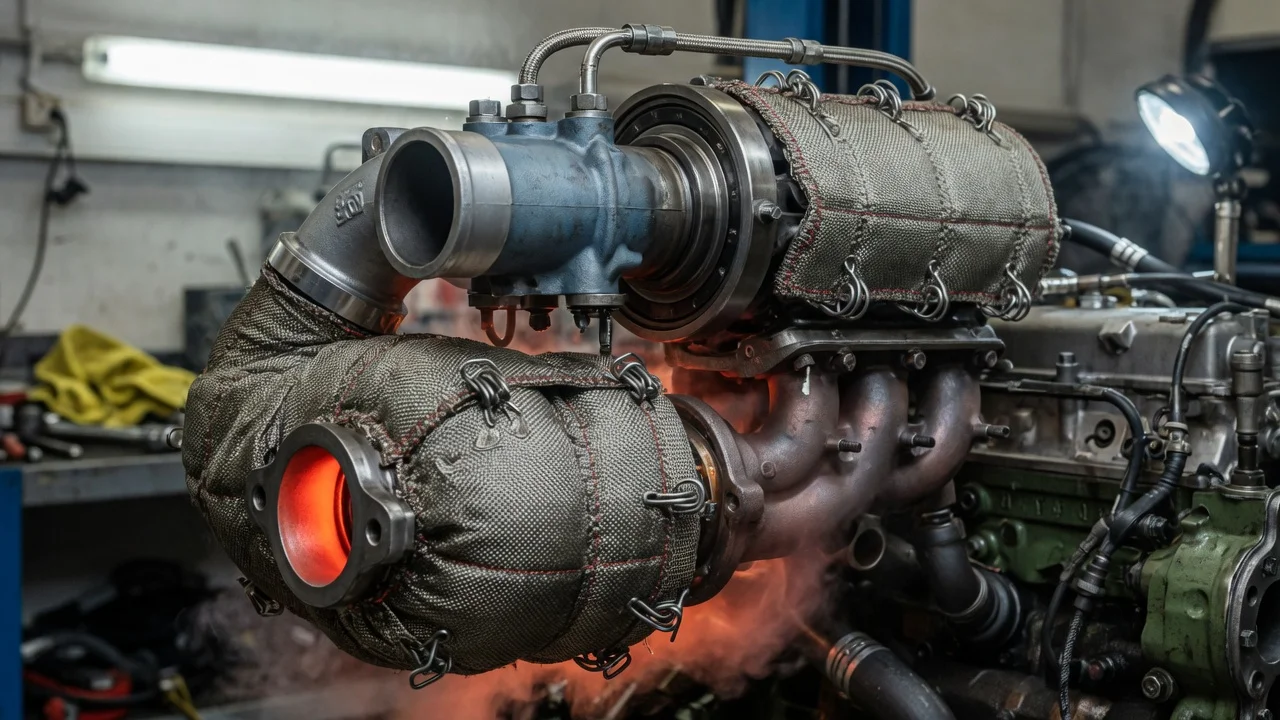
An HX35 turbo blanket wraps the turbine housing of a Holset HX35 so that exhaust heat stays contained instead of radiating into the engine bay. Whether one is worth buying depends on how the truck is used, what sits near the turbo and which version of the HX35 is actually bolted to the manifold. This guide covers how to match a blanket to your setup, which features matter and what a blanket cannot do.
Define the job the product must do
Start with the reason you want a blanket, because it determines how much you should spend and which design suits you. The most common goals are protecting nearby wiring, hoses, intake piping and the firewall from radiant heat, and lowering under-hood temperatures where the turbo sits close to other components. That second case is typical of engine swaps, rotated housings and compound setups. A daily-driven tow rig that sees long climbs in summer needs a durable blanket that survives repeated heat cycles and road grime, while a weekend or show truck may prioritize appearance and easy removal.
Next, list your practical constraints: available clearance around the housing, whether a factory or aftermarket heat shield is already fitted, how often you remove the turbo or downpipe, and whether the truck regularly drives in rain, snow or mud. If heat damage prompted the purchase, such as a brittle intake boot or a melted wiring loom, treat it as a symptom report rather than a verified cause. Confirm that radiant heat from the turbine housing is responsible and not an exhaust leak at the manifold, turbine inlet or downpipe. A blanket placed over a leaking flange will hide the leak while the hot gas keeps damaging nearby parts.
Check compatibility with your HX35 and engine
The HX35 is closely associated with Cummins 5.9-liter diesels and is popular in swaps, but HX35 is a family name, not a single part. Units differ in whether they have an internal wastegate, in turbine housing size and A/R, and in how the housing is clocked. A blanket is cut and shaped for a particular housing, and a wastegated turbo needs openings that clear the actuator canister and rod without restricting their movement. Model year and engine variant matter as well: trucks from similar years can carry different turbo specifications depending on transmission, emissions package and market, and later engines moved to other turbo families entirely. A listing that simply says it fits Cummins trucks is not enough. Read the data plate on your turbo for the exact part number, note any previous replacement recorded in the service history, and compare those details with the blanket manufacturer specifications rather than relying on the vehicle description alone.
Then check the interfaces around the housing. The blanket must clear the turbine inlet flange and its studs or nuts, the exhaust outlet clamp or V-band, the oil feed and drain lines, and any sensor, bracket or line that passes close by. Aftermarket manifolds and rotated housings change these positions, so a blanket that fits a stock configuration may sit badly on a modified one. Measure the gap to the firewall, inner fender and intake piping, since the blanket adds thickness to the housing.
Features that affect the choice
Material choice is the main trade-off. Blankets are commonly built from fiberglass, basalt or lava-rock fiber, or silica-based fabrics, often with an inner insulating layer and a different outer cover. Labels such as titanium, lava or extreme heat describe a material family or a marketing theme, not proven performance. A temperature rating is useful only when the manufacturer states whether it is a continuous or intermittent figure and which layer it applies to. If a seller cannot tell you that, treat the number as a claim rather than a specification.
Fastening and construction affect daily ownership more than the headline rating. Springs with hooks, stainless safety wire and straps all work, but springs usually make removal for inspection faster. Look for high-temperature stitching, reinforced edges around the wastegate and flange cutouts, and an outer surface that resists absorbing oil and water. A thicker blanket insulates more but needs more room. Claims of quicker spool or added power should be treated as owner reports unless they come with measured data from a comparable engine configuration; the dependable benefit of a blanket is reduced radiant heat around the housing.
Limitations and ownership costs
Installation is simple but should only be done on a fully cooled engine. Fiberglass and mineral fibers irritate skin and eyes, so wear gloves, eye protection and long sleeves. Many manufacturers warn that a new blanket may smoke or give off an odor during its first heat cycles, so expect that rather than assuming a fault. Before the first drive, confirm that the blanket does not touch the wastegate linkage, oil lines or wiring, and that every spring or wire is secure.
Ongoing care is mostly inspection. Check the blanket at routine service intervals for fraying, loose fasteners and contamination. An oil leak from the feed line, drain line or turbo seals can soak the fabric, which is a fire hazard, so an oil-saturated blanket should be replaced after the leak is repaired. A blanket also makes it harder to spot housing cracks, flange leaks and soot trails, so remove it whenever you are diagnosing the turbo or exhaust and note its condition in the service history. Budget for an eventual replacement, since heat cycles and road debris wear the outer layer.
A blanket cannot fix low boost, boost leaks, smoke, surge or high exhaust gas temperatures, and it does not replace a pyrometer for monitoring them. On electronically controlled engines, heat-related wiring faults may appear as diagnostic codes, but a code alone does not prove heat damage and still needs proper diagnosis. Some owners worry that trapping heat raises housing temperatures; if your turbo or manifold has a history of cracking, follow the turbo and engine manufacturer guidance before adding insulation.
Build a practical shortlist
Narrow the options with a short checklist. Confirm that each candidate is designed for your exact HX35 part number and housing, including wastegate cutouts if your turbo has one. Note the material, the stated continuous temperature rating and which layer it covers. Compare fastening methods and decide how often you will remove the blanket. Check your measured clearance against the blanket thickness. Finally, look at the return policy and whether replacement springs or hardware are sold separately, since lost fasteners are a common reason to replace an otherwise usable blanket.
Compare two or three products against that checklist rather than chasing a single best option. Give more weight to fitment feedback from owners with the same engine configuration, model year and turbo variant than to general star ratings. When reading reviews, separate symptom conditions, such as an owner noticing a cooler intake boot after towing in hot weather, from verified measurements taken under stated conditions. The blanket that fits your housing cleanly, clears every line and comes off easily for inspection is usually the right choice.