Choosing a GT35 Turbo Blanket: Fitment, Materials and Trade-offs
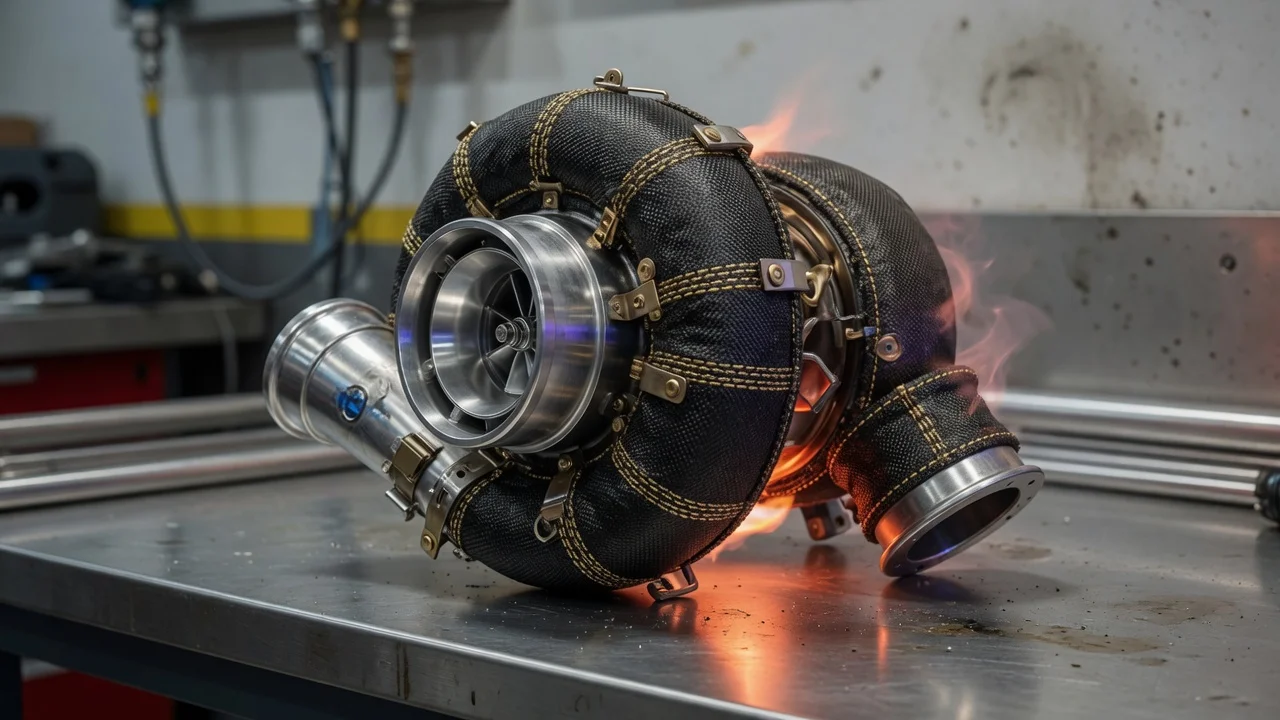
A turbo blanket wraps the turbine housing to cut radiant heat reaching nearby parts and to keep more heat in the exhaust side. On a GT35-family turbocharger, choosing one depends less on brand names than on matching the housing, inlet flange and wastegate layout on your specific build. This guide covers what the blanket needs to do, how to check fitment, which features matter, what ownership costs, and how to narrow the field to a short list you can defend.
Define the job the product must do
Most owners buy a blanket to reduce under-hood heat around wiring, coolant and brake lines, intake and charge piping, and plastic components close to the turbine housing. A secondary goal is limiting heat soak into the intake tract during stop-and-go driving or between track sessions. Claims of faster spool are often repeated, but results depend heavily on the setup, so treat them as a possible side effect rather than a reason to buy.
Separate symptom reports from verified causes before spending money. A melted connector, a cracked coupler or rising intake air temperatures under certain symptom conditions can point to radiant heat, but they can also come from an exhaust leak, a failed manifold gasket, poor intercooler airflow or a sensor fault. Read any stored diagnostic codes, log temperatures if your engine management allows it, and do a physical inspection first. A blanket will not fix a leak or a weak intercooler, and it can hide the evidence of both.
Then write down your practical constraints: engine configuration (top-mount, low-mount or rear-mounted turbo), street, track or mixed use, how often the turbo comes off, any sanctioning body rules on insulation materials, and your budget for periodic replacement. These answers decide how much material quality and removability you actually need.
Check compatibility
The GT35 name covers genuine units in several versions as well as many replicas, and their turbine housings are not interchangeable in shape. Housings differ in A/R, in inlet flange style (T3 and T4 variants are both common in this size class) and in whether they have an integrated wastegate. Blankets are usually listed by turbo frame or housing family, so confirm the part number on the turbo's identification tag and measure the housing rather than relying on the listing title. A replica housing that looks similar can still have a different volute shape or flange thickness.
Check every interface the blanket must clear: the inlet flange and studs, the outlet and downpipe connection, the wastegate actuator rod and port on internally gated housings, and any speed sensor if fitted. The blanket should cover the turbine housing only, leaving the oil and coolant lines on the center section and the compressor housing exposed. Also confirm clearance to the firewall, strut tower, steering shaft and hood. Model year and engine variant matter here, because the same platform can route harnesses, heat shields and lines differently, and an aftermarket manifold may orient the turbo at a different angle than the kit the blanket was photographed on.
Finally, read the turbocharger maker's installation documentation and manufacturer specifications for your unit. Some turbo makers address insulation, cooldown practice and warranty conditions, and that guidance should outrank general advice from blanket sellers.
Features that affect the choice
Material is the first trade-off. Outer shells are commonly woven fiberglass, basalt, silica or titanium-type volcanic fabric, over an inner insulating layer. Look for published continuous and intermittent temperature ratings and note what each figure refers to: the fabric, the insulation core or the finished product. Labels such as race grade, lava or extreme heat are marketing terms unless a specification supports them.
Construction affects fit and lifespan as much as material does. A blanket shaped for a specific housing usually sits tighter than a universal wrap, which matters where clearance is limited. Compare insulation thickness, the type of stitching thread, cutouts for the wastegate and flange, and the fastening method: stainless springs with hooks, stainless straps or safety wire. Springs make removal easy but can lose tension; wire holds well but is slower to service. An oil-resistant outer coating is worth having if your engine bay sees any seepage.
Weigh evidence by how well it transfers to your car. A documented fitment list by housing, written installation instructions and clear photos of the inner layer are useful. Owner reviews and before-and-after temperature claims are symptom reports from a different engine, boost level, climate and driving style, so treat them as hints rather than proof.
Limitations and ownership costs
Install on a cold engine, and check the turbine studs, flange gaskets and downpipe connection before you cover them, because the blanket will hide them afterward. Many blankets give off smoke or odor during the first heat cycles; check the instructions so you don't mistake that for an oil leak. Recheck spring tension and fastener position after the first few drives, since materials settle once heated.
The main ongoing risks are concealment and contamination. A blanket can hide a cracked housing, a leaking gasket or a weeping oil feed until the problem is advanced. Fabric soaked with oil or fuel becomes a fire hazard and should be replaced, not dried and refitted. Keeping heat in the turbine housing also means the housing, studs and adjacent gaskets run hotter; how much that matters depends on housing material, cooling and how hard the car is driven. Plan periodic removal for inspection and note each check and replacement in the service history.
Know what the product cannot do. It does not replace heat shielding for wiring near the downpipe, does not correct boost leaks or tuning problems, and does not diagnose anything. Budget for eventual replacement, spare springs or wire, and the labor of removing it whenever the turbo or manifold is serviced.
Build a practical shortlist
Start by eliminating options rather than ranking them. Remove any blanket without a documented fit for your exact housing family, A/R range, flange style and wastegate arrangement. Remove any listing that gives no temperature rating, no material description or no installation instructions. What remains is a realistic pool, usually only a few candidates.
Compare those candidates on the same points: confirmed housing and flange fit, cutouts that match your wastegate and sensor layout, clearance to surrounding parts on your model year and engine variant, outer and inner materials with stated ratings, oil resistance, fastening method, ease of removal for inspection, and total cost including spare fasteners and expected replacement. Check the return policy in case the fit is off once it is on the car.
Choose the option that meets your defined job with the fewest compromises on fit and serviceability, not the one with the strongest marketing label. After installation, record the part, date and inspection plan so future diagnosis has a clear baseline.