Choosing Ford Transmission Cooler Lines
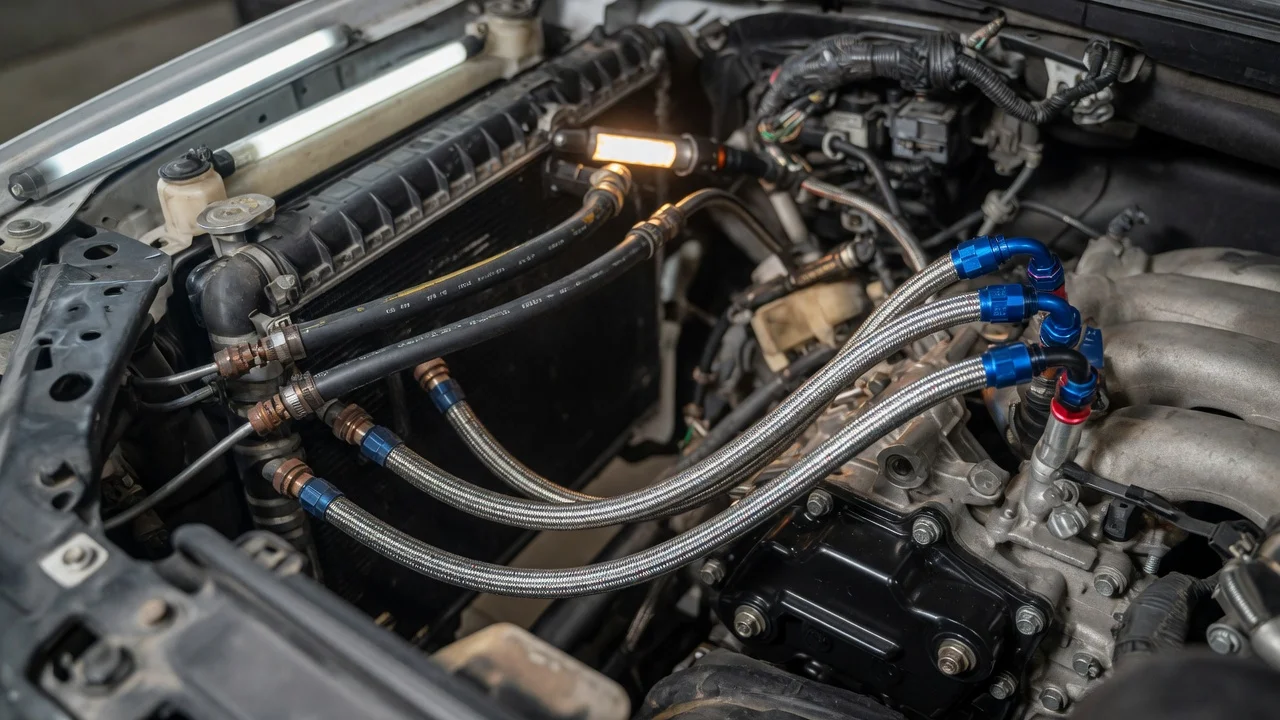
Ford transmission cooler lines carry hot fluid from the transmission to a cooler and back again. The cooler is usually inside the radiator or a separate auxiliary unit. When a line weeps, rubs through or cracks at a crimp, the replacement has to match your vehicle, fittings and routing. This guide explains how to choose the right lines for your Ford, which features matter, and what the part cannot do for a transmission that is already struggling.
Define the job the product must do
Start with why you are shopping, because each reason leads to a different purchase. Common reasons include a visible leak at a crimped hose section, a line damaged during other work, corroded steel tubing on a salt-belt truck, or an upgrade for towing. Replacing one leaking line on a commuter car is a smaller job than replumbing a work truck that pulls a trailer and needs an auxiliary cooler. Consider how the vehicle is used, how long you plan to keep it, and whether you will do the work yourself or pay a shop.
Confirm the leak source before buying anything. Fluid near the lines can come from the radiator tank, the fitting O-rings, the pan gasket or another system entirely, and airflow spreads drips backward along the underside. Clean the area, run the engine, and trace the wet residue to its highest point. A puddle or a low fluid level is a clue, not proof that a particular line has failed. If the transmission also slips, shifts harshly or shows overheating warnings, record the diagnostic codes and the shift behavior before assuming new lines will solve the problem.
Check compatibility
Cooler line fitment is narrow. Ford varies line shape, length and fittings across model years, cab and bed configurations, engines, drivetrains and transmission type. Two trucks with the same model name can need different parts. Gather the following before you search: • VIN; • Model year; • Engine; • Transmission model, from the build label or service records; • Whether the vehicle has a factory tow package or auxiliary cooler; Many listings separate the supply and return lines, or the upper and lower lines, so note which one is actually damaged.
Look closely at the connection ends. Many Ford applications use quick-connect couplings with retaining clips or spring lock style fittings at the radiator or transmission, while others use threaded fittings. The new line must match those ends, and some quick-connect styles need a specific release tool to separate without damage. Also confirm the fluid specification for your transmission, because Ford automatics call for different fluids, such as Mercon V, Mercon LV or Mercon ULV, depending on the unit. The fluid does not change which line you buy, but you will need the correct fluid on hand to refill after replacement.
Features that affect the choice
The main decision is between original equipment lines, aftermarket complete assemblies and repair kits. A complete assembly reproduces the factory bends and fittings, so it usually installs with the least guesswork. It may, however, require removing other components to route it into place. A repair kit splices new hose into the existing steel tubing using compression fittings or clamps. Kits cost less and suit a leak at a single crimped section, but their durability depends on careful cutting and seating, and on the condition of the remaining steel.
Treat material claims with caution. Braided covering can resist abrasion, and coated or stainless tubing can resist corrosion. Labels such as heavy duty or upgraded say little, though, without a stated pressure and temperature rating and a matching fitting style. Check whether the hose is rated for automatic transmission fluid, whether replacement O-rings or clips are included, and whether the listing names your exact vehicle rather than a broad range. Clear photos of both ends, a part number cross-reference and a written warranty tell you more than marketing terms do.
Limitations and ownership costs
Budget beyond the part price. Replacement usually means losing some fluid, so buy enough of the correct fluid to refill, plus any new clips, O-rings or clamps. Many newer Ford automatics have no traditional dipstick. Instead, they use a check plug or a temperature-based procedure for setting the level, so follow the service procedure for your transmission rather than guessing. Underfilling or overfilling can cause shift problems of its own. Also factor in the release tool, a drain pan and, if access is tight, shop labor.
Know what new lines cannot do. They will not fix worn clutches, a failing torque converter, valve body faults or a cooler that is clogged internally. If the transmission has already failed or been rebuilt, debris can remain in the cooler and lines. Rebuilders often require flushing or replacing the cooler as part of the repair, so ask your shop what its warranty requires. Review the service history too, because a vehicle that ran low on fluid may already have heat damage that new lines will not reverse. After installation, check for leaks and recheck the fluid level after the first few drives.
Build a practical shortlist
Narrow your candidates with a short checklist before you buy: 1) Confirm the listing matches your vehicle details: model year, engine, transmission, drivetrain and towing equipment. 2) Match the line position (supply or return) and both end fittings to the parts on your vehicle. 3) Choose between a complete assembly and a repair kit, based on how much of the old line is sound and how much disassembly you can handle.
Then compare the remaining options on evidence rather than labels. Look for stated ratings for transmission fluid, included clips or seals, a clear return policy for fitment mistakes, and a warranty you can actually use. Price the full job, including fluid and tools, not just the line. If two parts still look equal, choose the one whose photos and part number most closely match what you removed. If diagnostic codes, slipping or overheating remain unexplained, have the transmission evaluated before spending money on lines alone.