Choosing a Check Engine Light Code Reader
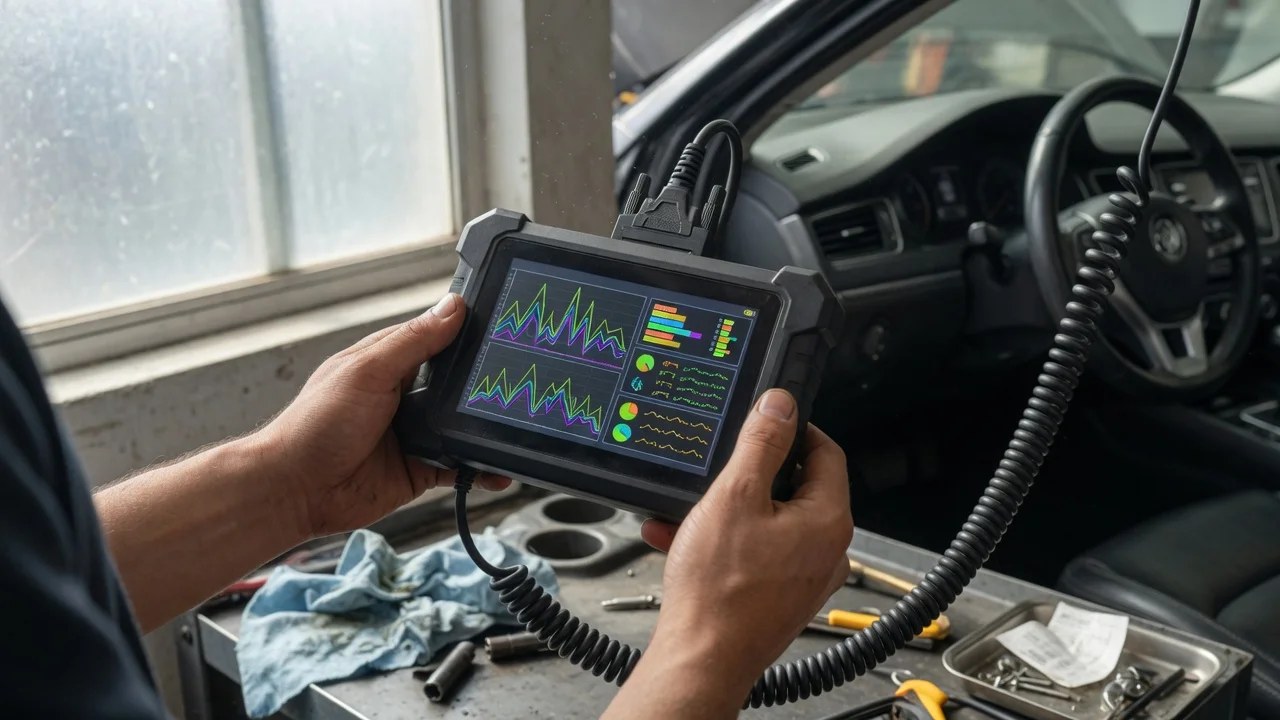
For an initial check of a check engine light, look for a code reader that explicitly supports your vehicle and can display stored fault codes, pending codes and their descriptions. A compatible basic reader can help you decide what to investigate next. If you also need to diagnose systems such as the brakes or airbags, confirm that the tool supports those systems on your exact vehicle.
Check compatibility before buying
OBD-II, or second-generation on-board diagnostics, provides standardized access to certain vehicle diagnostic information. However, a product advertised as an OBD-II reader does not necessarily support every diagnostic function on every vehicle. Check the manufacturer's coverage information against your vehicle's model year, make, model, market and engine or powertrain.
Match the supported functions to the problem you want to investigate. Reading engine-related emissions codes is a different requirement from accessing anti-lock braking, airbag, transmission or other control systems. Do not assume that a tool can access a system simply because it plugs into the vehicle's diagnostic socket.
Choose features that help you investigate
Clear code descriptions are useful, but the reader should also show the actual code so you can retain it for further investigation. Pending codes can reveal a detected fault that has not yet met the conditions for a confirmed code. Freeze-frame data records operating conditions associated with a fault, while live data shows available readings as the vehicle operates. These features can provide context, although interpreting them may require vehicle-specific information.
Check whether you can save or export results before clearing anything. Readiness-monitor information is also useful: it indicates whether the vehicle has completed certain emissions-system self-checks. It does not, by itself, establish that the vehicle is fault-free or will pass every applicable inspection requirement.
Check the full cost and setup requirements
Before committing, establish what the purchase includes and whether the functions you need require a paid app, subscription, software update or additional vehicle coverage. For a phone-connected reader, verify phone operating-system compatibility and the required connection method. Also check the update policy, support arrangements and return conditions in case the advertised coverage does not meet your needs.
Understand what a fault code can tell you
A fault code identifies a condition detected by the vehicle's diagnostic system; it is not proof that a named component needs replacing. Wiring, connections and other operating conditions can contribute to a fault. Use the code and recorded data to guide further checks, rather than buying a part solely from the reader's description.
Record the codes and available freeze-frame information before using the erase function. Clearing codes does not repair the underlying cause and can reset emissions readiness information. Follow the vehicle's guidance for responding to the warning light; a code reader cannot establish that continuing to drive is safe.
What remains to be verified
No vehicle details, product specifications, prices or test results were supplied, so compatibility, value and diagnostic coverage cannot be confirmed for a particular reader. Before buying, verify support for your exact vehicle and required functions, then confirm the total cost. Those checks are necessary to turn a general shortlist into a suitable purchase.