Choosing an OBD2 Scanner for Subaru
What is the answer to my immediate question?
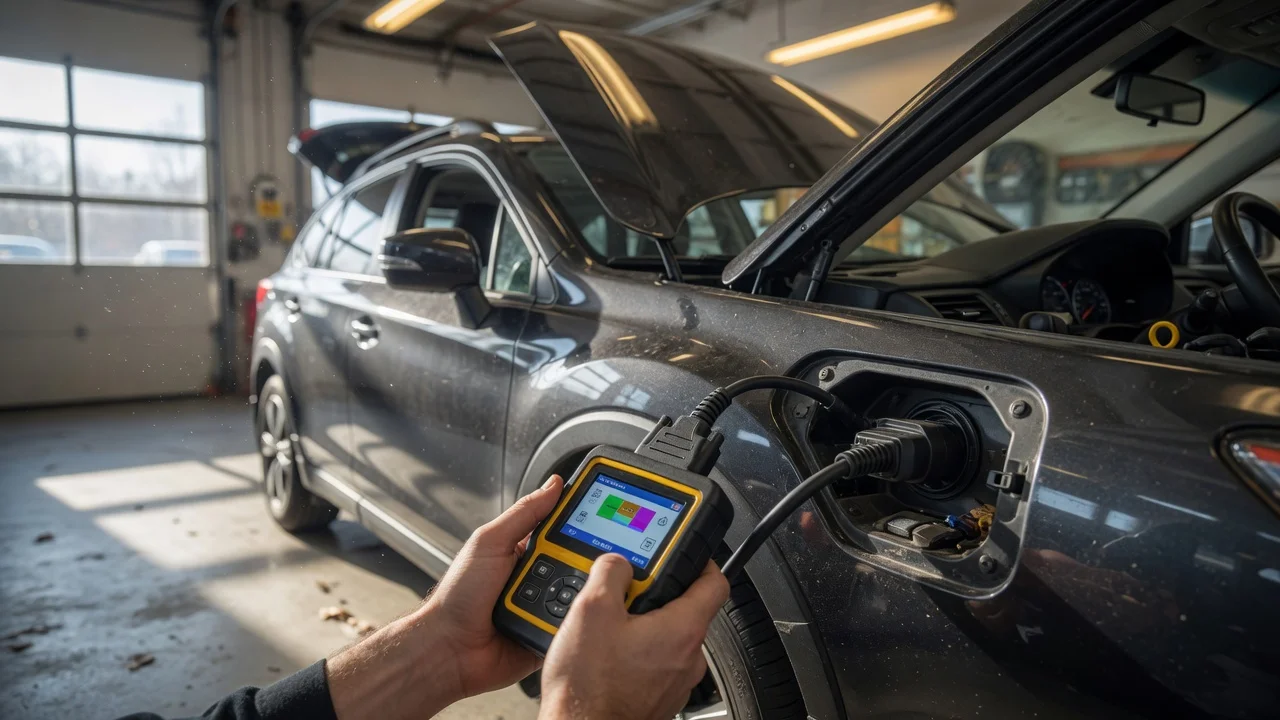
The right OBD2 scanner for a Subaru depends on what you want it to do. A basic universal OBD2 code reader will read and clear emissions-related diagnostic trouble codes on any Subaru sold in the United States from 1996 onward, because these vehicles use the standard OBD2 connector and core protocols. That is enough for many check-engine light situations. If you need Subaru-specific systems such as ABS, airbags, transmission diagnostics, or EyeSight-related modules, a more capable scanner with enhanced Subaru coverage is usually required. The materially important condition is the model year and system you want to scan: a simple code reader may not reach non-powertrain modules, and older or less common trims can respond differently depending on the tool's software coverage.
What to check before committing to a purchase
Before buying, prioritize suitability for the systems you actually expect to use, compatibility with your Subaru's model year and powertrain, and the total cost of making the scanner useful over time.
Confirm the OBD2 connector and protocol. For US-market gasoline Subarus from 1996 onward, the standard 16-pin OBD2 port is present, and the scanner must support the applicable OBD2 protocols. This is generally a low-risk check, but early OBD2 vehicles can still show quirks in how quickly or completely they respond.
Decide whether you need Subaru-specific or universal coverage. A universal reader is fine for powertrain codes. For ABS, airbag, body, transmission or other manufacturer-specific modules, check that the tool's advertised Subaru coverage names your model year and the module you need. Do not assume that the presence of a port means the software can access every controller.
Consider how the device handles updates. Some scan tools include lifetime updates, while others require a paid subscription or per-brand upgrade. If you plan to keep the scanner across multiple Subarus or model years, an ongoing software cost can outweigh a lower initial price.
Check the display and connection method. Handheld units work without a phone, while phone or tablet adapters and mobile apps can offer faster software updates and better screens. A standalone unit can be simpler in a garage, but an app-based adapter may require a compatible phone and a stable app experience.
Review total ownership costs rather than only the advertised price. For any quoted or advertised price, consider what is included: the scanner or adapter, required app subscription, model-specific software, cables, and updates. Advertised prices are not the same as completed transactions, and accessories or subscriptions can change the real cost.
A useful pre-purchase check is to search the scanner manufacturer's coverage list for your exact Subaru model, model year, trim and powertrain. If the coverage is described only in general terms, that is a gap to resolve before relying on the tool for ABS, airbag or other manufacturer-specific diagnostics.
Which alternative best fits my priorities?
Subaru owners generally choose among three types of scanner. The best choice depends on how deep the diagnostics need to go and how much you want to spend over time.
Basic universal code reader | Best for reading and clearing check-engine light codes and viewing basic powertrain data. If it shares the usual OBD2 functions with other scanners, the deciding factor is often price and ease of use rather than a unique diagnostic advantage. | Does not reliably reach Subaru-specific systems such as ABS, airbags or transmission modules. App-based OBD2 adapter | Good for owners who want inexpensive hardware and a better smartphone display. Software can be updated quickly and may include enhanced data for some Subaru models. | Requires a compatible phone or tablet and possibly a paid app or in-app purchase; total capability depends on the app. Professional or enhanced scan tool | Offers broader manufacturer-specific coverage and can be the better choice for ABS, airbag, body and other modules. | Higher upfront cost and possibly paid updates; more functions than an owner who only needs basic code reading will use.
If your priority is low cost and the main job is a check-engine light on a 1996-or-newer Subaru, a basic universal code reader or a simple app-based adapter is the more practical starting point. If your priority is deeper service, especially ABS or airbag work, choose a scan tool with explicitly verified Subaru coverage for your model year. A standalone enhanced scanner is convenient when you do not want to depend on a phone; an app-based enhanced solution can be the more flexible option if you accept the subscription or in-app purchase costs.
What the available evidence does not resolve
Compatibility claims and specific feature performance vary by exact model year, trim and module. The information reviewed here does not include measured results for specific scanner models, current advertised prices, or a verified list of every Subaru controller that each scanner can access. Those details should be checked against the manufacturer's current coverage information for your vehicle before purchase.