Choosing an OBD2 Scanner for Mitsubishi
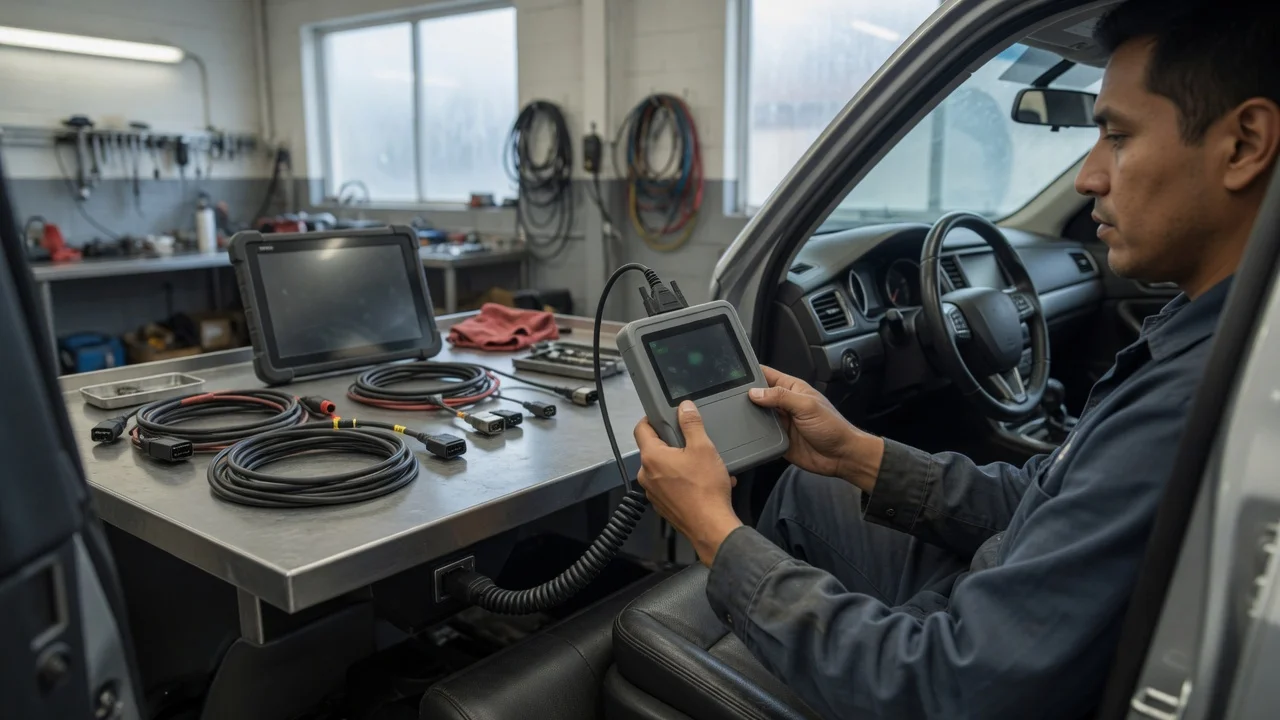
Immediate answer
For most Mitsubishi owners, the practical choice is a handheld or adapter-style scanner that supports standard OBD2 powertrain codes first, then adds Mitsubishi-specific coverage only if you expect to diagnose ABS, airbag, transmission, or body modules. A basic OBD2 tool will read and clear generic engine and emissions codes on gasoline-powered Mitsubishi models sold in the US from 1996 onward. Diesel models and some markets follow different diagnostic requirements, so the model year, market, trim, and powertrain are the main conditions that change the answer.
Start with what you need the scanner to do
The immediate question of which OBD2 scanner to buy for a Mitsubishi is best answered by the job you intend to do, not by brand loyalty to the scanner. A check-engine light caused by a loose fuel cap, an oxygen sensor, or an evaporative emissions issue can usually be identified with generic powertrain coverage. If the problem is an ABS warning, SRS airbag light, or a transmission fault, the tool must support enhanced manufacturer-specific diagnostics for your Mitsubishi model.
Generic OBD2 covers federally mandated powertrain and emissions data through the standard diagnostic connector. This includes stored and pending diagnostic trouble codes, freeze-frame data, and basic live data such as engine speed, coolant temperature, and fuel-trim readings. That is enough for common engine-light checks. It is not enough for Mitsubishi ABS, airbag, transmission, or body control modules, because those systems are outside the core OBD2 requirement and depend on manufacturer-specific protocols.
Compatibility checks before you commit
Before shortlisting a scanner, confirm the exact model year, market, engine, and trim of the Mitsubishi. Compatibility claims often sound broad, but a tool that reads enhanced data on one Mirage or Outlander build may not read every module on another. Check whether the tool lists the specific model-year range and the specific systems supported, rather than only advertising the Mitsubishi name.
For US-market gasoline vehicles from 1996 onward, the 16-pin OBD2 connector is standard. Older models may use different diagnostic connectors or protocols. Imported or non-US models are not guaranteed to follow the same OBD2 compliance date or connector behavior, so the market matters. Confirm the connector and compliance assumption against the vehicle itself before relying on it.
Ownership and installation costs
The cost of a scanner is not only its advertised price. Handheld tools are typically self-contained, while adapter-style tools may pair with a smartphone or laptop app that requires a separate purchase or subscription. Some enhanced Mitsubishi functions are unlocked through paid software packages, so a cheap adapter does not always give you access to every advertised system. Before buying, identify the included payment model: one-time hardware cost, one-time software cost, or ongoing subscription.
Price evidence is not supplied here. Market and date figures should be treated as unverified unless you check current advertised prices against completed transactions. Be careful comparing an advertised base price, because a tool may require a software bundle or an app subscription before the Mitsubishi-specific coverage actually works. The relevant question is what you must pay to get the specific system coverage you need, not what the cheapest listed price buys.
Comparing generic and enhanced scanners
If your priority is basic check-engine diagnosis on a gasoline Mitsubishi from 1996 or later, a well-reviewed generic OBD2 tool is usually the simplest and lowest-cost option. It can read and clear powertrain codes, show freeze-frame information, and monitor common engine data. The trade-off is that it will not access Mitsubishi-specific modules or advanced functions.
If you need to diagnose ABS, airbag, transmission, or body-related faults, choose a tool with confirmed enhanced Mitsubishi coverage for your model year and market. The trade-off is higher cost and a greater chance that the coverage is narrower than its marketing suggests. The best fit depends on whether you are solving occasional engine-light issues or actively maintaining a vehicle with the systems you need to access.
Conditional recommendation
For occasional powertrain diagnosis on a US-market gasoline Mitsubishi from 1996 or later, start with a generic OBD2 scanner and add enhanced coverage only if you encounter a confirmed ABS, airbag, transmission, or body-module fault. For a Mitsubishi that is regularly serviced at home or a model with known module-related concerns, evaluate enhanced-coverage tools early and verify their exact supported model years and systems before purchase.
What is not covered here
No specific scanner models, prices, compatibility lists, test results, or availability dates are provided in this article. Those details should be checked against current seller specifications and the exact Mitsubishi you own. Claims about enhanced coverage need to be tied to a stated model year, market, and system list because generic mentions of Mitsubishi support can be misleading.