Choosing an HE351 Turbo Blanket
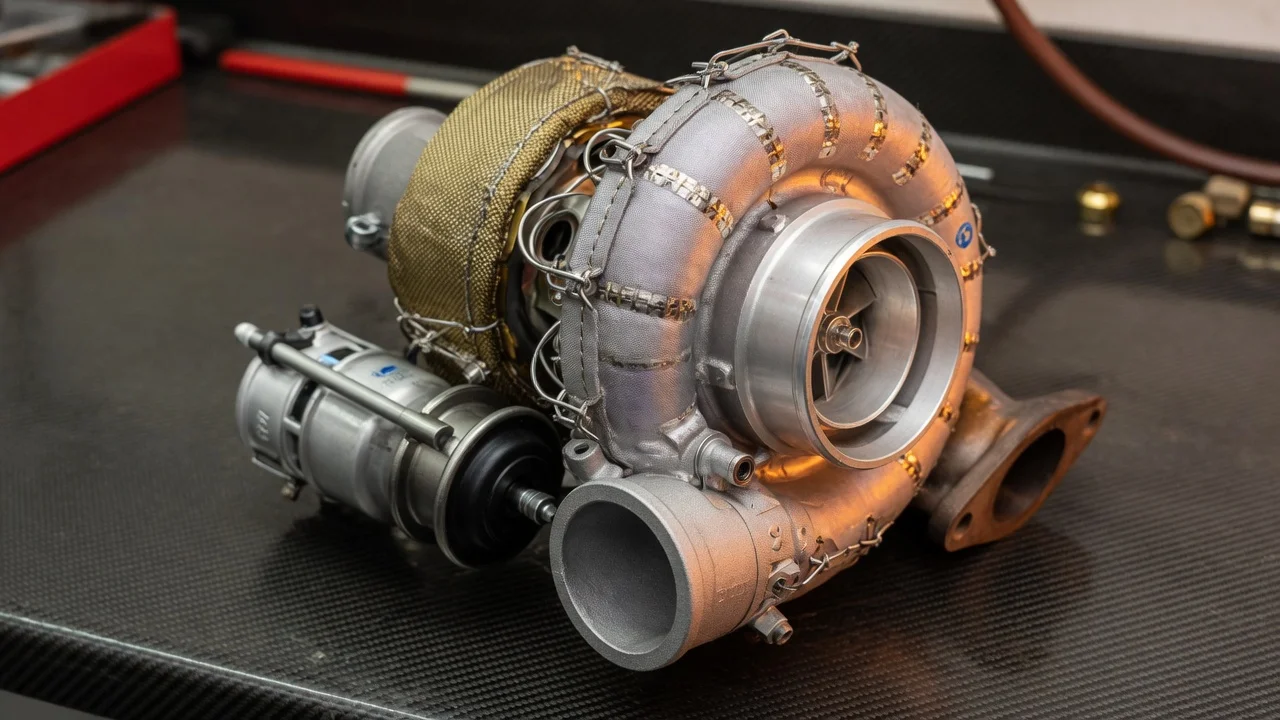
An HE351 turbo blanket wraps the hot turbine housing of a Holset HE351 turbocharger to cut radiant heat in the engine bay. The part is simple, but the right choice depends on which HE351 you run, how the truck is used and what you expect the blanket to fix. This guide covers fitment, materials and ownership trade-offs so you can narrow the options without relying on marketing claims.
Define the job the blanket must do
Start with why you want a blanket. Common goals are lowering under-hood temperatures near wiring, intake components and the firewall, protecting nearby plastic parts, and reducing burn risk when working around a hot engine. Some owners also want to slow the heat soak that reaches a turbo actuator after shutdown. Write down your use: daily driving, towing heavy loads up long grades, sled pulling, or a swap project where the turbo sits closer to other parts than it would in a factory engine bay. Towing and sustained high load produce the most exhaust heat, so they put the greatest demand on blanket materials and fasteners.
Be clear about what the blanket is supposed to solve. If the real concern is an HE351VE variable geometry actuator that has already logged faults, or vanes that stick, a blanket is not a repair. Owners often describe these complaints as heat-related, but a symptom report is not a verified failure. First confirm the problem with the vehicle's diagnostic codes. Note the symptom conditions under which it appears, such as cold start, high load or after shutdown. Then inspect the actuator, its wiring and vane movement. A blanket can be part of a heat-management plan, but it should not replace diagnosis.
Check compatibility with your HE351 variant
HE351 is a family, not a single part. The fixed-geometry HE351CW with a wastegate was used on 2004.5 to 2007 Ram heavy-duty pickups with the 5.9-liter Cummins. The HE351VE variable geometry turbo arrived with the 6.7-liter Cummins in the 2007.5 model year and stayed through 2012. Earlier 5.9 trucks used different Holset units, so a blanket labeled HE351 will not necessarily fit just because the engine is a Cummins. Swap builds add another layer, because an HE351 may be paired with an aftermarket manifold, a different turbine housing or a non-factory downpipe.
Identify the exact engine configuration and turbo from the turbo's data plate or the service history, not from the model year alone, because replacement and upgraded turbos are common. Then match the blanket to the interfaces that matter. These are the turbine housing size and A/R, the inlet flange and its orientation, and the outlet and downpipe connection. Also note where the actuator sits: the wastegate actuator on a CW or the electronic actuator on a VE. Cutouts must clear these parts without pinching hoses, sensor leads or actuator linkage. On a VE, check that the blanket leaves the actuator and its connector open to airflow rather than trapping them under insulation, unless the maker specifically designed it to cover them.
Features that affect the choice
The core material and outer weave determine how a blanket handles heat. Fiberglass-based blankets are common and economical. Basalt, silica and similar woven fabrics, often marketed as volcanic or lava, are generally rated for higher temperatures. Treat temperature figures as manufacturer specifications, not independent test results, and check whether a rating means continuous exposure or short peaks. An outer layer that resists oil and fluid absorption matters, because a soaked blanket on a hot turbine housing is a fire risk.
Attachment hardware is where blankets differ most in daily use. Springs with hooks, stainless safety wire and riveted grommets are typical. Springs make removal easier for inspection, while wire can hold tighter but takes longer to service. Look for reinforced edges at cutouts, high-temperature stitching and a shape cut for the specific housing rather than a generic wrap that needs trimming. Labels such as race-proven or maximum heat reduction mean little without stated test conditions. More useful evidence includes fitment lists by turbo part number, photos of the blanket installed on the same variant, and a temperature rating with its limits.
Limitations and ownership costs
A blanket keeps heat inside the turbine housing, and opinions differ on how that affects housing and fastener life under repeated hard use. Follow turbo or engine maker guidance where it exists. Avoid wrapping the bearing housing or center section unless the blanket is designed for it, because that area relies on oil, and on some versions coolant, to shed heat. A blanket also hides the housing, so cracks, exhaust leaks at the manifold or downpipe, and oil seepage are harder to spot. Plan to remove it during routine inspection, and replace it if it becomes oil-soaked, frayed or brittle.
Ownership costs include the blanket, replacement springs or safety wire, and sometimes new manifold or downpipe hardware if fasteners must be disturbed during installation. On a stock truck, fitting is usually possible with basic hand tools, but corroded exhaust bolts or tight access near the firewall can add labor time. The blanket cannot cool intake air, fix boost leaks, clear soot from VGT vanes, cure actuator electrical faults or lower in-cylinder exhaust gas temperatures. If those issues are present, test for and address them separately.
Build a practical shortlist
Narrow the candidates with a short checklist. Does the listing name your turbo variant, CW or VE, and ideally the part number on your data plate? Does it fit the turbine housing size and flange you actually have, including any swap or upgrade parts? Are the cutouts placed for your actuator, wastegate linkage, sensors and downpipe? What material is used, and is its temperature rating given as a continuous figure? How is the blanket secured, and can you buy replacement hardware?
Next, compare the oil resistance of the outer layer, how easily the blanket comes off for inspection, and whether installation photos show the same turbo or engine bay. Note any warranty terms that exclude oil contamination or improper installation. Keep two or three options that meet every fitment point, then choose on material and serviceability rather than broad claims. Record the install date in your service history so you can track the blanket's condition at later inspections and replace it before it degrades.