Choosing Aftermarket Replacement Tie Rod Ends
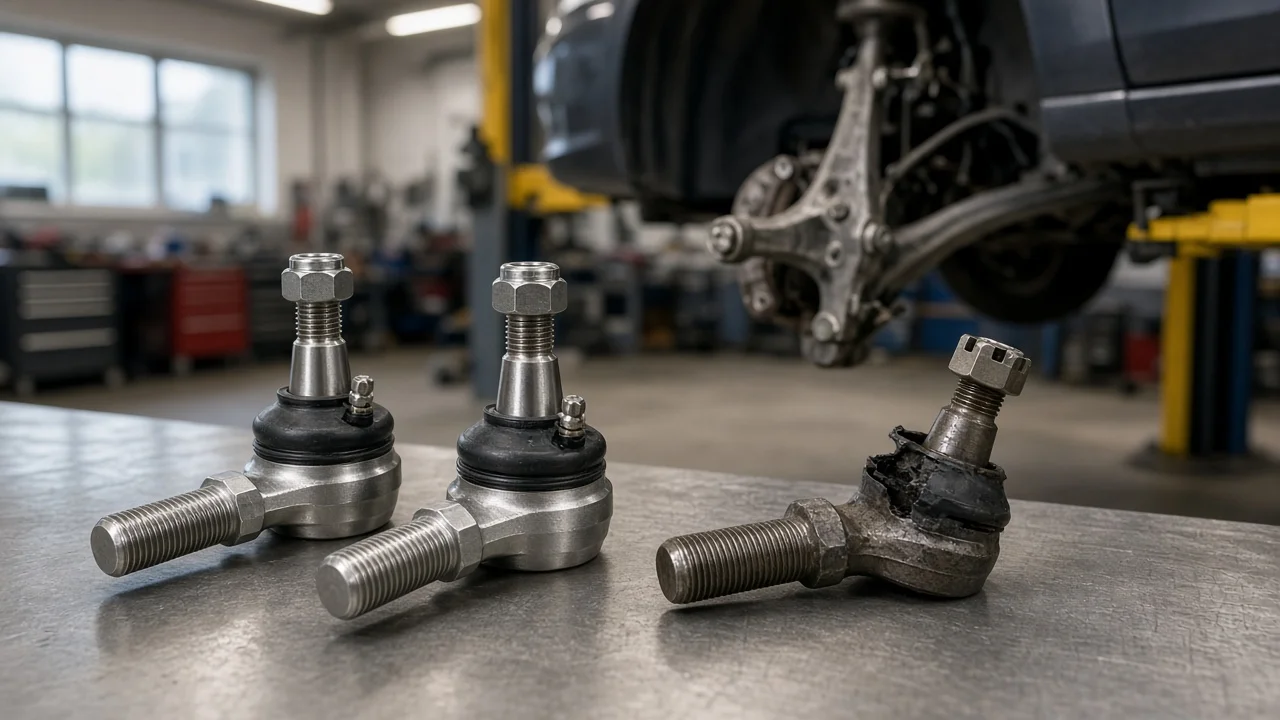
Tie rod ends are small parts with a big job. They link the steering rack or steering linkage to each steering knuckle, so every turn of the steering wheel passes through them. When one wears out, steering gets vague and tires wear unevenly. Choosing replacement tie rod ends comes down to three things: matching the right part to your vehicle, judging aftermarket options on real evidence, and budgeting for the work that follows installation.
Define the job the product must do
Start by confirming what actually needs replacing. Most vehicles with rack-and-pinion steering have an inner tie rod that threads into the rack and an outer tie rod end that attaches to the steering knuckle through a tapered stud. Trucks and older vehicles with linkage steering may also use center links, drag links and adjuster sleeves. Tie rod ends are commonly replaced because of noticeable joint play found during an inspection, a torn or missing dust boot, a clunk over bumps that traces back to the steering, or damage from hitting a curb or pothole. If only the outer end is worn, replacing that end alone may be enough. If the inner joint is also loose, buying the inner and outer ends as a set can save a second round of labor and a second alignment.
Next, consider how the vehicle is used. A commuter car on paved roads places different demands on its steering than a work truck that tows, a vehicle on oversized tires, or one that goes off-road. A modified suspension or changed ride height can alter steering angles and the loads on the joints, so a part sized for a stock vehicle may not suit a lifted one. Also be honest about your practical constraints. Do you have proper vehicle support equipment, a tool to separate a tapered joint, and a service manual for your model? Can you reach an alignment shop soon after the job?
Check compatibility
Fitment starts with year, make, model, trim, engine and drivetrain, because manufacturers sometimes use different steering components within a single model year. The two-wheel-drive and four-wheel-drive versions of the same truck, or the base and performance trims of the same car, may not share tie rod ends. The most reliable reference is the original equipment part number, or a supplier cross-reference based on your vehicle identification number. When a catalog lists several options for one vehicle, read the fitment notes instead of assuming the parts are interchangeable.
Then compare the interfaces. Check the stud taper and thread at the knuckle, the thread size and direction where the end joins the inner tie rod or adjuster sleeve, and whether the part is specific to the left or right side. Overall length and stud position affect how much adjustment range remains for setting toe. Inspect the mounting points on your vehicle as well. A knuckle with a worn or ovalled taper bore will not hold any new stud properly, so it needs attention before the new part goes in. Note the fastener type, too. Some designs use a castle nut and cotter pin, while others use a self-locking nut. Take the fastener specification, including torque and any tightening sequence, from the manufacturer's service information for your exact vehicle.
Features that affect the choice
Aftermarket tie rod ends range from direct replacements that copy the original design to upgraded versions aimed at heavy use. One visible difference is serviceability. Greasable ends have a fitting for adding lubricant during routine service. That can help in wet, salty or dusty conditions, but only if someone actually greases them. Sealed ends need no lubrication and suit owners who would rather skip that maintenance step. Neither type is automatically better; choose the one that matches how the vehicle is maintained.
Other features to look at include the boot material and how the boot is retained, the housing and stud construction, whether new hardware such as nuts and cotter pins is included, and whether the inner and outer ends come as a matched assembly. Treat labels like premium, heavy duty or OE quality as marketing unless something specific backs them up. Useful evidence includes published dimensions, a clear description of materials and design, a warranty with understandable terms, and fitment data that matches your vehicle. A longer warranty is worth knowing about, but it typically covers the part, not the labor or alignment needed to replace it again.
Limitations and ownership costs
The part price is only one piece of tie rod end replacement cost. The total usually includes the parts, shop labor if you are not doing the work yourself, and a wheel alignment afterward, because removing and installing a tie rod end changes toe. Costs rise when an adjuster sleeve or jam nut is seized, when the inner tie rods or rack boots also need replacing, or when corrosion turns a simple swap into a longer job. The cost of replacing tie rod ends varies by vehicle, region and shop rates. Ask for a written quote that lists parts, labor and alignment separately.
Doing the job yourself still takes setup. Lift the vehicle only at the manufacturer's specified points, and support it on rated stands rather than leaving it on a jack. You will typically need a tie rod end separator or puller, the correct sockets and wrenches, and possibly penetrating oil and a new cotter pin. Counting turns or measuring the old part before removal helps get toe close, but it does not replace a proper alignment. Have the vehicle aligned as soon as practical, and drive carefully until then. Greasable ends also add a small recurring maintenance task.
New tie rod ends also have limits. They will not cure worn ball joints, control arm bushings or wheel bearings, a leaking or loose steering rack, or tire wear caused by other problems. If steering looseness remains after replacement, the cause is elsewhere and the steering and suspension need a full inspection. Parts bent in an impact also require more than a tie rod end swap.
Build a practical shortlist
First, filter for confirmed fitment: vehicle details, side, inner or outer position, and a part number that cross-references to the original. Then compare the remaining aftermarket tie rod ends on evidence you can check. Note whether each one is greasable or sealed, what hardware comes with it, what the warranty covers and for how long, and whether the listing gives dimensions and fitment notes rather than only marketing claims. Also decide whether buying inner and outer ends as a set makes sense given the condition of your steering.
Finally, price the whole job, not just the part. Add labor or the tools you would need, the alignment, and likely extras such as boots or sleeves. A slightly more expensive part with complete fitment data and clear documentation can be the better buy if it avoids a return or a second alignment. After installation, make sure the fasteners are tightened to the manufacturer's specification, have the alignment done, and recheck steering feel and joint play at your next service.