Choosing a Used Car for Winter Driving: What to Check Before Buying
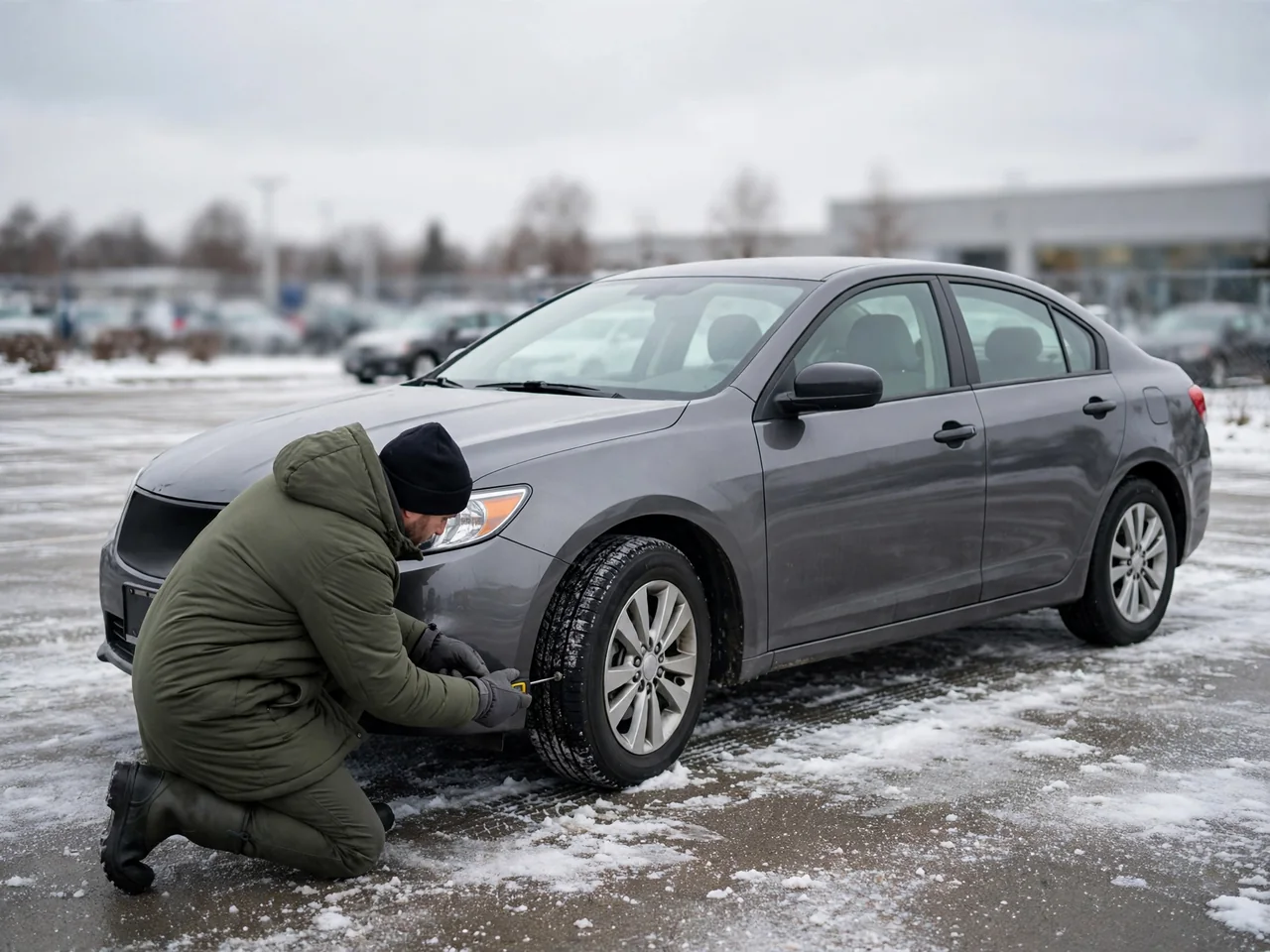
Choosing a used car for winter driving means looking past badges and reputation to the condition of the specific vehicle. The best used car for winter driving in one region may be a poor choice elsewhere, because local snow, road salt, terrain, and commute distance shape what you need. Tires, ground clearance, functioning stability aids, a strong battery, and an effective defroster usually matter more than whether the car is labeled all-wheel drive. This guide explains which checks reveal how a used sedan, crossover, or truck will actually behave in cold weather.
What Makes a Used Car a Good Fit for Winter Driving
The traits that matter most in winter are traction, tire condition, ground clearance, working stability and traction control, effective heating and defrosting, and a sound battery and charging system. A car with a strong winter image but worn tires and a weak battery may leave you stranded, while a well-kept sedan with fresh winter tires can plow through plowed streets confidently. Before shopping, think about your average winter: unplowed rural roads demand more clearance and aggressive tires than salted city arterials.
Condition and tires usually matter more than a model's reputation. A neglected all-wheel-drive vehicle with mismatched tires can behave unpredictably, while a maintained front-drive car with three-peak mountain snowflake tires may offer superior snow grip. Use the owner's manual and the specific vehicle's records to confirm equipment such as the drive system, heated features, and traction aids. Seller descriptions and trim assumptions are not enough; a quick look underneath and at the tire sidewalls tells you far more than a brochure.
Drivetrain Choices and What They Mean on Snow and Ice
When grip is low, front-wheel drive, rear-wheel drive, all-wheel drive, and four-wheel drive behave differently. Front-wheel drive concentrates engine weight over the driven wheels, which aids modest snow traction. Rear-wheel drive tends to offer less starting grip but can be manageable with dedicated winter tires. All-wheel drive and four-wheel drive distribute power to more wheels, which helps the car get moving and climb slippery grades. Yet no drivetrain creates grip that tires do not provide.
All-wheel and four-wheel drive mainly help with getting moving and climbing. They do not shorten braking distances or improve cornering grip, and that limit is often misunderstood. AWD systems vary by manufacturer: some are full-time, others engage only during slip, and some are sensitive to mismatched tire sizes or wear. Check the owner's manual for requirements. During a test drive, safely confirm whether 4WD modes engage as the manual describes, watch for drivetrain or traction warning lights, and listen for unusual noise or binding in slow turns. A fault confirms the need for professional diagnosis, not an assumption.
Can a Used Sedan Handle Winter Roads Well?
Sedans can be practical winter cars when fitted with suitable tires and kept in good condition. Their lower ground clearance can be a limit in deep or unplowed snow, but that is rarely a daily issue on plowed city streets and highways. Buyers should judge a sedan against their own conditions: a steep driveway or rural route with drifting snow may demand more clearance than a sedan offers, while a commuter on treated roads may never notice the difference.
Whether a sedan has front-, rear-, or all-wheel drive depends on the model, year, and trim. Buyers should confirm the drive system on the specific car instead of assuming. Practical sedan points include trunk space for a winter emergency kit, the condition of the trunk seal and rear defroster, and whether the low body picks up more salt spray underneath. A sedan that sits low can collect more corrosive slush on the underbody, making rust inspection even more important.
Checking for Rust and Road Salt Damage
Cars from salt-belt regions face more corrosion risk because road salt accelerates rust on untreated metal. A vehicle history report can show where the car was registered, which helps you anticipate exposure. A car that spent years in a coastal or heavily salted area deserves a closer look, even if the odometer is low. Surface rust on visible components is common, but hidden rot in structural areas can make a car unsafe and uneconomical to repair.
Safe visual checks with a flashlight include rocker panels, wheel arches, door bottoms, subframe areas, brake and fuel line runs, the exhaust, and suspension mounting points. Learn to tell cosmetic surface rust from flaking, swelling, or perforated metal. Judging structural corrosion needs a trained inspector with the car on a lift. Be wary of fresh undercoating, heavy spray, or new trim pieces that can hide corrosion. Ask when and why they were applied, and do not scrape or pry at the underbody yourself—that can damage protective coatings and conceal serious rust.
Tire Condition, Type and Winter Readiness
Measure tread depth across each tire with a tread depth gauge, not just the outer edge. Grip in snow and slush drops as tread wears down; many experts suggest replacing winter tires at around 6/32 inch, while all-seasons lose snow capability below 4/32 inch. Check several points across the tread because uneven wear can hint at alignment or suspension problems. Even a single worn tire on a driven axle can compromise traction and overload drivetrain components.
Read the tire's DOT date code on the sidewall: the last four digits give the week and year of manufacture. Rubber can harden over time even when plenty of tread remains, reducing cold-weather grip. Look for the three-peak mountain snowflake symbol on winter-rated tires; it means the tire passed a specific snow traction test, unlike a simple M+S marking. If the current tires are not suitable, budget for a matched set of winter tires. Mismatched tires on AWD or 4WD vehicles can cause drivetrain damage.
Heater, Defroster, Battery and Cold-Weather Systems
Ask the seller for a cold start if possible. Listen for slow cranking and watch for warning lights, while noting that one start cannot prove a battery or starter is healthy. A battery that works at 50°F may fail at 0°F. Check that the heater warms up to steady output, that the front and rear defrosters clear the glass, and that any heated seats, mirrors, or steering wheel work as the manual describes. A weak defroster can make winter driving unsafe even if the engine runs perfectly.
Look for a battery date label and battery service records. A proper battery and charging-system load test is done by a shop with the right equipment; a simple voltage check is not enough. Safe cold-weather checks include wiper blade condition, washer spray and fluid, and the coolant level seen through the reservoir only when the engine is cold. Never open a hot cooling system. If the reservoir is low or the coolant looks rusty, plan for a professional cooling system inspection before cold weather arrives.
Test Drive, Records and a Professional Pre-Purchase Inspection
A test drive can show a lot about winter readiness: straight braking without pulling, ABS and stability-control lights that come on at startup and then go out, and smooth steering and suspension over rough pavement. Listen for clunks or rattles that could indicate worn suspension parts, which are critical for keeping tires planted on snow. Test the brakes on a safe, empty road—a car that pulls or vibrates under braking may need work before winter.
Review service records for cooling-system, brake, battery, and drivetrain maintenance. Missing records are a reason to inspect more closely, not proof that something is wrong. Recommend an independent pre-purchase inspection on a lift, especially for cars from salt-belt areas or with AWD or 4WD. Checking the brakes, underbody, and drivetrain properly needs trained eyes. A warm-weather viewing cannot confirm cold-start behavior, defroster performance under load, or battery strength at low temperatures, so set aside part of the budget for winter tires, a battery, or other cold-weather items the car may need.