Choosing a Turbo Blanket for a Subaru
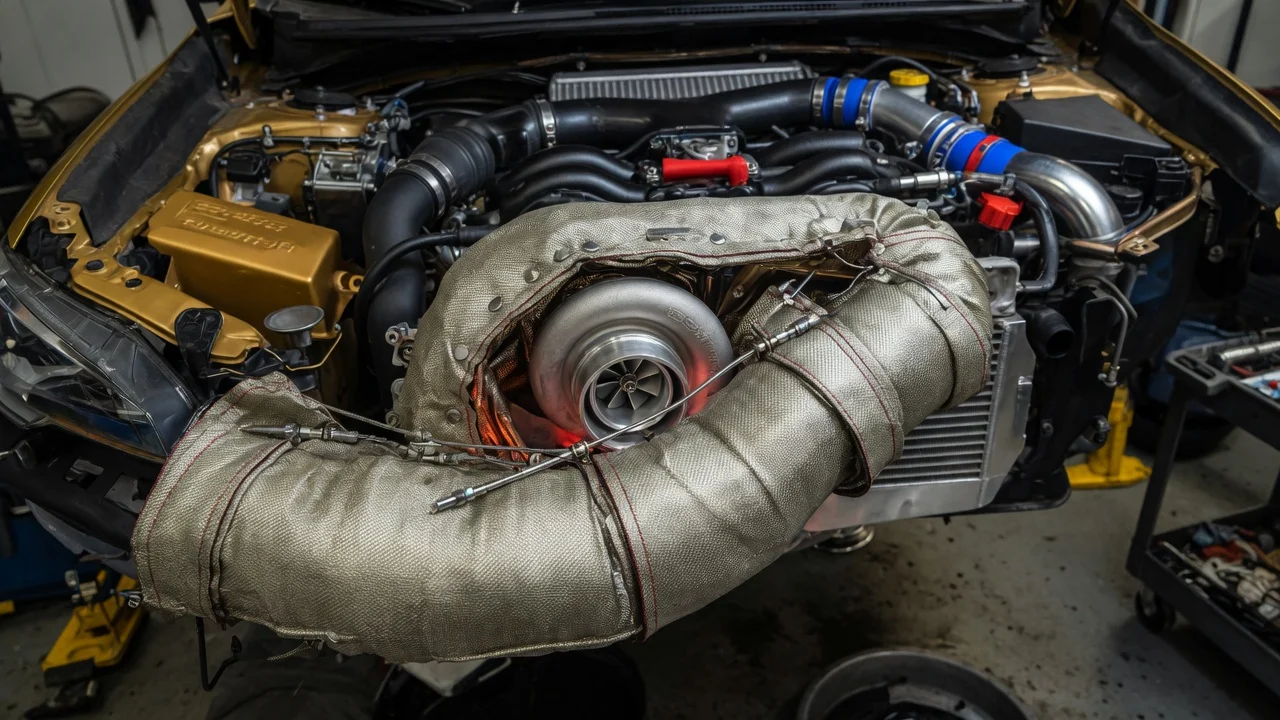
A turbo blanket wraps the turbine housing so more exhaust heat stays inside it instead of radiating into the engine bay. On a turbocharged Subaru, the turbo sits close to intake plumbing, hoses and wiring, and on many models close to a top-mount intercooler. The right blanket can help, but only if it suits your engine, your turbo and the problem you actually have. This guide covers how to choose one sensibly.
Define the job the product must do
Owners usually shop for a turbo blanket for one of three reasons: reducing heat soak on a top-mount intercooler, protecting nearby components such as vacuum lines, connectors and coolant hoses, or managing radiant heat after fitting an aftermarket turbo that no longer accepts the factory heat shields. Each goal sets a different standard for success, so decide which one applies before comparing products.
Separate symptom reports from verified problems. A car that feels sluggish after idling in traffic is describing symptom conditions, not a confirmed heat issue. If you can datalog, record intake air temperature under repeatable conditions, such as the same route, ambient temperature and idle time, so you have a baseline to compare against later. Likewise, a melted connector, a hardened vacuum line or scorched loom is verified heat damage, while a general sense that the bay runs hot is not. Fix the cause of documented damage first; a blanket should support that repair, not replace it.
Then set practical constraints: whether the car is a daily driver, a track car or both, your climate, whether the engine is stock or modified, and whether you do your own work. A blanket that is easy to remove matters more if you service the turbo area often.
Check compatibility
Engine configuration is the first filter. Subaru has used several turbocharged engine families across model years: EJ-series engines in older WRX, STI, Forester XT, Legacy GT and Outback XT models, the FA20DIT in the 2015 to 2021 WRX and 2014 to 2018 Forester XT, and the FA24DIT in newer models including the 2022 and later WRX, Ascent, Outback XT and Legacy XT. Turbo placement, factory heat shielding and the turbo unit itself differ between these engines, so a listing that only says it fits a WRX is not a fitment specification. Look for the exact model year range and engine code.
Next, confirm the turbo actually installed. Service history matters here: a previous owner may have replaced the factory unit with an upgraded or remanufactured turbo, and blankets patterned on the stock turbine housing will not fit a different frame. During inspection, check the identification on the housing or compressor cover and compare it with what the blanket maker lists. The interfaces that decide fit are the turbine inlet and outlet flanges, mounting studs, the wastegate actuator and its linkage, oil and coolant lines, and any nearby oxygen sensor wiring.
Finally, check physical clearance. On some layouts the factory heat shield must come off for a blanket to fit, which shifts protection from a rigid metal shield to fabric. Confirm the blanket clears the firewall, intake ducting and actuator, and that you have the manufacturer specifications for refitting any shields and fasteners you disturb.
Features that affect the choice
Construction matters more than appearance. Most blankets use an insulating core such as basalt, fiberglass or silica-based fabric, covered by a woven outer layer. Check the thread and stitching material, because standard thread can fail long before the fabric does. Temperature ratings are useful only when the seller distinguishes continuous from peak exposure; a single large number with no context is a marketing label, not evidence.
Coverage and attachment are the next trade-offs. A turbine-only blanket leaves the compressor side alone, which is normally what you want. Precut openings for studs and the wastegate area reduce gaps and improve fit. Spring-and-wire mounting tolerates thermal expansion better than simple straps, but takes longer to install. Useful evidence includes published dimensions, the specific housing the pattern was made for, clear installation instructions and available replacement hardware. Claims of large percentage temperature drops without stated test conditions should carry little weight.
Also weigh the effect on the turbo itself. Insulating the turbine housing keeps it hotter, and opinions differ on whether this adds thermal stress or meaningfully changes turbine behavior. Because the answer depends on housing material and use, read the turbo manufacturer's warranty terms, especially for aftermarket units, before wrapping one.
Limitations and ownership costs
A blanket only reduces radiant heat from one component. It will not cure boost leaks, a sticking wastegate, oil consumption or failing sensors, and it has nothing to do with diagnostic codes, which still need proper diagnosis. It also cannot eliminate intercooler heat soak on its own, since a top-mount intercooler absorbs heat from the whole engine bay when the car is stationary. Follow the factory guidance on letting the engine settle before shutdown; a blanket is not a substitute.
The main risk is oil. Seepage from turbo oil lines or nearby seals can soak into the fabric, and an oil-saturated blanket on a hot turbine housing is a fire hazard. A blanket also hides cracks, leaks and loose fasteners during routine inspection, so plan to remove it periodically and replace it if it is contaminated. Many blankets smoke briefly during the first heat cycles as binders burn off; confirm with the seller that this is expected for their product rather than assuming.
Ownership costs include the blanket itself, possible new exhaust nuts or gaskets if seized hardware must be disturbed, shop labor where access is tight, and eventual replacement as the fabric frays. Depending on the goal, maintaining the factory heat shields, ceramic-coated exhaust parts or heat-reflective sleeving on nearby lines may be lower-maintenance alternatives.
Build a practical shortlist
Compare candidates against the same checklist. Does the listing name your model year and engine code, not just the model name? Is it patterned on the turbo you confirmed is installed? Does it clear the wastegate actuator, oil and coolant lines and nearby wiring, and does it require removing a factory shield? Are materials, thread and continuous temperature rating stated? Is the mounting method suited to how often you work in that area? Are installation instructions and spare hardware available? Do the turbo manufacturer's warranty terms allow it?
Discard any option that fails on fitment, then choose between the rest on construction and serviceability rather than marketing claims. If you recorded baseline intake temperatures, repeat the same test after installation to see whether the blanket made a measurable difference. If your car shows no verified heat damage and no measurable heat soak problem, well-maintained factory heat shields may already be doing the job.