Choosing a Turbo Blanket for a Subaru WRX
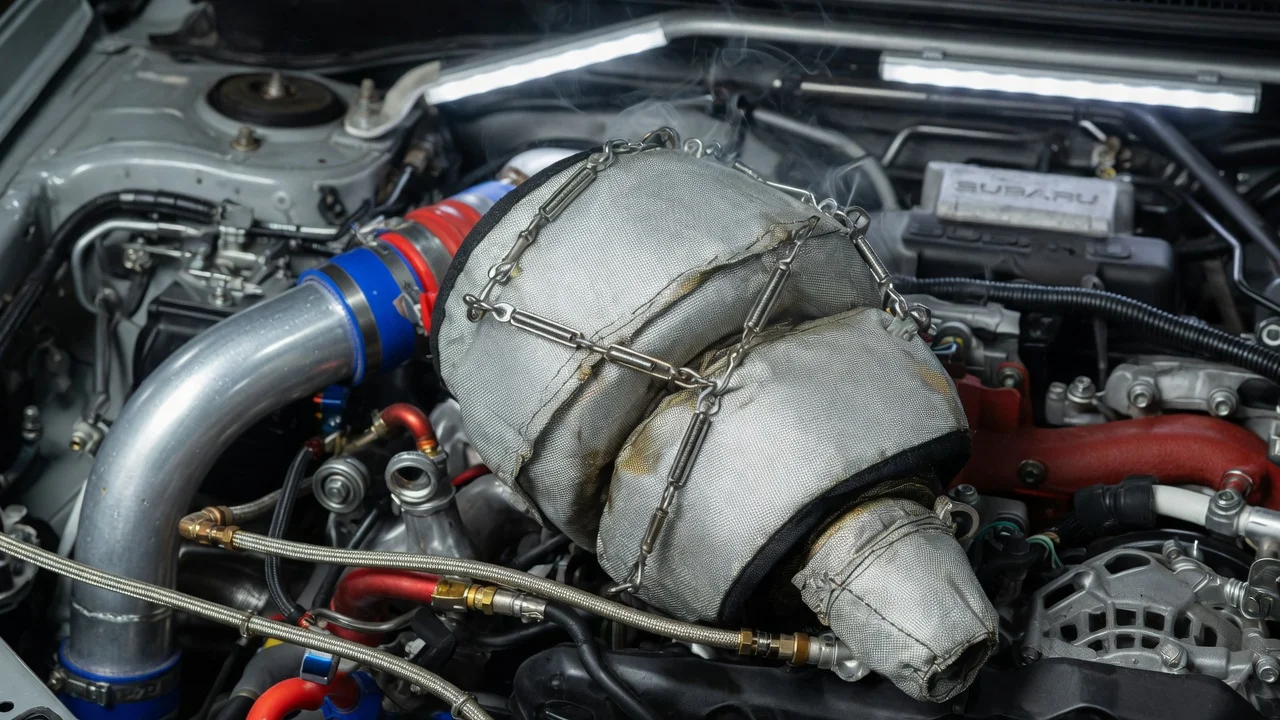
A turbo blanket wraps the turbine housing to keep exhaust heat inside it and away from nearby parts. On a Subaru WRX the turbo sits close to intake plumbing, hoses and wiring, so a blanket can look like an easy upgrade. The right choice depends on your model year, engine, whether the turbo is still stock, and what problem you are trying to solve. This guide covers fitment, the features that matter, and the real costs of running one.
Define the job the product must do
Start with the reason you want a blanket. Common goals are reducing under-hood heat soak, protecting nearby rubber hoses and wiring, and keeping heat away from the intercooler and intake tract. Each goal implies a different standard of success. Separate symptom reports from verified problems. A car that feels sluggish after sitting in traffic is a symptom report. A verified problem is something like logged intake air temperatures that climb under repeatable symptom conditions: the same route, similar ambient temperature, the same logging tool, and the same driving pattern. Without that baseline you cannot tell whether a blanket helped.
If the complaint involves hesitation, low boost or a check engine light, read the diagnostic codes and do a basic inspection before buying any heat management parts. A blanket will not fix a boost leak, a sticking wastegate, a failing sensor or a poor tune. Also decide how the car is used. A daily driver in a hot climate, a weekend track car and a show build each weigh durability, appearance and ease of removal differently. If the car is still under factory coverage, ask your dealer how they treat aftermarket heat parts before installing one.
Check compatibility
Fitment begins with the model year and engine configuration. US-market WRX models have used several turbocharged engines: the 2.0-liter EJ205 in early cars, the 2.5-liter EJ255 from 2006 through 2014, the FA20DIT from 2015 through 2021, and the FA24DIT from 2022 onward. The STI used its own engine and should be checked separately. On the EJ cars the turbo sits behind the engine beneath the top-mount intercooler. The FA-engine cars package the turbo differently, so a blanket listed only as fitting a WRX is not enough information. Confirm the exact years and engine the seller supports.
A turbo blanket is shaped for a turbine housing, not for a car. If your WRX has an upgraded or aftermarket turbo, a different housing, an external wastegate or a twin-scroll design, buy for that turbo model rather than the vehicle. Check that the openings line up with the wastegate actuator rod, housing studs, oil and coolant lines, and the inlet and outlet flanges. Note how the blanket is retained, whether with springs, hooks or safety wire. Find out whether the factory heat shield must come off, whether its bolts are reused, and follow manufacturer specifications for any fasteners you disturb.
Features that affect the choice
Construction varies more than product photos suggest. Blankets typically combine an insulating core with an outer layer of woven fiberglass, silica or basalt fabric, held together with heat-resistant stitching. Some add a metal mesh outer layer for abrasion resistance. Temperature ratings on listings are hard to compare. A useful rating states whether it is continuous or intermittent and how it was determined. A single peak number with no context says little about how the blanket will hold up after repeated heat cycles on a street car.
Fit quality matters as much as material. Look for snug coverage of the turbine scroll without large gaps, finished edges that resist fraying, and retention hardware that will not loosen with vibration. An outer surface that resists oil absorption is worth paying for, because engine bays are rarely perfectly dry. When judging evidence, prefer installation photos on the same engine and turbo, owner logs that state their test conditions, and wear reports after real mileage. Claims such as race proven or a percentage drop in temperature, without a described method, are marketing labels rather than evidence.
Limitations and ownership costs
A blanket keeps more heat inside the turbine housing, so the housing itself runs hotter. Some owners and builders worry this can contribute to housing cracks or fastener problems over time. Those concerns come from anecdotal reports, not verified failure data, but they are a reason to inspect regularly. A blanket also hides the housing, which makes oil leaks, coolant seepage and cracks harder to spot. An oil-soaked blanket can become a fire hazard and should be replaced rather than cleaned and reused. Plan to remove it during routine inspection, and record installation and removal in the service history so the next technician knows it is there.
Ownership costs go beyond the purchase price. Installation may require removing the factory heat shield and nearby components, and disturbing flanges can mean new gaskets or hardware. Blankets degrade with heat cycles and contamination, so expect periodic replacement. Be realistic about results. A blanket does not add power by itself, and it cannot fully prevent heat soak, because intake temperatures also depend on intercooler condition, airflow, ambient temperature and how the car is driven. It also cannot correct the mechanical or tuning faults mentioned earlier.
Build a practical shortlist
Narrow your options with a short checklist. Confirm your model year, engine and exact turbo. Confirm each blanket is made for that turbine housing and that its openings clear the wastegate actuator, studs, lines and flanges. Compare retention methods and decide which you can service easily. Look for a material description and temperature rating that explain their basis, an oil-resistant outer layer, clear installation instructions, available replacement hardware and a fair return policy in case fitment is wrong. Rank candidates on these points rather than on price or on the boldest claims.
Before installing, log a baseline under consistent conditions, then repeat the same test afterward so you can judge the change honestly. If your WRX is stock, the factory heat shield is intact and you have no measured heat problem, you may not need a blanket at all. If you do proceed, choose the one that fits your turbo precisely and that you will actually remove for inspection. Fit and maintenance discipline matter more than any marketing promise.