Choosing a Treadstone Intercooler
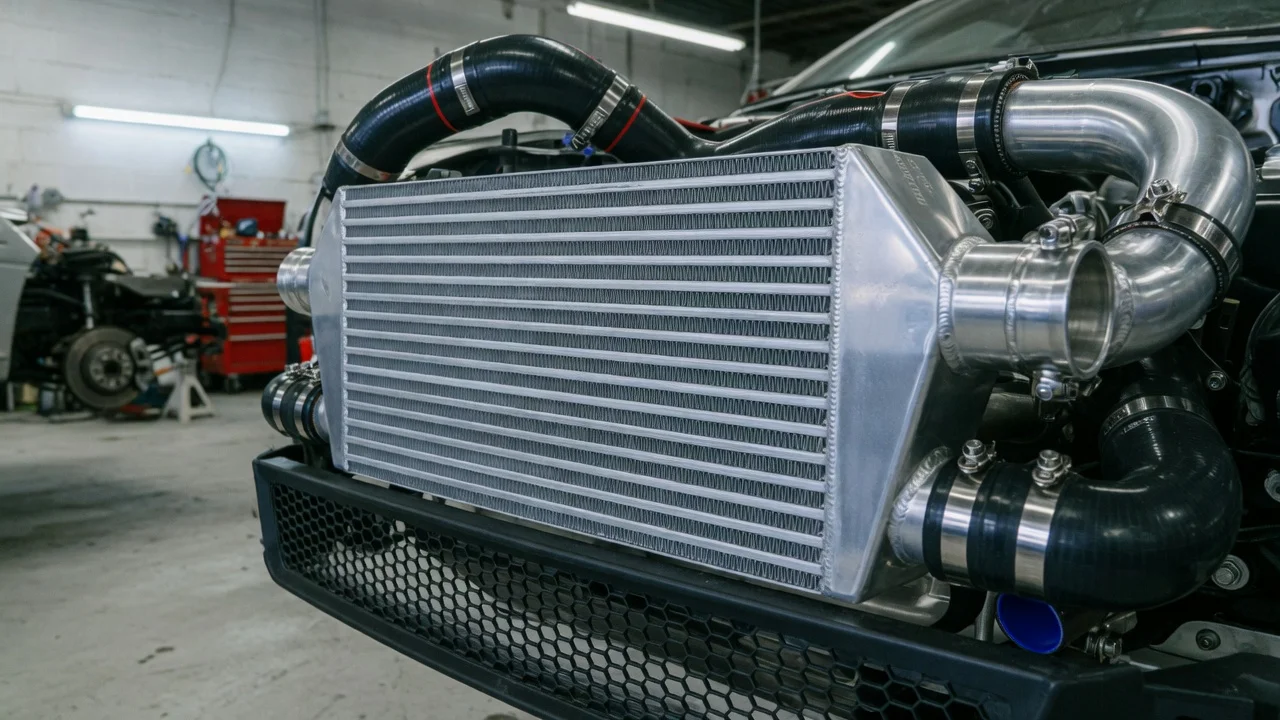
A Treadstone intercooler usually comes up when a turbocharged or supercharged build needs more cooling than the factory unit gives, or when a custom front-mount setup needs a core rather than a complete kit. Choosing well depends less on the brand name and more on matching core size, inlet and outlet layout, and construction to your engine, your bumper space and the way you drive. This guide covers those decisions so the core you order fits and does its job.
Define the job the intercooler must do
An intercooler cools the charge air that a turbocharger or supercharger has compressed and heated. Cooler air is denser, which helps the engine make consistent power and gives the tune more margin against knock. Before comparing cores, write down what is driving the upgrade. It might be intake air temperatures that climb on repeated pulls, a larger turbo that flows more air than the stock unit can handle, an engine swap with no intercooler at all, or a damaged factory part that needs replacing. Each goal points to a different size and layout.
Be honest about how the car is used. A daily driver with occasional spirited runs needs quick throttle response and a core that leaves the radiator enough airflow. A track or drag car cares more about holding temperatures through long or repeated boost events. Note your practical constraints as well: whether you are willing to cut the bumper support or crash bar, whether the A/C system must stay, how much fabrication you can do yourself, and whether the car must pass emissions inspection where you live. These limits narrow the field faster than any spec sheet.
Check compatibility with your vehicle
Treadstone is best known for universal front-mount cores, so getting the fitment right is largely your job. Measure the space behind the bumper. Note the width between the frame rails or headlight supports, the height you can use without blocking the lower grille completely, and the depth available before the core crowds the A/C condenser or radiator. Compare these measurements with the overall dimensions including the end tanks, not just the core face. Leave room for couplers and clamps at each end.
Next, check the interfaces. The inlet and outlet diameters should suit your charge piping and turbo outlet. Pipe orientation also matters. Whether the outlets are on the same side or opposite sides, and whether they point straight, up or down, decides how many bends the piping will need. Plan where the intake air temperature sensor, the blow-off or bypass valve and any boost reference line will mount. Make sure the core suits the boost level and airflow of your setup. A core sized for a small engine can become a restriction on a large turbo. An oversized core adds piping volume and can slow throttle response.
Drivetrain compatibility matters too. On some front-wheel-drive and all-wheel-drive cars, the charge piping has to route around the transaxle, axles or other driveline parts, which limits where the pipes can run. Check those clearances before you order, not after the core is mounted.
Features that affect the choice
Construction type is the main trade-off. Bar-and-plate cores are generally heavier and more resistant to damage from road debris. Their extra mass also means they absorb and release heat more slowly. Tube-and-fin cores are usually lighter and can offer lower pressure drop for a given size, but their thinner tubes are easier to damage. Core thickness, fin density and internal fin design all affect how well the core sheds heat and how much boost pressure is lost across it. Judge a listing by its stated core and overall dimensions, inlet and outlet sizes and construction details, not by catchy product names.
Treat the horsepower rating on any intercooler listing as a rough guide, not a guarantee. Real results depend on ambient temperature, vehicle speed, airflow through the grille, boost level and how long you stay in boost. End tank shape matters as well, because smooth, well-shaped tanks spread air across the whole core instead of pushing most of it through the middle rows. Inspect weld quality and mounting tabs, and check whether the core is documented as pressure tested. If that is not stated, plan to pressure test it yourself before installation. Finally, decide whether a universal core is enough or whether a vehicle-specific kit with brackets and piping is worth the higher price for the guesswork it removes.
Limitations and ownership costs
The core price is only part of the bill. A universal front-mount usually needs charge piping, silicone couplers, T-bolt clamps, mounting brackets and sometimes a new blow-off valve flange. Cutting the bumper support, trimming splash shields or relocating horns and sensors adds labor. Many builds also need a tune adjustment afterward, because intake temperatures and piping volume affect how the engine control unit behaves. Count these items before deciding that a cheaper core is the better deal.
Day-to-day ownership is mostly inspection. Check couplers and clamps for boost leaks. Look for oil inside the piping, which can come from crankcase ventilation or a worn turbo. Clean bugs and debris out of the fins so airflow is not choked. A front-mount sits low and forward, where it is exposed to stones, curbs and minor impacts, so inspect it after any hit. An intercooler cannot make up for an undersized turbo, a poor tune or fuel delivery limits. If it blocks too much airflow to the radiator, it can also push coolant temperatures up. If that happens after installation, review the core placement and ducting.
Build a practical shortlist
Narrow your options with a simple checklist instead of a ranking. For each candidate core, record the overall dimensions including end tanks compared with your measured space, the inlet and outlet diameter and orientation, the construction type and core thickness, and which hardware is included and which must be bought separately. Also note whether a pressure test or quality inspection is documented, and how the piping will route past the radiator, the A/C lines and the drivetrain components.
Then compare the total installed cost, not just the price of the core. Include piping, clamps, fabrication and tuning time. If two cores fit equally well, choose the one that needs fewer bends and shorter piping, since that usually keeps throttle response sharp. If none fits cleanly without major cutting, a vehicle-specific kit may be the more practical route even at a higher price. Keep your receipts and measurements together to make future repairs or a resale easier.