Choosing a Tire Repair Kit for a Tubeless Car Tire
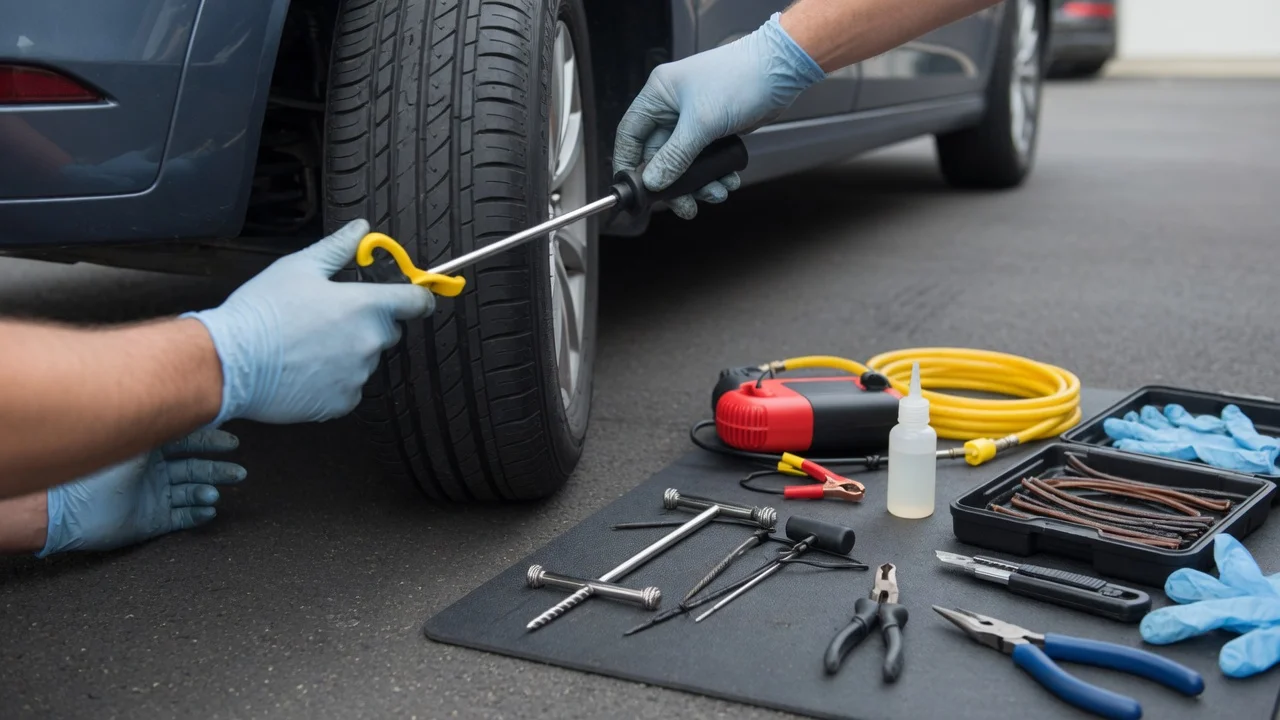
Answer upfront: match the kit to the repair you can actually perform
For most tubeless car tire punctures away from home, a compact tire repair kit with an insertion tool and repair strings is the most practical choice. It can plug a small puncture in the tread without removing the wheel, provided the hole is in the repairable tread area and the puncture is not in the sidewall or shoulder. The important condition is location and damage size: a string-type kit is suitable only for small, round punctures caused by nails, screws or similar objects in the tread. It is not a proper fix for sidewall damage, cuts longer than a puncture, run-flat damage from driving on a deflated tire, or a tire that has already separated internally.
Check the puncture location and shape before buying or using a kit
A kit cannot fix every flat. Before committing to a specific tire repair kit, confirm that the puncture is within the central tread face and that the object entered at a shallow angle. Repairs in the sidewall or the outer shoulder are not considered safe with a string plug, because those areas flex heavily and the plug may not hold. Also check whether the tire has been driven while flat. A tire that has run with very low pressure may have internal sidewall damage that is invisible from outside; no external repair kit addresses that condition.
What a basic tubeless tire repair kit should include
Rasp or reamer for roughening and cleaning the puncture channel; Insertion tool with an eye or fork for pushing the repair string into the tire; Repair strings or plugs made from a tacky rubber compound; Lubricant or rubber cement if required by the product instructions; Trimming blade for cutting the plug flush with the tread
A complete kit should let you prepare the hole, insert the plug, and trim it without improvising. Some kits also include a valve tool or inflation aid, but those are secondary to the plugging tools.
Compare string plug kits with alternative roadside options
String plug kits are compact, inexpensive and work without removing the wheel, but they are best understood as a durable temporary or emergency repair. A can of tire sealant is even quicker and requires almost no skill, but it can coat the inside of the wheel and tire sensor, may complicate a later proper repair, and does not suit larger holes. A plug-and-patch repair performed from inside an unmounted tire is the more complete method, but it requires removing the tire from the wheel and is not a roadside task for most drivers. If your priority is getting moving quickly with limited tools and experience, a string kit is the practical middle option.
Checks that may change the purchase decision
Read the product instructions before relying on the kit. A string plug that requires rubber cement works differently from a self-vulcanizing plug, and the adhesive should be compatible with tubeless passenger tires. Examine the tools in hand: cheap kits can bend during insertion or push their own protective sleeve into the tire. Finally, decide whether you can reinflate the tire after plugging it. A plug is only useful if you also carry a working inflator or spare pressure source, because the plug itself does not restore enough air to drive on.
Prices and included components vary by market, retailer and date, and advertised prices should not be treated as completed-transaction values. This guidance does not quote a specific price because no reliable current market figure is available in the supplied material.
A sensible selection by use case
If you need a small kit for occasional commuting punctures, choose one with a sturdy T-handle insertion tool and self-vulcanizing strings, and keep it with an inflator. If you drive long distances or live where help is far away, carry a more complete kit with a rasp, insertion tool, multiple strings, cement or lubricant, and a blade. If the tire has sidewall damage, a cut, or evidence of being driven flat, do not choose a plug kit as the repair method; have the tire inspected by a shop before further use.