Choosing a Tire Bead Seater
The short answer
A good bead seater is one built for the tires you mount most often, rated for the pressure your compressor supplies, and fitted with controls and safety markings you can verify. It also needs to work with the air system you already own. If you mount large, stiff or wide tires regularly, a dedicated bead seater is usually worth having. If you only deal with ordinary passenger tires now and then, simpler methods or a shop visit may be enough. Two things change the advice most: the size and type of tire, and whether your compressor can refill the tank in a reasonable time.
What a bead seater does
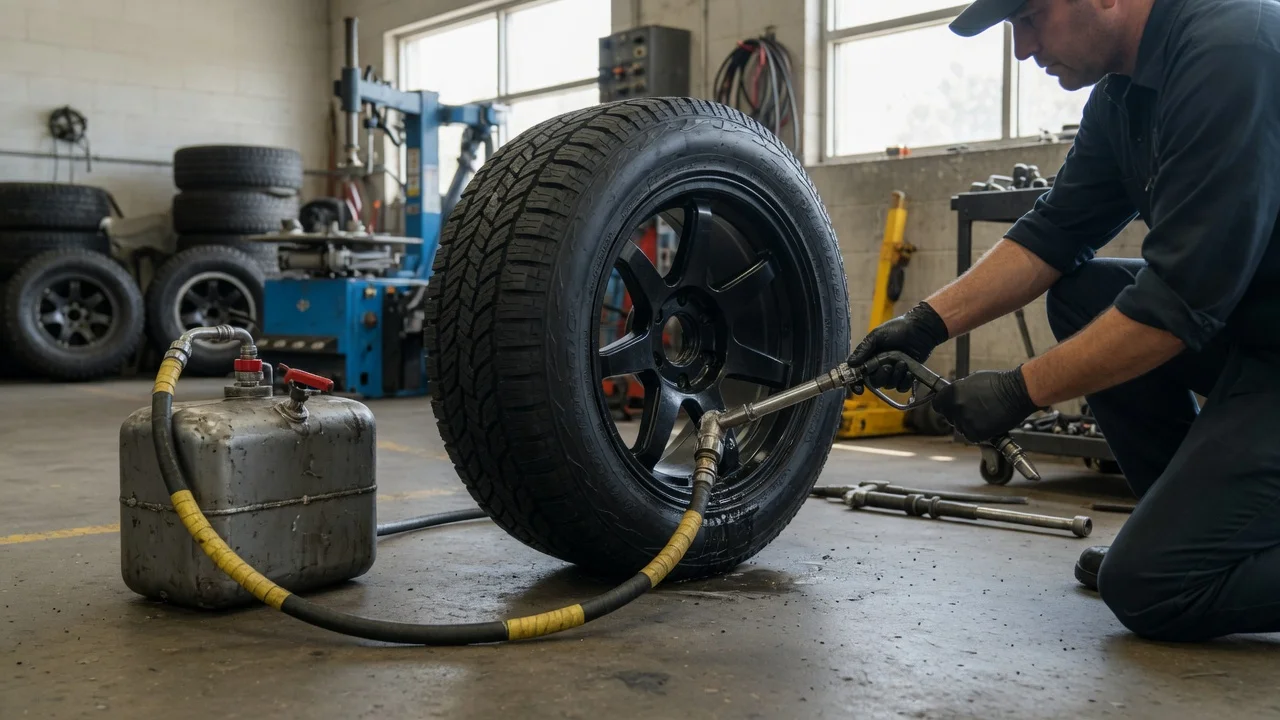
The bead is the reinforced inner edge of a tire that seals against the wheel rim. When a tire is mounted, there is often a gap between the bead and the rim, so air escapes faster than a normal inflator can supply it. A bead seater stores compressed air in a tank and releases it all at once through a nozzle aimed into that gap. The sudden rush pushes the beads outward against the rim so the tire can hold air. You then finish inflating the usual way.
Common types
Handheld tank with a nozzle (often called a bead blaster): a portable tank with a quick-release valve and a shaped barrel. It is the most common choice for home garages and mobile tire work. Inflation ring: a hollow ring that sits on the tire and releases air around its whole circumference. It is mostly used on larger tires where a single nozzle may struggle. Bead-seating jets built into a tire changer: air outlets in the changer's turntable or clamps. These only matter if you are buying or already own a tire changer that offers them.
What to check before buying
The tires you will actually mount
Start with your real workload: passenger cars, light trucks, ATVs, trailers, motorcycles, or farm and commercial tires. Nozzle shape and length decide whether the blast reaches the bead gap. This is especially true on low-profile tires, where there is little room between the rim and the sidewall, and on very wide or tall tires. Check which tire and rim sizes the manufacturer says the unit supports. Treat a vague claim like "fits most tires" as unconfirmed until you see the supported range. Motorcycle and small-equipment wheels may need a different nozzle from car and truck wheels.
Tank construction, rating and safety features
The tank is a pressure vessel, so its markings matter more than its looks. Look for a clearly stated maximum working pressure and evidence that the tank meets pressure-vessel standards for your market. A safety relief valve and a pressure gauge are also important. The maximum pressure should match or exceed what your compressor delivers, and you should never fill the tank beyond its rating. Prefer a unit whose labels are legible and whose manufacturer is identifiable, so you can confirm ratings and find replacement parts.
Compatibility with your air supply
Check that the inlet fitting, thread and coupler style match your hoses and compressor, or budget for adapters. Also check that your compressor can reach the pressure the bead seater needs. A larger tank delivers a bigger burst but takes longer to refill, and a small compressor may struggle if you need several attempts on one tire. If the manufacturer does not state a recommended compressor output, treat that as a gap to resolve before buying.
Valve and controls
Most handheld units use either a lever-operated ball valve or a trigger. A fast-opening valve gives the sharp burst that seats beads well. A comfortable handle and a firm grip matter because the release kicks back. Some units have a separate shutoff or a fill valve that lets you refill without disconnecting. These conveniences are worth comparing only after the safety and compatibility checks are met.
Buying used
A used tank needs closer inspection than most used tools. Rust inside the tank is a common hidden problem, because moisture from compressed air collects there and weakens the walls from the inside. Avoid tanks with dents, pitting, heavy external corrosion, repaired or damaged welds, missing rating labels, or a relief valve that is missing or tampered with. If you cannot drain the tank and inspect it, or you cannot confirm its pressure rating, a low asking price does not offset the risk.
Total setup cost
The bead seater is often only part of the cost. Depending on what you already own, you may also need couplers or adapters, an air hose rated for the pressure, a tire gauge, bead lubricant, eye and hearing protection, and possibly a larger compressor. When you compare prices, note the market, currency and date of each quote, and check which accessories are included. Advertised prices for used units can differ from what those units actually sell for, so recent completed sales are a better guide to value. This guide does not quote prices, because no current pricing data was supplied.
When you may not need one
Many ordinary passenger tires seat with bead lubricant and a normal inflator. It can also help to remove the valve core for faster airflow, or to cinch a ratchet strap around the tread to push the beads outward. If you mount tires only occasionally, a tire shop may be cheaper than buying a bead seater and upgrading your compressor. Using flammable sprays and ignition to seat a bead is sometimes suggested online. It is dangerous and is not a substitute for a proper tool.
Safe use basics
Wear eye and hearing protection, and keep your face and hands away from the gap between the tire and the rim when releasing air. Follow the tire and wheel manufacturers' limits for maximum bead-seating pressure. Many tires state this limit on the sidewall. If the beads have not seated by that pressure, deflate the tire and find out why rather than adding more air. Drain the tank regularly to limit internal corrosion, and stop using it if the gauge, valve or relief valve is damaged.
Gaps to resolve before deciding
No specific products, specifications, test results or prices were supplied for this guide, so it does not rank models or quote figures. Before you commit, confirm the following from the manufacturer for the exact model you are considering: the supported tire and rim range, maximum working pressure, tank capacity, fitting type, and compliance markings for your market.