Choosing a T28 Turbo Blanket: Fitment, Features and Real Limits
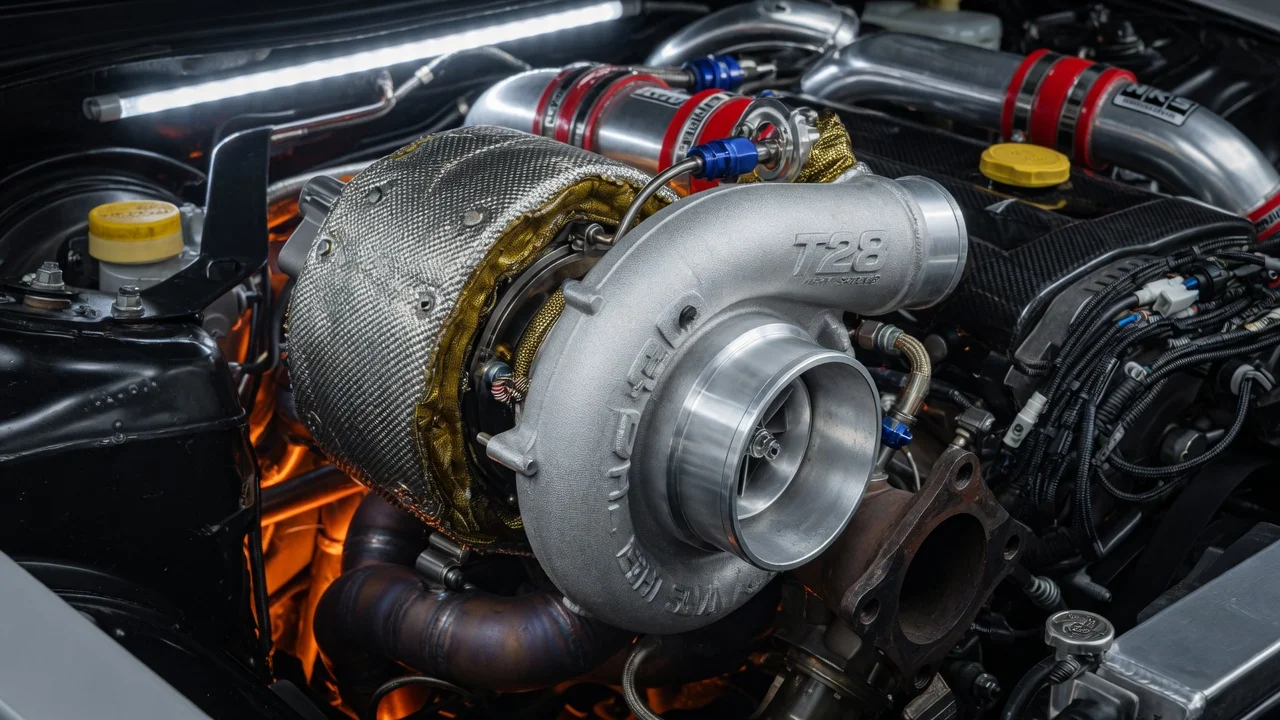
A T28 turbo blanket wraps the turbine housing of a Garrett T28-frame turbocharger so exhaust heat stays in the hot side instead of radiating into the engine bay. Choosing the right one depends less on brand claims and more on matching the blanket to your exact housing, actuator and line routing. It also depends on understanding what a blanket can and cannot fix. This guide covers those decisions from a working mechanic's point of view.
Define the job the product must do
Start with the reason you want a blanket. The most common goal is reducing radiant heat that reaches nearby wiring, connectors, the brake master cylinder, intake piping and plastic parts packed close to the turbo. A second goal is limiting heat soak in charge piping, which can help keep intake air temperatures steadier in traffic or during repeated hard runs. Some owners also want to keep more exhaust energy in the turbine. Sellers often promise quicker spool, but any change depends on the whole setup, so do not expect a blanket to transform response on its own.
Next, consider how the car is used. A daily driver that idles in traffic, a weekend street car and a track car put different demands on the blanket and on how often you can remove it. Note whether your installation still has its factory metal heat shield. A blanket may replace that shield or work alongside it, and the answer affects clearance and fitment.
If a symptom prompted the purchase, confirm its cause first. A burning smell, a melted connector, high intake temperatures or slow spool are symptom reports, not verified failures. Record the symptom conditions, such as whether it happens at idle, after shutdown or under load. Then do a physical inspection and check for stored diagnostic codes. A burning smell is often an oil or coolant leak dripping onto the exhaust, and a blanket would hide that leak rather than solve it.
Check compatibility
T28 describes a turbo frame size, not a single part. Factory T28 applications differ by vehicle, market, model year and engine variant, and aftermarket or hybrid T28 units may carry different turbine housings altogether. A blanket listed for a particular car fits only if your turbo is still the configuration that car shipped with. Identify the turbine housing size and shape and the inlet flange pattern. Many T28 units use a T25-style inlet flange, but confirm this on your own housing rather than assuming it. Also note the internal wastegate actuator position, the actuator rod and bracket, and the routing of the oil feed and return. If your unit has coolant lines, note where they run too.
Check the service history before ordering. Find out whether the turbo is original, rebuilt or replaced, and whether a previous owner fitted a different housing or a reclocked actuator. If the identification tag on the turbo is readable, compare it with the manufacturer specifications for your engine configuration. Then measure the housing yourself and compare it with the seller's stated dimensions and cutout positions. Finally, look at clearance to the hood, strut tower, exhaust manifold and downpipe. A thick blanket can turn a tight gap into contact.
Features that affect the choice
Blankets are usually built from woven fiberglass, basalt or silica-based fiber layers, often with a coated outer skin. Names such as lava or titanium usually describe the appearance or the fiber blend rather than a measured performance difference. The temperature rating matters more than the name, so ask whether the figure is a continuous rating or a short-exposure peak. A peak figure alone tells you little about how the blanket will hold up over months of heat cycles. A sealed or coated outer layer helps resist absorbing oil and other fluids, which affects both safety and service life.
Fit details separate a good blanket from a frustrating one. Look for cutouts placed for the wastegate actuator bracket and rod, so the actuator is not wrapped in trapped heat. Check whether it attaches with stud-mounted springs, straps or wire, and whether the springs and stitching thread are stainless or rated for high temperatures. Also confirm that it covers the turbine housing without blocking the inlet flange or outlet. A shaped blanket made for the housing usually fits better than a universal wrap. Useful evidence includes stated dimensions, installation photos on the same housing and a documented rating. Treat claims such as a specific temperature drop without stated test conditions as marketing.
Limitations and ownership costs
A blanket does not cure oil leaks, boost control faults, worn shaft bearings, cracked housings or exhaust leaks. It can also make those faults harder to spot. Because the blanket keeps heat in the turbine housing, the housing and surrounding area can stay hotter after shutdown. Sensible cool-down habits and oil service at intervals that suit the manufacturer specifications become more important, not less. Never treat a blanket as a substitute for diagnosing a turbo fault.
Plan for upkeep. Fibers fray and outer coatings break down with heat cycles, and spring attachments can lose tension. A blanket soaked with oil or coolant can smoke and becomes a fire risk, so replace it rather than keep running it. You will need to remove it for every hot-side inspection, which adds labor whenever you check flange gaskets, studs or the actuator. Some manufacturers warn of an initial burn-off of coatings during the first heat cycles. If you compete, check whether event or class rules restrict wraps or require specific heat shielding.
Build a practical shortlist
Before comparing prices, confirm a few points for every candidate. First, the blanket matches your verified turbo and turbine housing, not just the vehicle listing. Second, it suits your inlet flange and actuator orientation. Third, its dimensions and cutouts fit your measurements. Fourth, the temperature rating is stated as continuous or intermittent, and the attachment hardware is stainless or rated for the heat. Also decide whether it will replace or supplement the factory heat shield, and confirm the clearance to nearby components. Budget for eventual replacement and plan an inspection interval you will actually keep. If a candidate fails any of these points, remove it from the shortlist regardless of brand reputation.
Install the blanket on a cold engine and check clearance all the way around. Run the engine, then let it cool and recheck spring tension and fit. Watch for smoke beyond any short initial burn-off, and confirm no new diagnostic codes appear. Note the installation date and blanket details in the service history, so the next inspection starts with known information rather than guesswork.