Choosing a Radiator Repair Kit
The short answer
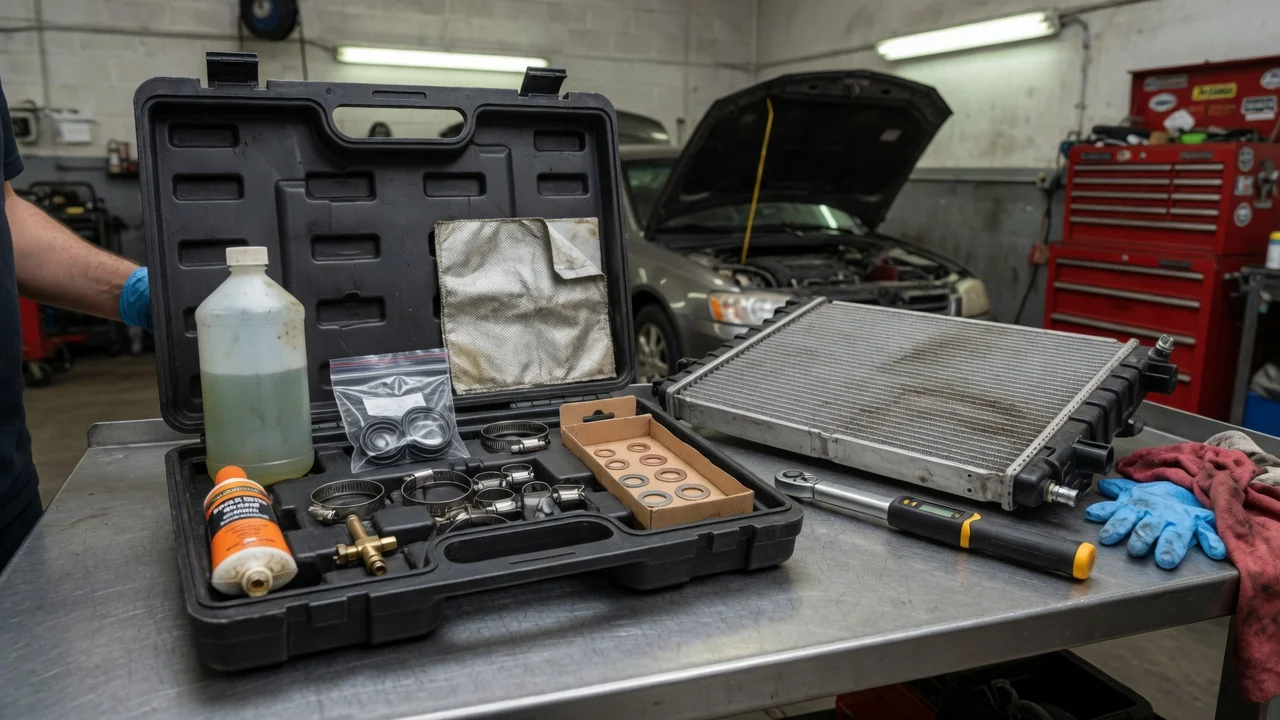
A radiator repair kit is a stopgap for small, accessible leaks, not a full radiator replacement. The best choice depends mainly on the radiator material, leak size and location, and how long you need the repair to last. A pour-in or liquid sealer is most suited to pinhole leaks or seeping tanks on an otherwise sound radiator. An epoxy or two-part patch kit is more suited to small cracks or holes on a visible, clean surface. If the leak is on a pressurized joint, a crimped tank seam, or a damaged inlet or outlet neck, a kit may not create a durable seal and replacement should be considered first.
Match the kit to the radiator and the leak
Radiator materials affect how a repair product behaves. Aluminum and plastic-tank radiators respond better to sealers that can circulate and collect at small leaks, but they are less forgiving of large cracks. Copper or brass radiators can be patched with epoxy, but they may later be solderable by a specialist, which can make a temporary kit less appealing if the radiator is worth rebuilding.
Liquid sealers are convenient because they are poured into the cooling system and do not require draining or finding the exact leak. Their weakness is that they can clog small passages in the heater core, thermostat or engine if used excessively or in the wrong vehicle. Epoxy and two-part repair compounds bond only where you apply them, so they avoid circulating through the cooling system, but they require a clean, dry, accessible surface to adhere properly.
Check these things before buying
Leak location: confirm whether the leak is in the core, a tank, a hose connection, the drain plug, or the filler neck. Kits treat these differently. Radiator material: check whether the core and tanks are aluminum, plastic, copper or brass, and whether the leak is at a material joint. Cooling system condition: a kit is not a substitute for a failing water pump, bad cap, damaged hose, or a radiator weakened by corrosion or previous sealers. Downstream sensitivity: vehicles with small heater-core passages or stop-start cooling systems can be more vulnerable to circulating sealers. Repair life: decide whether you need a short-term repair only or something that must survive highway heat, pressure and repeated thermal cycles. Instructions and temperature limits: confirm the product is rated for the cooling-system temperature and pressure in your vehicle and follow its cure or circulation time.
Conditional recommendations
Situation|Likely better option; Pinhole or weeping leak in a core or tank; exact location hard to reach|Pour-in liquid sealer; Small visible crack or hole on a clean external surface|Epoxy or two-part patch; Leak at a crimped tank-to-core seam|Replacement radiator or specialist repair; Leak at an inlet or outlet neck, hose connection or drain plug|Repair the joint or replace the damaged part rather than sealing the radiator; Vehicle with tight cooling passages or a history of heater-core blockage|External patch instead of circulating sealer
What a kit will not solve
A repair kit cannot reverse structural damage, internal blockage, or a radiator that has lost strength from age and corrosion. It also cannot compensate for an overpressurized system caused by a faulty cap or a failing head gasket. Symptoms such as coolant loss, overheating and visible residue can have several causes, so a sealer may temporarily hide a leak without correcting the reason it started.
Cost and ownership trade-offs
A repair kit usually costs far less than a replacement radiator, but the useful comparison is total ownership cost. If the repair fails, you may still need the replacement, plus coolant, labor and possibly recovery after overheating. Comparing advertised kit prices is not reliable without knowing the market, date, currency and whether the figure is a completed sale. Treat the kit as a lower-cost first step only when the leak is small, correctly identified and on a cooling system that is otherwise healthy.
When to stop driving and test instead
Continue driving only while the cooling system is holding temperature and pressure. Stop if the temperature rises, the level drops quickly, the cap or warning light indicates pressure loss, or the leak moves from a weep to an active stream. A pressure test with the engine off is the more discriminating next check than adding more sealer, because it can separate a radiator leak from a hose, heater core, water pump or head-gasket leak. A diagnostic code or warning alone does not prove the radiator needs replacement; it only indicates which system should be inspected.
Choosing a next step
If the leak is a pinhole on a sound radiator, a suitable liquid sealer may be worth trying. If the leak is visible, small and on a clean surface, an epoxy patch avoids adding circulating material to the system. If the leak is at a seam, neck, fitting or pressurized area, the safer next step is to replace or professionally repair the radiator rather than spending on a kit that is unlikely to hold.