Choosing a Radiator and Coolant Stop Leak
Direct answer
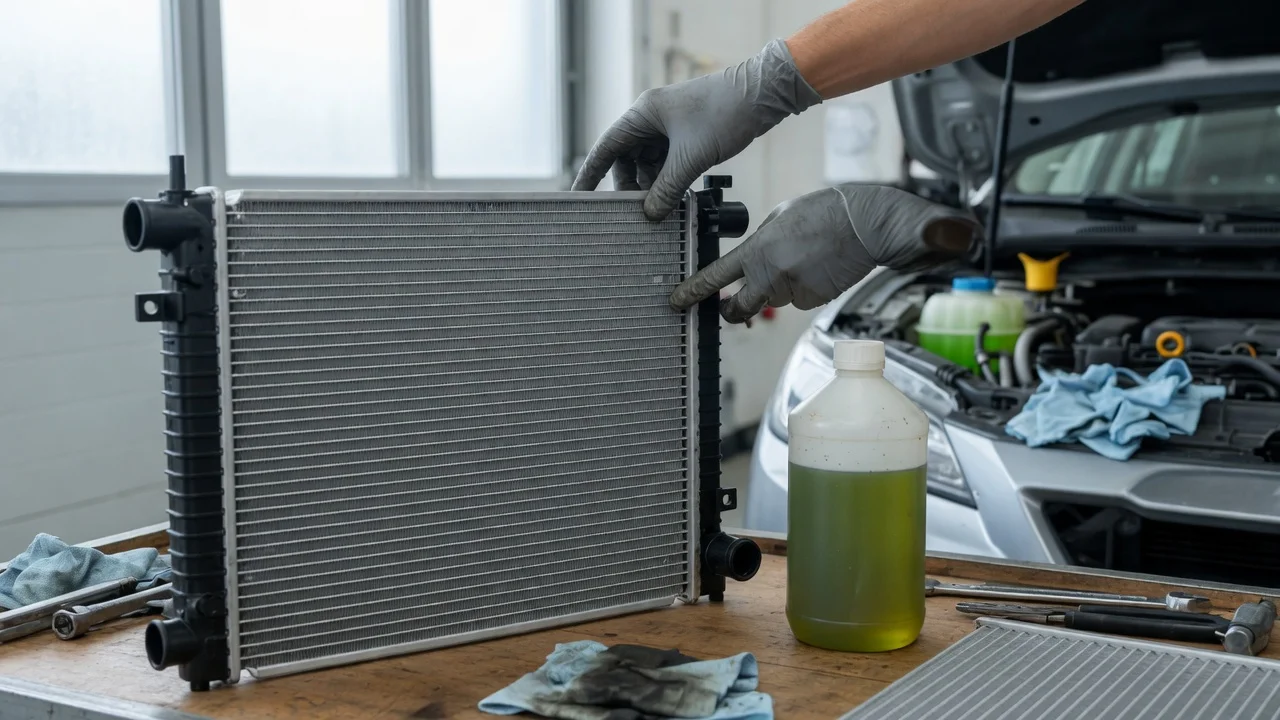
A coolant stop leak is a temporary repair product designed to seal small leaks in the cooling system, including the radiator, heater core, hoses, water pump, or gasket surfaces. It is not a permanent replacement for mechanical repair. The most suitable product depends on the size and location of the leak, the cooling system materials, and whether the vehicle needs to remain drivable until a proper repair can be completed.
What coolant stop leak products do
Coolant stop leak additives are poured into the cooling system and circulate with the engine coolant. When the mixture reaches a small opening, exposure to air and temperature change causes the sealing particles or liquid compounds to collect at the leak and form a temporary plug. This can slow or stop weeping from pinholes, hairline cracks, and minor seam or gasket seepage.
The repair depends on the product finding the leak while the cooling system is pressurized and warm. Additives cannot repair structural damage, large cracks, burst hoses, failed gaskets with visible gaping, or leaks that occur only when the engine is cold and parts have contracted. In those cases, the product may not seal effectively and can give a false sense of security.
Radiator stop leak versus general cooling system sealer
A radiator stop leak is often marketed specifically for radiator leaks, while a general coolant stop leak or radiator leak sealer may be intended for broader cooling system use. The underlying working principle is similar, but the distinction matters for compatibility and application. A product labeled for the whole cooling system may contain materials intended to remain suspended in the coolant, while some radiator-specific formulas are aimed at metal tank and tube repairs.
Because the supplied brief does not include independent test data or manufacturer specifications for specific brands, material claims about individual products cannot be verified here. The following comparison explains the relevant categories and limitations rather than endorsing one named formula over another.
Choosing between product types
Products generally fall into a few broad groups: liquid sealers that remain in the coolant, particulate formulas that collect at the leak, and thicker paste or tablet products intended for more aggressive temporary sealing. Liquid sealers may be easier to distribute through the system, while particulate formulas can be more likely to clog narrow heater core passages if used incorrectly or over-dosed. Paste or tablet products can seal somewhat larger openings but also carry a greater risk of depositing material where it is not wanted.
For a confirmed small radiator leak, a radiator-specific stop leak may be an acceptable temporary measure. For a leak whose exact source is not confirmed, a general cooling system sealer may be more practical, but it introduces the same trade-off: any additive that travels throughout the cooling system can affect the heater core, thermostat, water pump, and coolant passages.
Compatibility and vehicle-dependent factors
Physical compatibility is only one part of the concern. A product may physically fit the filler neck or mix with the existing coolant while still being unsuitable for the specific cooling system design. Narrow-tube radiators, compact heater cores, and vehicles with sensitive coolant passages can react differently to suspended sealing material. The relevant model year, engine, cooling system layout, and coolant specification can all affect whether a product is appropriate.
There is no universal stop leak that is safe and effective for every cooling system. The instructions supplied with the product should always be checked against the vehicle owner's manual and the engine coolant type already in use. Mixing incompatible chemistries can reduce corrosion protection or alter the coolant's behavior while the temporary repair is active.
Practical limits and next steps
A coolant stop leak is best understood as a short-term aid for a small, stable leak. It does not restore a damaged radiator to original strength, repair a blown head gasket properly, or replace a cracked hose. After using a temporary sealer, the cooling system should still be inspected and pressure-tested, and the damaged component should be repaired or replaced before the vehicle is relied on for sustained operation.
The supplied material does not provide verifiable effectiveness data for any named product, so a specific best radiator stop leak cannot be established from the evidence. If a selection is required, the practical recommendation is conditional: choose a product whose stated compatibility matches the vehicle exactly, limit its use to a confirmed small leak, and treat it strictly as a temporary measure until a pressure test confirms the real repair.