Choosing a Garrett Turbo Blanket
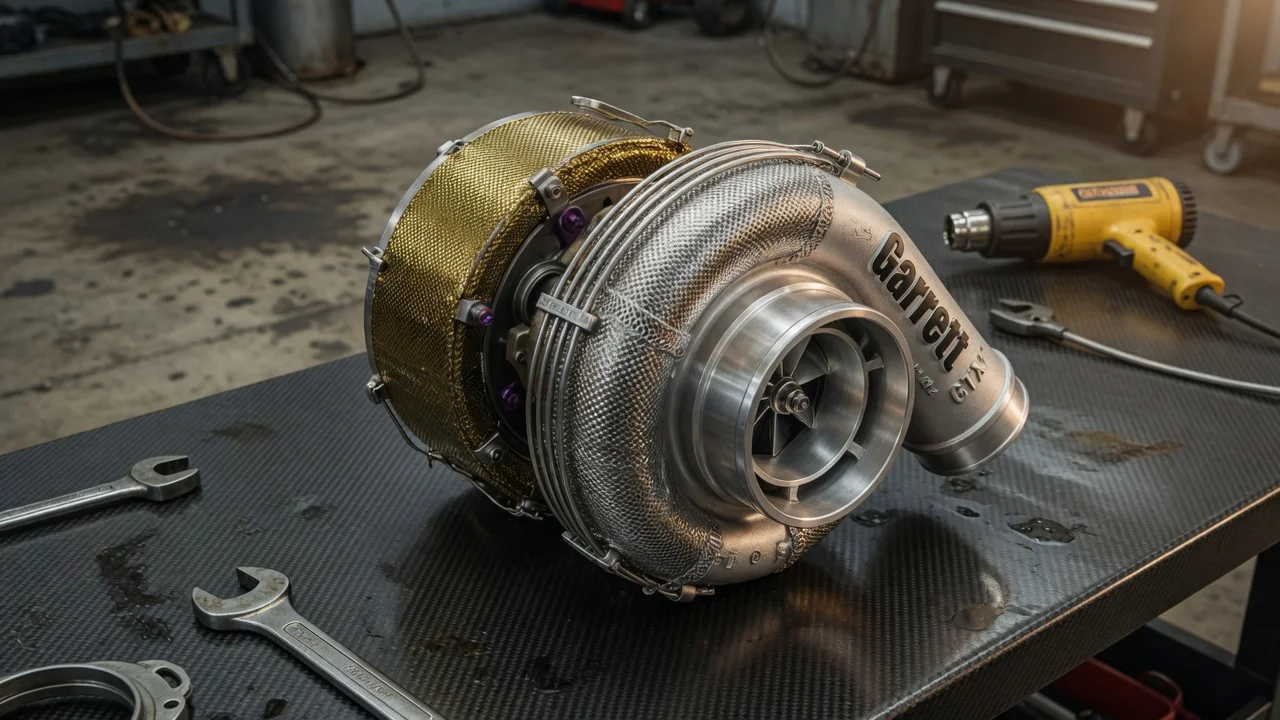
A turbo blanket wraps the turbine housing to keep exhaust heat in the hot side and away from nearby parts. Choosing one for a Garrett turbocharger comes down to three questions. What problem should it solve? Does it fit your exact turbo frame and housing? Can you accept the inspection and maintenance trade-offs? This guide covers each step so you can narrow your options without relying on marketing claims.
Define the job the product must do
Start with the reason you want a blanket. Common goals include cutting radiant heat reaching intake piping, wiring looms, brake and fuel lines, and plastic reservoirs, and lowering underhood temperatures in a tight engine bay. Some owners buy one after finding melted loom or brittle plastic near the turbine housing. Others act on a forum post blaming heat soak for sluggish response or power loss in traffic. Keep symptom reports separate from verified failures. A complaint that boost feels weaker on hot days does not prove the turbo's radiant heat is the cause. Before treating a blanket as the fix, confirm the problem through inspection: look for heat damage near the hot side, log intake air temperatures if your tools allow, and check for diagnostic codes tied to affected sensors or wiring.
Vehicle context matters as much as the goal. Model year and engine variant change factory turbo choices, heat shield design and where components are routed, even within one model line. A factory application using a Garrett unit may already have OEM shielding designed around it. An aftermarket Garrett on a custom or swapped manifold may have none. Service history also counts: a recent turbo replacement, manifold change or rerouted harness can change what needs protection. Finally, note your practical limits. These include available clearance, how the car is used (daily driving, towing or track days) and how often you expect to remove the hot side for service.
Check compatibility
Blankets are shaped around a turbine housing, not around a brand name. Garrett builds many turbo families and frame sizes, and turbine housings within them differ in A/R, volute shape, inlet flange and outlet design. Identify your exact unit before shopping. Record the part number from the turbo's identification tag, the family and frame, and the turbine housing A/R. Note the inlet flange style, such as T25, T3, T4 or V-band, along with the outlet type and whether the wastegate is internal or external. A blanket listed only by flange may match your inlet pattern but not the shape of your specific housing. A listing by vehicle alone may assume the factory turbo, which is a problem if yours has been changed.
Next, check the interfaces around the housing. The blanket needs suitable openings for the wastegate actuator arm or external wastegate port, the downpipe connection, any oxygen sensor or exhaust gas temperature probe, and the mounting studs. It should cover the turbine housing without trapping or touching the oil feed and return lines, the coolant lines on water-cooled center sections, the actuator diaphragm or the compressor side. Confirm how it fastens and whether those points are reachable in your engine bay. Also review the manufacturer specifications from both the turbo maker and the vehicle maker on insulating the turbine housing. Some guidance restricts which areas may be covered or ties the practice to warranty terms.
Features that affect the choice
Construction drives durability. Most blankets pair a woven outer layer, commonly fiberglass, basalt or silica-based fabric, with an insulating core, sometimes held by stainless thread or mesh. A temperature rating is useful only if you know two things: whether it means continuous or short-term exposure, and which layer it applies to. A single number on a product page with no context is a label, not evidence. Look at stitching density and how the edges are finished, because vibration and repeated heat cycles tend to fray weak seams first.
Fit style is the main trade-off. A blanket shaped for a specific housing usually leaves fewer gaps, clears the actuator more reliably and is easier to remove and refit. A universal blanket sized by flange is often cheaper, but it may leave exposed areas or bunch up near moving parts. Fastening also matters. Springs allow tool-free removal but can loosen over time, while safety wire holds well but slows servicing. Be cautious with claims of faster spool, added power or fireproof performance. Such claims are rarely backed by documented, repeatable testing on an engine configuration like yours. More useful evidence includes a fit list by turbine housing, clear photos of the cutouts, a stated material specification and a return policy that covers fitment problems.
Limitations and ownership costs
A blanket cannot fix an exhaust leak, a cracked housing, worn turbo bearings or a tuning fault. It only manages where heat goes. By holding heat in the turbine housing, it can raise temperatures in the housing and its fasteners, and it keeps the hot side warm longer after shutdown, so follow the cooldown guidance for your engine. A blanket also hides the parts you would normally check. Cracks, leaking gaskets, loose studs and oil seepage stay out of sight, so every proper inspection means removing it.
Plan for setup and upkeep. Install only on a cold engine, and wear gloves and eye protection, since the fibers can irritate skin. You may need to remove factory heat shields, so store them in case you go back to stock. After the first few heat cycles, recheck clearances and fasteners. Budget for consumables such as springs or safety wire, and eventually a replacement blanket as the weave breaks down. A blanket soaked with oil or fuel is a fire risk and should be replaced, after the leak has been repaired. Also count the extra labor each time the turbo or exhaust is serviced.
Build a practical shortlist
Before comparing products, write down your goal and the verified evidence behind it, then your vehicle details: model year, engine variant and any changes from factory configuration. Then record your turbo's identification: part number, family, turbine housing A/R, inlet flange, outlet type and wastegate layout. Drop any blanket that cannot be matched to that housing, either through a specific fit listing or measurements you can check against your own.
For each remaining candidate, answer a short set of questions. Does it clear the actuator, sensor bungs, oil lines and coolant lines? Is the material specification clear about which layer the rating covers and whether it is continuous? Does the fastening method suit how often you remove the hot side? Can you return it if it does not fit? Does fitting it conflict with any manufacturer guidance or warranty terms that apply to your car? The blanket that answers these clearly for your exact configuration is a sound choice, whatever its ranking in general lists.