Choosing a Front-Mount Intercooler
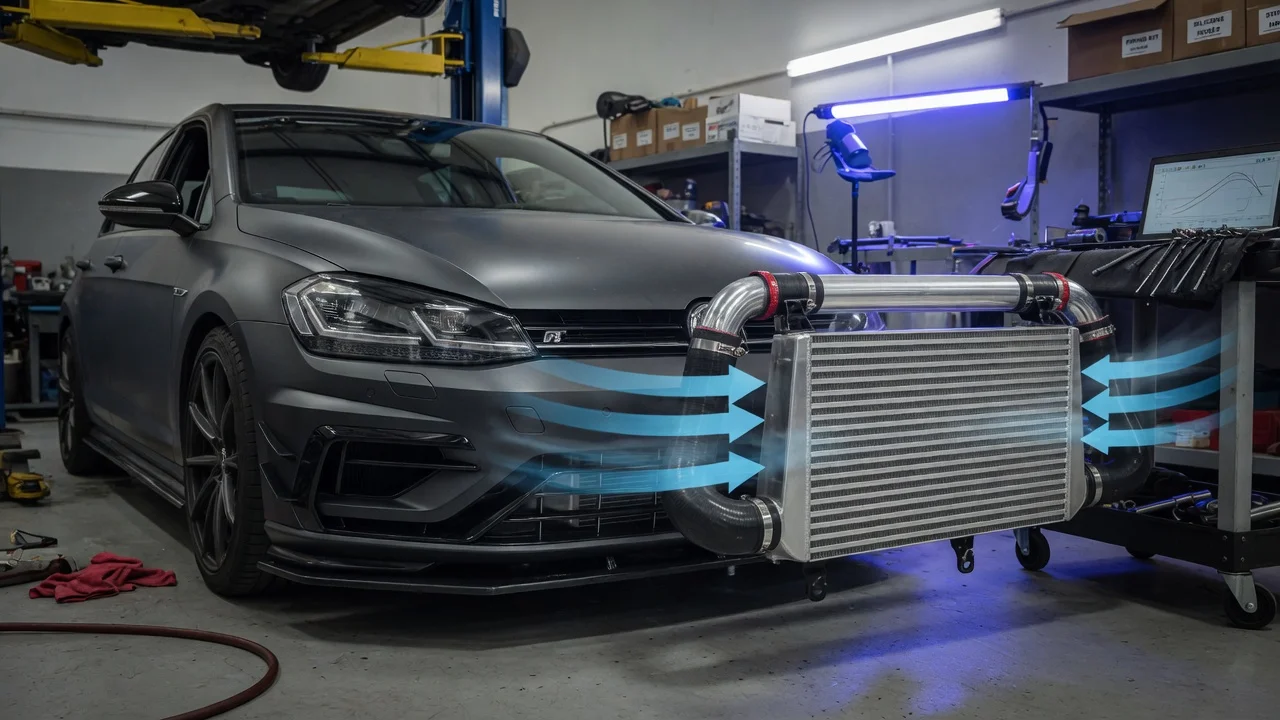
A front-mount intercooler can lower intake air temperature on a turbocharged or supercharged engine. The right one depends on how the car is driven, what is already installed and how much space sits behind the bumper. This guide explains how to match a core and its piping to your vehicle and which features matter. It also covers what the upgrade costs to own and how to narrow the options to a short, defensible list.
Define the job the product must do
Start with how the vehicle is actually used. A car on a stock calibration that sees commuting and the occasional highway merge asks far less of a charge air cooler than one with a raised boost target, repeated track sessions or heavy towing in summer heat. Any front-mount intercooler is meant to keep intake air temperature lower and more stable under load. The upgrade makes the most sense where the factory unit is already being pushed. If a symptom is driving the purchase, separate what has been reported from what has been verified. Forum accounts of heat soak, power fade after back-to-back pulls or hesitation on hot days are useful leads, not a diagnosis. Verified findings look different: data logs showing charge temperature climbing under repeatable symptom conditions, a leak located during a smoke or pressure test, or a cracked factory end tank found at inspection. Diagnostic codes for underboost or charge air temperature narrow the search. However, the same codes can come from a faulty sensor, a sticking wastegate or a split coupler, and a new core will not cure any of those.
Next, list the practical constraints. Budget should include couplers, clamps, possible bumper trimming and a tune if one is needed. Decide whether the stock bumper, fog lights and tow hook mount must stay. Check whether the car still faces emissions inspection and whether local rules require an approval or exemption for intake modifications on street-driven vehicles. A cooler that suits a dedicated track car can be the wrong choice for a daily driver that has to pass inspection and survive winter road debris.
Check compatibility
Fitment is decided by model year and engine variant, not by the badge. The same nameplate can carry several engines across a generation. Each may use a different turbocharger outlet, throttle body inlet, charge pipe routing and sensor location. Some variants use a top-mount or side-mount cooler from the factory, so a front-mount conversion means new piping, brackets and sometimes relocated components rather than a simple swap. Mid-cycle refreshes can also change the bumper cover, crash beam, radiator support or grille shutters. Confirm your engine configuration with the engine code and VIN-based parts data. Then check that the product's fitment list names your exact year range and drivetrain rather than a broad model family.
Then compare the interfaces one by one. Inlet and outlet diameters must match the turbo and throttle body connections, or the kit must include the correct reducers. Check the coupler style, bead rolls and clamp type. Confirm that the charge pipes keep the factory boost and temperature sensor bosses and the blow-off or diverter valve flange. Look at clearance to the AC condenser, radiator, horn and washer reservoir, and to any radar or camera sensors that driver assistance systems use behind the grille. Blocking or shifting those sensors can trigger warnings. Finally, compare the kit against the manufacturer specifications for your engine, such as factory boost levels and sensor types, so the cooler and calibration remain compatible.
Features that affect the choice
Core construction is the main engineering trade-off. Bar-and-plate cores are generally heavier and more resistant to physical damage. Tube-and-fin cores tend to be lighter and can flow well for their size. A larger frontal area and a thicker core add cooling capacity, but they also add charge volume, weight and pressure drop. A thick core can also reduce the airflow reaching the radiator behind it. On a mild setup, more capacity than the engine needs adds little and may make throttle response feel softer. End tank shape, internal fin density and smooth piping routes affect how evenly air spreads through the core. They also determine how much pressure is lost before the throttle body.
Treat marketing labels with caution. Phrases such as race-proven, maximum efficiency or a quoted percentage drop in intake temperature mean little without test conditions. Useful evidence states the vehicle, engine variant, tune, ambient temperature, number of runs and how charge temperature and pressure drop were measured. Ideally, it compares the new cooler against the factory one on the same car. Dyno sheets without that context, and gains measured on a different engine, are claims rather than proof. Finish coatings and polished piping mostly affect appearance. Weld quality, bracket design and the included hardware matter more over time.
Limitations and ownership costs
Installation usually requires removing the front bumper, and some kits call for trimming the bumper support, crash beam or splash shields. Allow time to align the couplers so they seat without strain, and pressure test the system afterward to confirm there are no leaks. On some engines, changing charge volume or sensor placement may require a revised calibration. That adds cost and may affect warranty coverage. Couplers and clamps are wear items. At routine service, check them for cracking, oil weeping and loose clamps, and keep records in the vehicle's service history.
A front-mounted core sits low and exposed, so it is more vulnerable to stones, curbs and road salt than many factory locations. Rinse debris from the fins, straighten bent fins carefully and check for corrosion each season. A light oil film inside the system can be normal on engines whose crankcase ventilation feeds the intake. Pooled oil, however, points to a problem upstream that the cooler cannot solve. An intercooler also will not repair a worn turbocharger, a faulty sensor, a boost leak elsewhere or knock caused by poor fuel. On an unmodified engine, it mainly improves consistency rather than adding large amounts of peak power.
Build a practical shortlist
Narrow the field by asking the same questions of every candidate. Does the fitment list name your model year, engine code and drivetrain? Do the inlet, outlet and sensor provisions match your turbo, throttle body and factory sensors? Will the bumper, crash beam, condenser and driver assistance sensors stay in place without cutting you are not prepared to do? Does the core construction suit your use and its exposure to road debris? Is any published performance data backed by stated test conditions? Finally, is the hardware complete, is a tune required, what does the warranty cover, and is the part allowed for road use where you live?
Keep two or three options that pass every check, then decide on installation effort, support and total cost rather than headline claims. Before installation, log charge temperature and boost under the same symptom conditions that prompted the upgrade, then repeat the logs afterward. That comparison, together with a clean leak test, is the only way to confirm the cooler solved the problem you bought it for.