Choosing a Car to Flat Tow Behind an RV
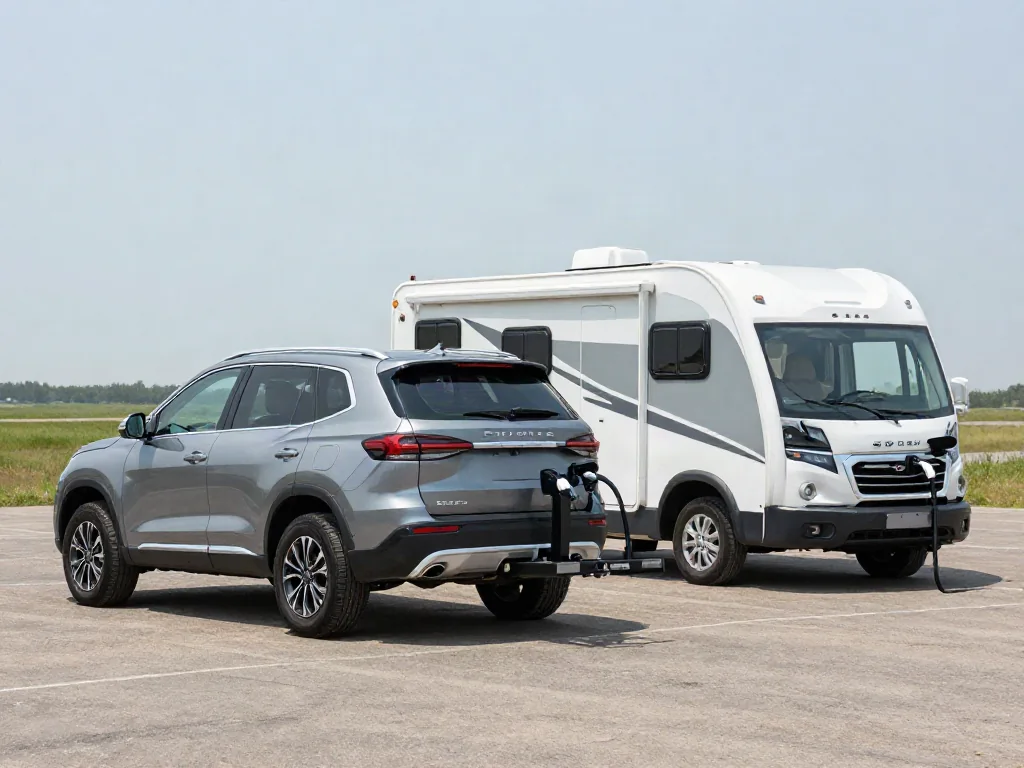
Choosing the best car for towing behind an RV starts with how the vehicle will be used, not with a single popular nameplate. The best car for flat towing behind an RV is one the manufacturer approves for dinghy or four-down towing, that fits the motorhome's limits, and that still works as daily transportation at the destination. Recreational towing approval, weight, and a repeatable hookup routine matter more than generic ranking lists.
Define What Your RV Tow Car Needs to Do
Flat towing, also called dinghy towing or four-down towing, means the toad travels with all four wheels on the ground behind the motorhome. That setup is different from a trailer or a tow dolly, because the towed vehicle's drivetrain may keep rotating while the engine is off. The best car for RV towing is therefore one that can survive that motion without internal damage, not merely one that looks compact or is easy to park. Treat the combination as a system: the motorhome pulls, the tow bar connects, and the dinghy must be designed for that duty.
Once that mechanical requirement is clear, match the toad to destination driving. Passenger space, cargo room, parking access, and fueling convenience at campgrounds all matter after you unhook. A best small car for towing behind a motorhome still has to carry people and bags through city streets and trailheads. Frame the choice around documented recreational towing approval, the motorhome's remaining towing capacity, and a preparation routine you can complete consistently. There is no universal winner, because a car that tows well for one coach and trip pattern can be a poor fit for another.
Confirm Approval for the Exact Vehicle
Start with the recreational towing section of the owner's manual for the exact model year, engine, transmission, and drivetrain. That language is the only reliable source of recreational towing approval. Emergency towing permission, such as allowing a wrecker to move a disabled vehicle a short distance, does not establish approval for recreational flat towing. Many cars that can be towed in an emergency still suffer transmission or transfer-case damage if they roll for highway miles with the engine off. Read the recreational pages separately from roadside-assistance notes.
Before you buy, confirm towing restrictions, required preparation, speed or distance limits if stated, and any manufacturer clarifications that apply to that configuration. A seller's claim, a forum consensus, existing tow hardware, or approval for a similar trim in another model year cannot establish eligibility. Hardware can be bolted to a car that was never approved, and a one-year drivetrain change can reverse four-down status. If the manual is missing, obtain the correct edition for that vehicle identification number and year before you treat the car as a candidate.
Understand Transmission and Drivetrain Requirements
Internal lubrication and drivetrain design decide whether components can rotate safely with the engine off. Automatic transmissions often rely on engine-driven pumps, so fluid may not reach bearings and clutches while the car rolls as a dinghy. Manual-transmission cars and certain four-wheel-drive SUVs with a transfer case that can be placed in transfer case neutral are common candidate types, because those layouts can isolate rotating assemblies. Even those types still need exact-vehicle approval. A gearbox that looks similar on a neighboring trim can have a different lubrication path.
A manual transmission, a transmission placed in neutral, or a transfer case in neutral does not by itself establish flat-towing suitability. Some approved vehicles still require specific ignition positions, steering-lock management, or battery-disconnect rules so the wheels can track and electrical systems do not drain. Check the manufacturer's instructions for steering, ignition, battery power, and drivetrain settings on that exact car. Do not copy another owner's sequence as a universal setup. If the published steps are unclear, ask the manufacturer or a dealer using the vehicle identification number rather than improvising.
Build a Shortlist of Small Cars and SUVs
Small hatchbacks, compact sedans, and compact SUVs are the body styles most people investigate when they want the best small car for towing behind a motorhome, but only configurations with manufacturer approval belong on a shortlist. Seating, cargo access, overall length, and turning radius then help you drop vehicles that would be awkward after unhooking. A two-seat hatch may tow light yet fail a family trip, while a compact SUV may carry gear yet be harder to park in a resort lot. Destination driving should shape the shortlist as much as hitch convenience.
Weigh each remaining candidate by more than cabin layout. Vehicle weight affects how much of the motorhome towing capacity you consume. Availability of documented towing equipment, including a proper baseplate and a supplemental braking system, matters because improvised mounts are a warning sign. Also judge the physical demands of the approved preparation routine: if the steps require crawling, shifting multiple levers, or managing battery power every departure, you must be willing to do that work correctly. Decide among remaining candidates on those points, treating each engine, transmission, and drivetrain combination as its own case.
Check the Motorhome’s Weight and Equipment Limits
Published curb weight is only a starting point. Water, fuel, passengers, cargo, and aftermarket accessories raise the actual travel-loaded weight of both the motorhome and the toad. Weigh the loaded coach when you can, then add a realistic loaded weight for the dinghy rather than brochure figures. Check motorhome towing capacity, gross combined weight rating, hitch rating, and the ratings of the tow bar and related equipment together. The best car for towing behind a motorhome is still unusable if any one of those ratings is exceeded.
Remaining combined-weight allowance depends on how heavily the motorhome is already loaded and does not override any individual component limit. A hitch, receiver, or tow bar can be the binding constraint even when gross combined weight rating still shows a margin. Have a qualified towing installer assess baseplate fit, tow bar suitability, a supplemental braking system, breakaway equipment, safety connections, and lighting. Those pieces must work as a matched set so the dinghy tracks, stops, and signals with the coach. An installer can also confirm that mounting points on the car are the ones the equipment maker designed around.
Evaluate a Used Tow Car Before Committing
A used toad can look ready and still hide problems. Arrange a pre-purchase inspection that includes existing tow attachments, frame or unibody mounting areas, wiring, and signs of damage, corrosion, or improvised installation. Prior dinghy towing alone cannot establish condition, because miles under a tow bar can wear drivetrain parts if procedures were skipped. Ask for maintenance records and any evidence that manufacturer recreational towing steps were followed. Look closely at the baseplate region, safety-cable mounts, and lighting harness for cracked welds, elongated holes, or splices that do not match professional work.
Build inspection, equipment, installation, and any required corrective work into the purchase budget instead of treating the sale price as the full cost. Missing approval documents, uncertain equipment fit, or unexplained structural damage should be resolved before you commit. If the seller cannot produce the correct recreational towing pages or the hardware does not match a documented kit, walk away or price the uncertainty as a reason not to buy. After a clean inspection, have a professional demonstrate the approved hookup, including supplemental braking and lighting, so you know the routine before the first trip.